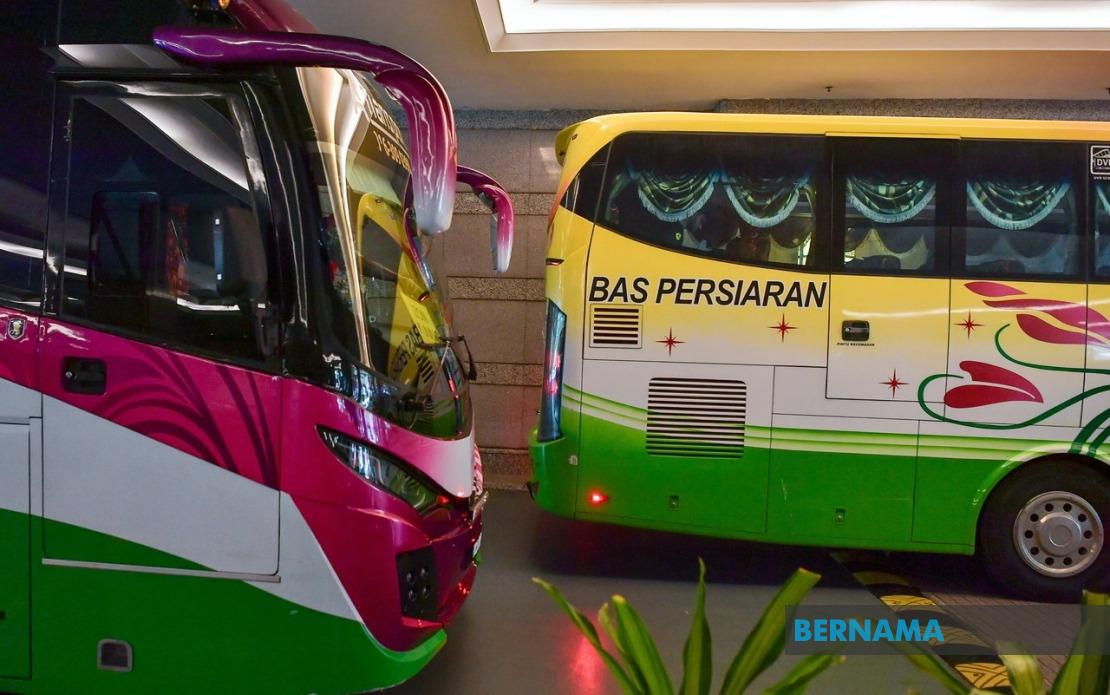
The Ministry of Tourism, Arts and Culture has made an urgent appeal to the nation's tour bus operators and tourism associations to immediately provide comprehensive diesel usage data and supporting documentation. The request comes as the government seeks to evaluate the true impact of recent fuel price movements on the ground transportation sector and determine what form of financial relief might be appropriate. Without this information, officials say they cannot move forward with implementing targeted assistance programmes that would actually address the sector's difficulties.
Diesel price volatility has emerged as a significant operational challenge for Malaysia's tour bus industry, with carriers facing markedly higher fuel costs that directly erode profit margins. The Middle East crisis has been cited as a contributing factor to international crude oil price fluctuations, which in turn affect domestic fuel costs. Tour operators have long complained that rising diesel expenditure threatens the viability of their businesses, particularly those operating on tight margins serving price-sensitive domestic and international tourist markets. The cumulative effect on the sector's financial health has prompted industry groups to seek government intervention.
The Ministry of Finance has signalled preliminary openness to considering relief proposals for affected tour bus operators, but this conditional support depends entirely on receiving solid empirical evidence of hardship. Officials emphasise that policy decisions of this magnitude cannot rest on anecdotal complaints or general industry grievances alone. Instead, the government requires concrete data demonstrating how much additional fuel costs have increased, how operating expenses have risen as a proportion of total costs, and which operators face the most severe pressures. Without this documentation, any assistance package risks being either inadequate or poorly targeted.
MOTAC has specifically requested that operators submit comparative fuel cost analysis showing expenditure levels before and after the recent price surge. This benchmarking approach would allow analysts to quantify the precise financial burden imposed by price movements. Additionally, operators must provide detailed records of their actual diesel consumption patterns, including information about fleet sizes, vehicle ages and fuel efficiency ratings, and typical monthly or annual fuel purchases. The ministry is also seeking documentation on how fuel costs have been absorbed—whether through reduced wages, deferred maintenance, price increases to tour packages, or other mechanisms.
Nine tourism associations had previously submitted a joint memorandum highlighting the diesel price crisis and requesting government support. MOTAC has already held engagement sessions with representatives from these groups to gather qualitative feedback and understand the lived experiences of industry participants. These consultations have provided useful context, but they cannot substitute for the quantitative data necessary to justify specific policy measures. The ministry's position reflects a recognition that targeted assistance requires baseline measurement and impact assessment.
Industry insiders suggest that compliance with the data submission requirement has so far been incomplete and patchy. Some operators may lack the administrative systems to compile the necessary information quickly, while others may be reluctant to disclose detailed financial records to government agencies for various reasons. The ministry's repeated emphasis on the urgency of submission suggests frustration with the pace of responses. Officials note that delayed submission merely postpones the government's ability to design and implement relief measures, effectively harming the operators' own cause.
MOTAC has cautioned that any assistance programme decided without full understanding of industry conditions risks failing to serve actual needs. If relief measures prove too generous in some areas and inadequate in others, they could create resentment among operators who feel their circumstances have been overlooked. Conversely, assistance that fails to match the scale of the problem may be dismissed as insufficient and ineffective. The ministry's insistence on accuracy and completeness reflects this awareness that poorly designed relief can generate as much dissatisfaction as no relief at all.
The sustainability of Malaysia's tourism industry carries broader economic implications. The sector contributes significantly to national GDP and employment, particularly in states with strong tourism infrastructure. Tour operators form a crucial link in the tourism value chain, connecting hotels, restaurants, attractions, and other service providers with visiting customers. If fuel cost pressures force operators into insolvency or contraction, the effects ripple throughout the tourism economy. This interconnectedness explains why government officials are treating the matter seriously rather than dismissing it as a sectoral issue.
MOTAC has committed to continuing its focus on tourism industry sustainability and broader economic wellbeing. The ministry indicated that assistance measures, once approved, would be rolled out in phased stages rather than as a single comprehensive package. This graduated approach allows the government to manage fiscal implications while observing results and gathering additional feedback. However, implementation timelines remain contingent on the data submission process accelerating substantially in the coming weeks.
The current situation highlights the complex relationship between market forces and government support in Malaysia's economy. Diesel prices are determined largely by international crude oil markets and foreign exchange movements beyond any single government's control. Yet domestic operators expect state assistance when prices rise sharply. Finding the right balance between acknowledging legitimate industry hardship and maintaining fiscal discipline remains a persistent challenge for policymakers across Southeast Asia.

