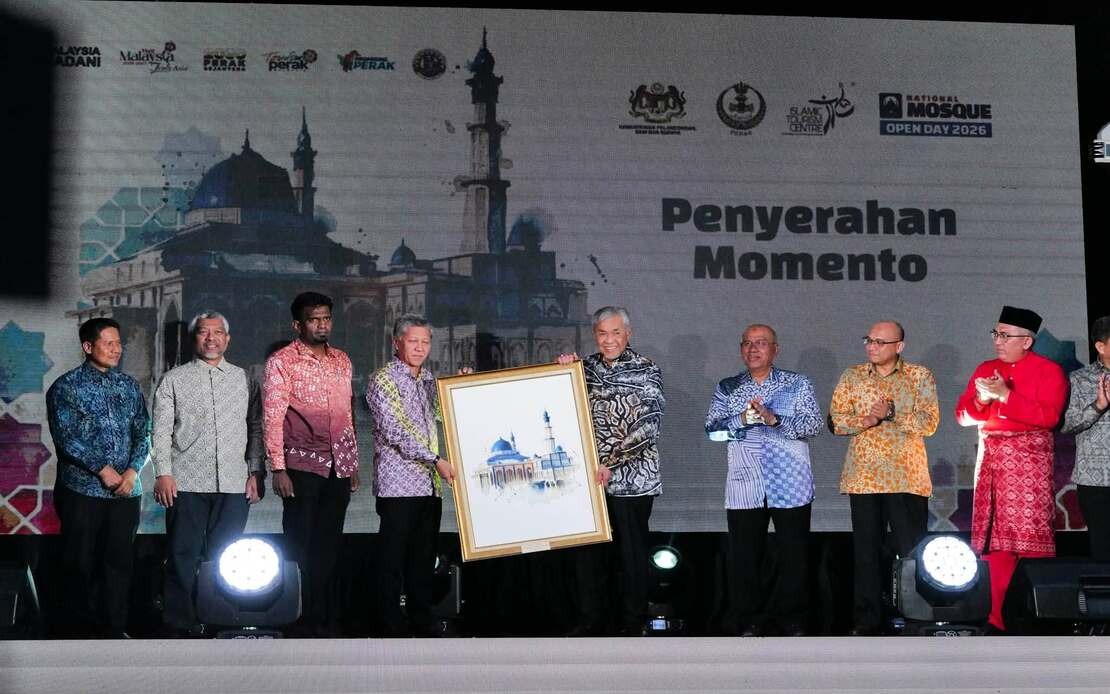
Deputy Prime Minister Datuk Seri Dr Ahmad Zahid Hamidi has urged Malaysian mosques to embrace their potential as tourism destinations, arguing that these religious institutions can effectively showcase the country's Islamic heritage and values to international visitors. Speaking at the National Mosque Open Day 2026 in Bagan Datuk, Ahmad Zahid outlined a vision where mosques transcend their traditional boundaries as purely devotional spaces, becoming instead integral components of the broader tourism narrative that defines contemporary Malaysia.
The rationale behind this initiative reflects a strategic approach to cultural tourism that extends beyond conventional heritage marketing. By positioning mosques as destinations within visitors' itineraries, the government seeks to create touchpoints where travellers can engage directly with Islamic civilisation as expressed through Malaysian contexts. Ahmad Zahid emphasised that tourists should depart Malaysia carrying more than photographic memories of architectural splendour—they should instead retain lasting impressions of the warmth demonstrated by local communities and the Islamic principles that underpin social interactions. This emotional and experiential dimension transforms mosques from passive monuments into active platforms for cultural diplomacy.
The National Mosque Open Day represents precisely the type of programming Ahmad Zahid champions as essential infrastructure for this tourism ecosystem. By opening mosque facilities to visitors of diverse backgrounds, ages, and faiths, such events create structured environments where cross-cultural encounter becomes normalised rather than exceptional. These occasions serve multiple functions simultaneously: they demystify Islamic institutions for those with limited exposure, they create opportunities for dialogue rooted in genuine curiosity rather than stereotypes, and they allow Muslim communities to articulate their own narratives about faith and identity directly to external audiences.
Acknowledging the significance of mutual understanding, Ahmad Zahid stressed that initiatives promoting mosque visitation contribute meaningfully to social cohesion within Malaysia itself. The framework of hospitality and guided engagement fosters respect for mosques as repositories of national heritage and identity rather than viewing them through narrower sectarian lenses. For a multicultural nation like Malaysia, positioning Islamic institutions as shared cultural resources strengthens the foundation of interreligious goodwill that underpins social stability. When non-Muslim visitors are welcomed with genuine warmth and receive educational content about Islamic history, theology, and contemporary Muslim life, misconceptions dissolve and appreciation deepens.
The designation of Masjid Tuminah Hamidi as Malaysia's 98th Tourism Mosque by the Islamic Tourism Centre marks a tangible milestone in this strategic direction. Completed in 2023 as a family waqf project, the mosque exemplifies the characteristics the government seeks to promote: distinctive architectural design that reflects contemporary Islamic aesthetics, integrated facilities such as knowledge galleries that facilitate learning, and a location within accessible communities rather than isolated enclaves. The Islamic Tourism Centre's recognition of this facility acknowledges how private religious development can contribute to public tourism objectives when designed with such intentions.
The Islamic Tourism Centre's director-general, Mohammad Faisal Abu Suaib Khan, disclosed that Malaysia's 6,851 registered mosques represent an enormous untapped potential for tourism diversification. The current roster of 98 designated Tourism Mosques represents merely 1.4 percent of this total inventory, suggesting substantial room for expansion. The strategic challenge involves identifying and developing additional mosques possessing distinctive features—whether historical significance, architectural innovation, community programmes, or educational offerings—that justify inclusion within tourism promotion frameworks. This selective approach ensures quality and prevents tourism objectives from overwhelming the devotional and spiritual functions that define mosques fundamentally.
Coordination between the Islamic Tourism Centre, the Department of Islamic Development Malaysia, and state-level Islamic religious authorities provides the institutional architecture necessary for systematic expansion of this initiative. Rather than approaching mosque tourism in ad hoc fashion, government agencies are establishing consistent guidelines that ensure Tourism Mosque designation carries meaningful standards. This professionalisation process protects mosque reputations and visitor experiences alike, establishing clear expectations regarding accessibility, interpretation, cleanliness, and staff training. Such frameworks prevent tourism from degrading into exploitative spectacle or disrespectful intrusion into sacred spaces.
The Islamic Tourism Centre's initiatives extending beyond mosque visitation itself—particularly the Muslim-Friendly Tourism and Hospitality Assurance and Recognition programme and Muslim-Friendly Tourist Guides certification—embed mosque tourism within a comprehensive ecosystem approach. These complementary programmes ensure that visitors' mosque experiences connect logically to accommodation, dining, shopping, and other tourism services that similarly accommodate Islamic requirements and sensitivities. This holistic strategy positions Malaysia competitively within the expanding Muslim tourism market, attracting visitors who seek destinations where their religious and cultural preferences receive genuine accommodation rather than merely perfunctory acknowledgment.
The "Muslim-Friendly, not Muslim-Only" principle articulated by the Islamic Tourism Centre encapsulates a nuanced approach that differs markedly from sectarian alternatives. Rather than creating separate tourism infrastructure exclusively serving Muslim visitors, Malaysia's strategy deliberately includes mosque tourism within national tourism offerings accessible to everyone. This inclusive framework communicates that Islamic heritage constitutes national heritage valuable to all Malaysians regardless of religious affiliation, while simultaneously demonstrating to international observers that Muslim-majority societies actively welcome diversity and cross-cultural engagement. Such positioning carries implications extending well beyond tourism metrics into broader diplomatic and soft-power dimensions.
For regional Southeast Asian economies competing within tourism markets, Malaysia's mosque tourism initiative offers instructive lessons regarding heritage diversification and religious-cultural integration within tourism strategies. Thailand, Indonesia, and other nations with significant Muslim populations similarly possess magnificent mosques and Islamic institutional networks that could be leveraged for tourism purposes. Malaysia's systematic approach—establishing designation frameworks, coordinating between government agencies, training guides, and embedding mosque tourism within broader Muslim-friendly tourism infrastructure—provides a replicable model. The initiative demonstrates how faith-based institutions can simultaneously deepen community engagement, strengthen interfaith understanding, and contribute meaningfully to tourism revenue generation without compromising spiritual or devotional integrity.
The scaling ambitions embedded within this framework warrant attention from tourism planners and policy-makers across the region. As international travel increasingly reflects preferences for authentic cultural and spiritual encounters rather than generic resort experiences, mosques positioned as interpretive centres for Islamic civilisation occupy distinctive market niches. Malaysian planners recognise that tourism competitiveness increasingly depends upon offering experiences unavailable elsewhere—and guided engagement with living Islamic communities, reflected through welcoming mosques staffed by trained interpreters, clearly satisfies this demand for authenticity and meaning.
Looking forward, the success of this initiative will depend substantially upon sustained engagement from mosque communities themselves and careful attention to balancing tourism development against devotional priorities. Mosques fundamentally exist to serve their congregations' spiritual needs; tourism functions must remain secondary and subordinate to this core mission. When implemented thoughtfully with appropriate oversight and community consultation, however, mosque tourism can generate resources for religious institutions, create employment for local communities, and strengthen Malaysia's positioning as a premier Islamic tourism destination within an increasingly competitive regional landscape.

