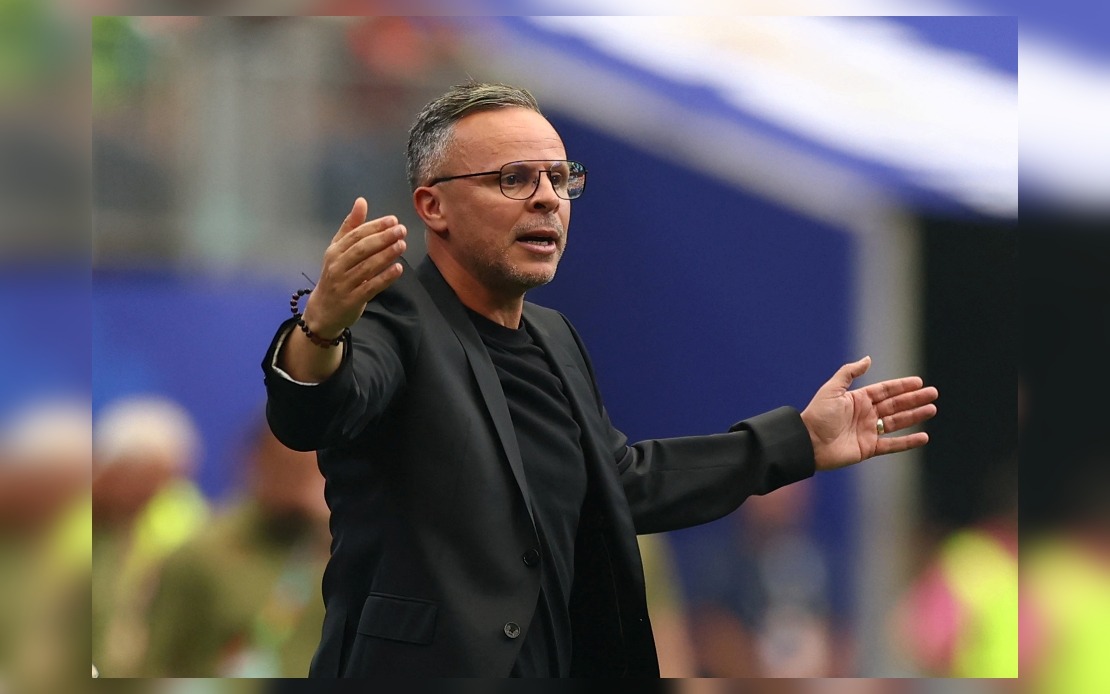
Morocco has transcended its status as an unlikely tournament participant to become a genuine heavyweight in world football, according to head coach Mohamed Ouahbi, whose team demolished Canada 3-0 in Houston on Saturday to advance to the World Cup quarterfinals. The emphatic victory represents far more than a simple progression in the tournament for the North African side—it signals a fundamental shift in how the footballing world must regard Morocco as a competitive force on the global stage.
Ouahbi's assertion that Morocco is now perceived as "a major footballing nation" rather than merely "a surprise" reflects a maturation in the team's approach and execution that has emerged across multiple competitions. The coach emphasised during his post-match remarks that this accomplishment should be viewed as the foundation for future ambitions rather than the culmination of the team's aspirations. His determination to maintain momentum and pursue further advancement demonstrates the psychological shift that has accompanied Morocco's rising status in international football.
The match itself unfolded in contrasting fashion across its two halves, with Canada initially asserting control through aggressive pressing and rapid transitions. The co-host's approach in the opening period created genuine difficulties for Morocco, generating numerous turnovers and forcing the North African side into uncharacteristic positional errors. However, such early pressure proved insufficient against a team that demonstrated remarkable capacity to recalibrate its tactical approach when circumstances demanded adjustment.
The transformative second-half performance revealed the depth of Morocco's footballing intelligence and adaptability. Azzedine Ounahi's two strikes, supplemented by Soufiane Rahimi's clinching goal, showcased the clinical efficiency the team deployed once it seized tactical dominance. Ouahbi identified his strategic modifications as the pivotal element that shifted the balance of play, allowing Morocco to dictate tempo and create defensive vulnerabilities through precise forward passing that repeatedly caught Canada defending with their goal at immediate risk.
Ouahbi's candid acknowledgement that he anticipated a far more competitive encounter underscores the respect he maintains for Canadian determination and intensity. His observation that Round of 16 matches rarely produce such emphatic scorelines reflects the reality that international football at this level typically generates tighter contests, making Morocco's capacity to impose such comprehensive control all the more significant. This perspective guards against complacency while simultaneously validating the quality of his team's second-half execution.
The coaching staff's ability to implement tactical corrections speaks to a sophisticated understanding of match dynamics and opponent patterns. Rather than maintaining rigid formations or predetermined strategic frameworks, Ouahbi demonstrated the flexibility to recalibrate passing angles and defensive positioning to exploit emerging weaknesses in Canada's approach. Such adaptability has become increasingly essential in modern tournament football, where rigid systems struggle against intelligent opponents capable of swift tactical counter-adaptation.
Morocco's progression to the quarterfinals marks the continuation of an extraordinary African footballing narrative that commenced during the 2022 World Cup campaign. The team's historic semifinal appearance four years earlier established a template for continental success, yet consistency across multiple tournament cycles remains far more elusive than achieving a single breakthrough result. Sustaining competitive excellence over multiple competition editions distinguishes genuine footballing powers from transient tournament sensations.
The forthcoming encounter against France presents a considerable escalation in competitive intensity, positioning Morocco at a genuine crossroads in its developmental trajectory. France's technical superiority and collective experience create an unmistakable challenge, yet Ouahbi's stated ambition to reach the final rather than fixate upon revenge against any particular opponent indicates a team focused upon its own narrative rather than external storylines. This psychological positioning suggests Morocco approaches the France fixture with clarity regarding its capabilities rather than dwelling upon historical context or bilateral rivalry.
For Southeast Asian football observers, Morocco's trajectory holds particular resonance regarding the potential for nations beyond traditional European and South American strongholds to establish themselves as sustained competitive forces. The team's combination of tactical discipline, technical proficiency, and psychological resilience demonstrates that sustained investment in player development systems and coaching infrastructure can produce results comparable to more traditionally dominant regions. Malaysia and other regional nations can extract valuable lessons from Morocco's systematic approach to building a competitive international side.
Ouahbi's determination to maintain identical ambition and confidence moving forward encapsulates the psychological transformation that differentiates momentary success from sustained excellence. Rather than permitting the Canada victory to represent a satisfactory conclusion, the coach has explicitly articulated that the team's people merit further advancement and that the competitive environment demands continuing elevation of performance standards. This mentality—treating quarterfinal advancement as a baseline rather than accomplishment sufficient in itself—distinguishes programmes capable of repeated tournament success from those experiencing isolated performances.
The implications of Morocco's advancement extend beyond immediate tournament considerations to broader questions regarding continental football development and the international talent pool. As African nations demonstrate increased capacity to compete at the tournament's highest levels, the global football landscape experiences beneficial competitive diversification that ultimately strengthens the sport's overall quality and unpredictability. Morocco's evolution from peripheral participant to genuine contender accelerates this competitive realignment.
Ouahbi's measured but ambitious rhetoric strikes an important balance between acknowledging genuine progress while resisting the complacency that frequently undermines sustained tournament performances. By framing the Canada victory as beginning rather than conclusion, the coach maintains the psychological vigilance necessary for teams pursuing deep tournament runs. France represents an appropriate challenge against which Morocco can evaluate whether its evolution constitutes temporary escalation or fundamental repositioning within world football's hierarchy.

