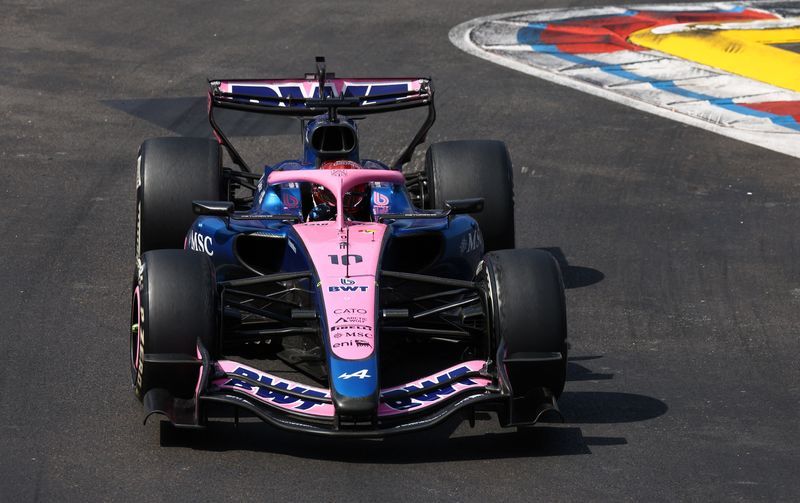
The motorsport world awaits clarity on one of this season's most contentious podium finishes as Formula One's international court of appeal indicated it will require several weeks to deliver its verdict on the June Monaco Grand Prix controversy. Following a closed-door hearing in Paris on Tuesday, the FIA confirmed that judges need between two and three weeks to issue a definitive ruling on a case that has cast a shadow over multiple drivers' championship standings and raised serious questions about the consistency of penalty application in the sport.
At the heart of the dispute lies a simple but consequential question: does third place belong to Alpine's Pierre Gasly or Red Bull's Isack Hadjar? The answer matters far beyond the podium presentation, as it triggers a cascade of position changes affecting Oscar Piastri's McLaren, Liam Lawson and Arvid Lindblad's Racing Bulls entries, and ultimately the championship points distribution in an intensely competitive season. What began as a straightforward post-race stewards' decision has morphed into a broader examination of how Formula One applies its rulebook and whether all competitors receive equal treatment under pressure.
Gasly crossed the line in third position on June 7, only to face a devastating blow when stewards applied two five-second penalties for pit-lane speeding infractions committed during the race. Those penalties dropped him to seventh place and promoted Hadjar to the podium, where the Red Bull driver celebrated with champagne in hand. For Hadjar, it seemed the matter was settled. Within days, however, new information emerged that would unravel that outcome entirely.
Alpine successfully challenged the decision on June 12, presenting evidence of a timekeeping error that stewards accepted as grounds for overturning the penalties. The reversal meant Gasly reclaimed his third-place trophy while Hadjar awkwardly surrendered his. Yet this unexpected development triggered an immediate counter-appeal from Hadjar's team and McLaren on June 16, with the latter protecting the interests of its driver Piastri, who had also received pit-lane speeding penalties but served them during the race itself, making them irreversible under current regulations.
The structural unfairness exposed by this sequence of events has alarmed the sport's competitors and raised uncomfortable questions for the FIA's stewards. McLaren team principal Andrea Stella articulated the concern with clarity at the Dutch Grand Prix, noting that Gasly's penalty reversal created fundamental questions about fairness and equal application of rules. Piastri, like Gasly, committed the same pit-lane speeding offence, yet because his penalties were served in-race rather than assessed post-race, he had no opportunity to challenge or overturn them. That distinction cost him valuable championship points and highlighted an asymmetry in how the rulebook functioned in practice.
Mercedes driver George Russell, himself a championship contender, experienced another dimension of this problem. After serving a drive-through penalty for the identical pit-lane speeding violation, Russell reportedly requested that his penalty be assessed post-race instead, which would have preserved his chance to appeal it later. That request was denied, leaving him without a remedy that proved available to Gasly. The stewards' own notes acknowledging that overturning Gasly's penalties created unfairness to other drivers now haunt the ruling, admitting the logical contradiction of their position.
The appeal hearing in Paris unfolded in strict confidentiality on Tuesday, offering the competing parties and judges space to present their arguments away from media scrutiny. The FIA offered no detail regarding the substantive case presented by either side, the evidence examined, or the particular legal and sporting grounds being weighed. This opacity, while protecting the integrity of deliberations, inevitably fuels speculation about how judges might resolve such a complex interplay of technical regulation, fairness, and procedural justice.
McLaren's appeal extends beyond mere sporting principle. Team leadership has been explicit that championship implications drive their interest in overturning the reversal of Gasly's penalties. With points at stake and the constructors' championship intensifying with each race, every position and every point gained or surrendered carries direct consequences for McLaren's title ambitions. The appeal therefore represents not only a formal challenge to a stewards' decision but also a strategic intervention in the season's title fight.
The broader implications ripple through the paddock and among fans who follow Formula One across Southeast Asia and beyond. A decision that restores penalties and drops Gasly back to seventh while reinstating Hadjar at third would effectively validate the original stewards' interpretation and undermine Alpine's legal victory. Conversely, upholding Gasly's current position would force Formula One to grapple with the uncomfortable reality that different drivers received fundamentally different treatment for identical infractions depending on timing and procedural circumstances. Either outcome requires judges to clarify whether the sport's rulebook creates such loopholes or whether stewards made errors in application.
Formula One's racing calendar continues regardless of the legal proceedings. The Italian Grand Prix at Monza is scheduled for September 6, followed by the inaugural Formula One race at Madrid's new circuit on September 13. These upcoming events will unfold with the June Monaco standings still technically unresolved, creating a situation unique in recent motorsport memory where championship points distributions remain provisional and subject to retroactive alteration based on judicial review.
The waiting period of two to three weeks places the appeal decision squarely in the lead-up to Monza, meaning competitors and teams will prepare for that pivotal race knowing a significant points revision could be imminent. This uncertainty adds a layer of complexity to championship calculations and strategic planning, as teams cannot definitively commit to their points tally or drivers' comparative standings until the judges render their verdict. The delay, while necessary for thorough judicial consideration, compounds the frustration that stems from Monaco's original decision-making process and subsequent reversal.

