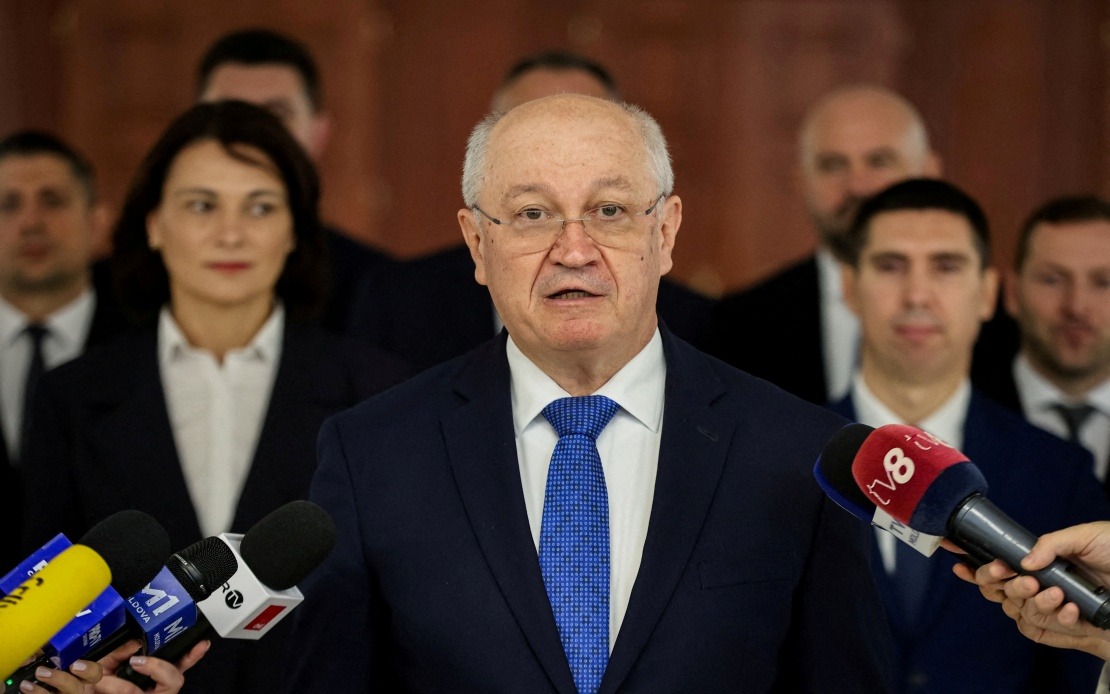
Alexandru Munteanu's departure from Moldova's highest executive office marks a significant political development in Eastern Europe, with the Prime Minister announcing his resignation on Friday through a post on the social media platform X. His decision to step down comes after less than a year in the role, having assumed office in November 2025, raising questions about the stability of Moldova's government during a critical period for the country's geopolitical positioning.
The resignation announcement was notably spare on specifics. Munteanu stated simply that "the moment I realised that I could no longer carry out my mandate in accordance with my principles and convictions, I chose to step down," without elaborating on what particular circumstances or policy disagreements prompted his decision. This vagueness has left observers and political analysts across the region speculating about the underlying causes, whether they involve internal coalition dynamics, conflicts with other government institutions, or fundamental policy disputes.
For Malaysian observers and Southeast Asian policymakers tracking European developments, Munteanu's resignation underscores broader instability patterns emerging across Eastern European governments. Moldova has occupied an increasingly precarious position between Western and Russian interests, and the domestic political landscape reflects these external pressures. Any turnover in executive leadership during such a delicate period can affect the country's strategic direction and international relationships, particularly its trajectory toward European Union integration.
The timing of the resignation carries geopolitical weight. Moldova has been navigating complex relations with the European Union while managing Russian influence and security concerns related to the ongoing Ukraine conflict. A change in prime ministerial leadership inevitably creates uncertainty about the continuity and vigour of pro-European reform efforts and foreign policy commitments. The fact that Munteanu felt compelled to leave after such a brief tenure suggests internal governance challenges that may not be immediately apparent from public statements.
Political transitions in smaller Eastern European nations often trigger rapid succession processes and coalition recalibrations. The identity of Munteanu's successor will be crucial in determining whether Moldova maintains its pro-Western orientation or whether domestic pressures could alter its strategic course. President Maia Sandu's government, which has championed EU accession, will need to manage this transition carefully to prevent either policy whiplash or prolonged governmental paralysis.
The departure also reflects the personalised nature of political leadership in countries navigating transitional status between competing spheres of influence. When leaders invoke personal principles as reasons for resignation, it often signals deeper frustrations with governance constraints or coalition pressures that individual politicians find untenable. In Moldova's case, such tension might relate to implementation of EU-aligned reforms, economic policy choices, or security decisions regarding cooperation with Western institutions.
For Southeast Asian governments observing European political dynamics, Munteanu's exit demonstrates how principle-based political commitments can sometimes conflict with the practical realities of governing, particularly when leaders inherit complex policy inheritances or face entrenched institutional resistance. This pattern has echoes in other small nations navigating between great power competition and domestic reform agendas.
The succession process will be watched closely by European Union officials and NATO observers, given Moldova's strategic importance as a buffer state and the EU's commitment to expanding eastward integration. Any disruption to governance during this critical phase could have ripple effects across Eastern European security architecture and European integration timelines. The new government's composition and policy priorities will signal whether Moldova continues on its European trajectory or faces potential course corrections.
Historically, prime ministerial resignations citing principle-based objections often presage broader governmental crises or reveal structural weaknesses in coalition governance. Moldova's fragmented political landscape, where coalition-building often requires careful balancing of competing factions, means that Munteanu's departure could trigger realignments among parliamentary groupings and potentially destabilise the existing governing arrangements if not managed expeditiously.
The international community's response to this leadership transition will also merit attention. The European Union, neighbouring Romania, and Ukraine will all have stakes in ensuring that Moldova's government remains stable and committed to reform. Prolonged governmental uncertainty could invite external actors to exploit internal divisions, making swift resolution of the succession imperative for Moldova's stability and European partners' strategic interests in the region.

