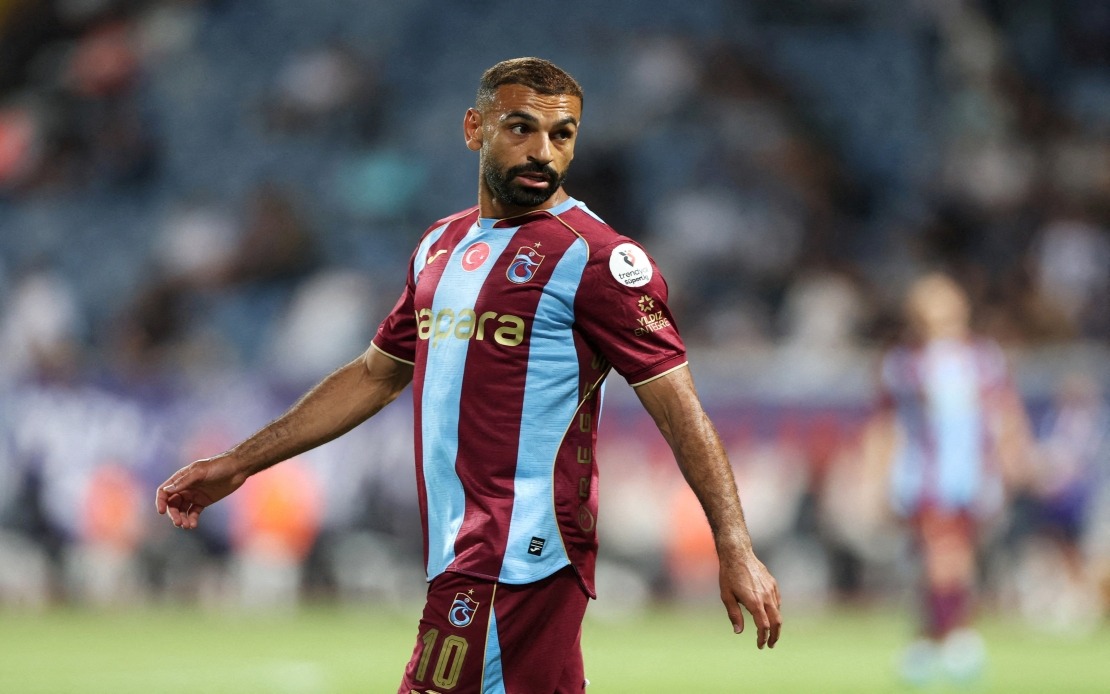
The arrival of Mohamed Salah at Turkish football club Trabzonspor has generated unexpected ripples throughout Cairo's commercial landscape, with the Egyptian international's No. 10 jersey now adorning shop windows across the Khan el-Khalili bazaar barely a fortnight after his transfer. The phenomenon demonstrates how a single athlete's career move can translate into tangible economic activity and cultural exchange in unexpected places, transforming a sporting transaction into a broader narrative about national pride and cross-border connection.
Sports retailers operating throughout the historic marketplace have wasted little time capitalising on the excitement surrounding Salah's Turkish venture. His Trabzonspor shirt, distinguished by its characteristic claret-and-blue colouring, sits prominently alongside traditional Egypt national team merchandise in numerous shop windows. This juxtaposition itself tells a story—one in which Egyptian identity and emerging international connections coexist rather than compete. Shopkeepers report that the jersey is moving steadily at prices ranging from 400 to 500 Egyptian pounds, equivalent to roughly US$8-10, placing it within reach of ordinary supporters while generating meaningful margins for vendors in a historically significant tourism destination.
The Khan el-Khalili bazaar occupies a particularly symbolic position within Cairo's cultural fabric, having recently hosted successive visits from Egyptian President Abdel Fattah el-Sisi and French President Emmanuel Macron. This prominence amplifies the significance of Salah merchandise appearing there, suggesting that his transfer has captured the attention of commercial operators and consumers alike at multiple social levels. Retail operators like Salah Abdulmecid have explicitly articulated their enthusiasm for the move, framing it not merely as a business opportunity but as a positive development for Egypt's international standing.
Among the most revealing aspects of this phenomenon is the reasoning offered by local traders themselves. Their support for Salah's transfer to Turkey reflects perceived cultural and religious commonalities between Egyptian and Turkish societies—a perspective that extends well beyond conventional football fandom. Abdulmecid's statement that Turks and Egyptians share traditions and religious commitment provides insight into how ordinary Egyptians conceptualise their relationship with Turkey and why they view their football icon's relocation there as appropriate rather than disappointing. This emotional framework transforms what might otherwise be read as loss into an expression of international solidarity.
Casual observers and enthusiastic supporters moving through the bazaar have articulated their own perspectives with remarkable consistency. One Trabzonspor jersey purchaser explicitly positioned the acquisition as an expression of both personal happiness and spiritual aspiration, donning the garment outside a shop and invoking divine blessing for Salah's prospects in Turkey. Such spontaneous expressions reveal the depth of public investment in Salah's career trajectory and the manner in which his achievements have become woven into the fabric of Egyptian collective identity and hope.
Egyptian sociologist Said Sadik has articulated an interpretation of these developments that extends considerably beyond the commercial sphere, positioning Salah as a vector of "soft power" connecting Egypt and Turkey through shared cultural enthusiasm. According to Sadik's analysis, the footballer has become an instrument through which ordinary citizens of both nations can express appreciation and solidarity, functioning as a bridge across geographic and political distance. This conceptualisation reflects a growing recognition among observers that contemporary sport operates as a significant diplomatic tool, capable of facilitating genuine human connection where formal government relations might prove more constrained or formulaic.
Sadik points to concrete evidence of state-level engagement with this dynamic, recalling that Salah's name featured during a public appearance involving Turkish Foreign Minister Hakan Fidan and Egyptian Foreign Minister Badr Abdelatty on August 14. The inclusion of a footballer's career development within high-level diplomatic discourse indicates that government officials themselves recognise the resonance Salah commands and the potential utility of leveraging popular enthusiasm for football in advancing bilateral relations. This integration of sports into formal diplomacy reflects a sophisticated understanding of how public sentiment shapes international relations.
The sociologist emphasised that Salah's appeal transcends typical sports fandom boundaries within Egypt. His following extends to individuals who do not regularly engage with football as spectators, yet nonetheless maintain active interest in his professional progress. This unusually broad constituency means that jersey sales and bazaar display represent only the visible tip of much more extensive engagement with his career developments. The enthusiasm generated by his Trabzonspor transfer thus reflects and reinforces a particular form of national cohesion centred on the achievements of internationally recognised figures.
For Malaysian and Southeast Asian observers, these developments carry several relevant implications. The phenomenon demonstrates how individual athletes can crystallise national identity and facilitate international connection through sport, a dynamic that Southeast Asian nations have themselves cultivated with varying degrees of success. The transformation of a commercial transaction into a vehicle for diplomatic engagement reflects broader patterns whereby sporting achievement generates soft power advantages that extend far beyond athletic competition. Additionally, the commercial enthusiasm witnessed in Cairo's markets suggests that sports merchandising remains a potent driver of economic activity in developing market contexts, where global supply chains and local retail networks intersect.
The reception Salah has reportedly received in Turkey has itself become culturally significant, with footage circulating widely through Egyptian and Arab social media platforms. This digital amplification means that the enthusiasm generated within Turkish stadiums directly reinforces enthusiasm back in Egypt, creating a virtuous cycle of mutual appreciation and national pride. The cyclical reinforcement of positive sentiment across borders through modern communication channels represents a distinctly contemporary form of international relation-building, where traditional diplomatic channels operate in parallel with grassroots enthusiasm mediated through digital platforms.
Traditional business models within markets like Khan el-Khalili face ongoing pressure from modern retail formats and e-commerce platforms, yet the Salah phenomenon demonstrates the continued relevance of physical marketplaces as venues for capturing timely consumer sentiment. The bazaar's historic status and tourist prominence create natural advantages for retailers seeking to capitalise on trending products with cultural resonance. For shopkeepers, Salah's transfer represents an opportunity to diversify revenue streams and engage with broader narratives about Egypt's international positioning, extending their commercial significance beyond mere merchandise transactions.
Looking forward, the durability of Salah's appeal will likely depend on his competitive performance within the Turkish Super Lig. Extended success at Trabzonspor would sustain and potentially amplify the current enthusiasm, while difficulties on the pitch would inevitably diminish it. Nevertheless, the current moment captures something significant about contemporary sporting culture—the manner in which individual achievement generates commercial ecosystems, diplomatic resonance, and collective identity simultaneously. For policymakers and cultural observers across Southeast Asia, the Salah phenomenon offers instructive lessons about leveraging athletic excellence as a platform for broader national objectives.

