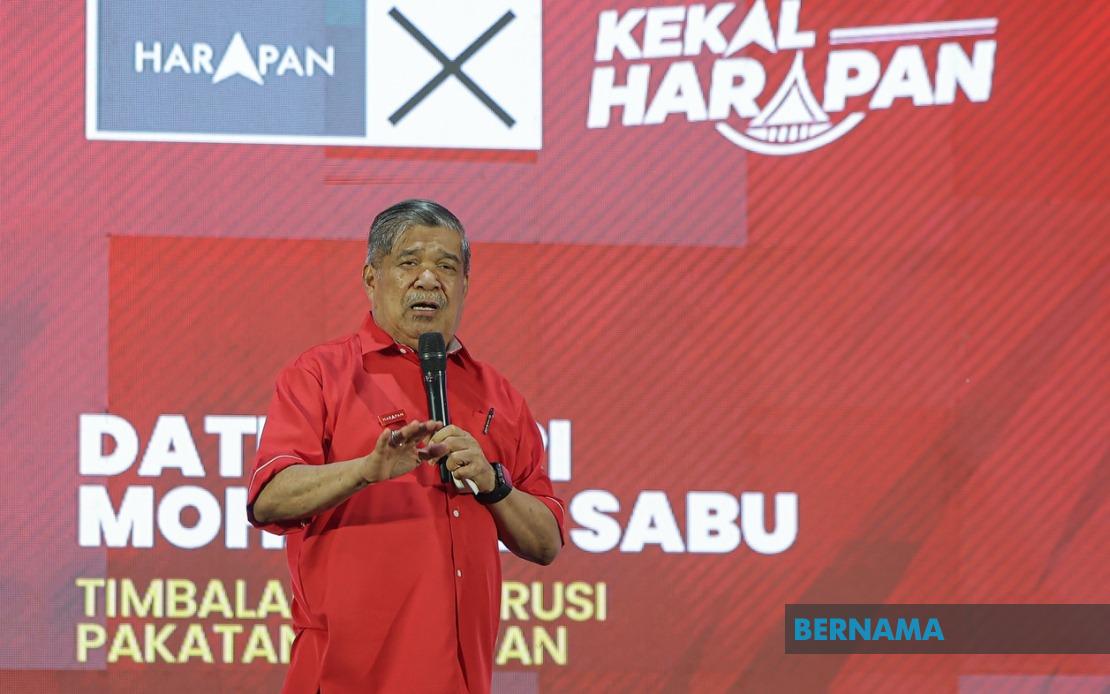
Amanah president Datuk Seri Mohamad Sabu has issued a sharp rebuke to what he characterises as opportunistic political manoeuvring in Malaysia, calling on voters in Negeri Sembilan to firmly reject the pattern of constant alliance-shifting that he argues has become a hallmark of certain parties' pursuit of power. Speaking in Seremban on July 22, Mohamad Sabu framed the problem not merely as a matter of political tactics but as a fundamental threat to the country's democratic health and institutional stability.
The terminology Mohamad Sabu employed—'marriage-divorce' politics—serves as a pointed metaphor for what observers recognise as the revolving-door approach to political partnerships that has characterised Malaysian politics in recent years. This practice, whereby parties abandon alliances when expedient and forge new ones based purely on the prospect of gaining or retaining ministerial positions, represents a departure from ideological consistency or shared policy platforms. Instead, it privileges short-term advantage over long-term commitment, a dynamic that Mohamad Sabu contends corrodes public trust in the political system itself.
Mohamad Sabu's concern reflects genuine anxiety within reform-minded political circles about the implications of serial coalition-building divorced from principle. When political parties treat partnerships as transactional arrangements to be dissolved at will, voters face chronic uncertainty about which individuals and factions actually hold power, and on what basis. This instability cascades through governance structures, making coherent policymaking difficult and rendering election outcomes less meaningful as guides to future government composition.
The specific history Mohamad Sabu invoked illuminates the scale of the problem in contemporary Malaysian politics. He traced a particular party's journey through multiple matrimonial metaphors: first alliance with Barisan Nasional, followed by defection to Pakatan Rakyat, then returning to UMNO-BN barely a year later, subsequently joining Bersatu, only to break away again, and now attempting to re-engage with Barisan Nasional. This sequence, compressed into merely a few years, demonstrates how the political landscape has become characterised by rapid reconfiguration at the elite level, often without coherent explanation to the electorate or principled justification rooted in policy disagreement.
The Malaysian context makes Mohamad Sabu's intervention particularly significant. The country has experienced multiple cycles of government transitions since 2018, each accompanied by dramatic shifts in coalition membership and realignments involving high-profile defections. These developments have generated public cynicism about whether elections genuinely determine governance outcomes or merely provide theatrical occasions between periods of backroom negotiation. The frequency and scale of party-switching at the national level has arguably normalised political instability in ways that undermine democratic norms.
Mohamad Sabu's framing also carries implications for how Malaysian voters should evaluate political promises and campaign platforms. If parties are prepared to abandon previous alliances and reverse stated positions based on calculations about power acquisition, what confidence can electors place in commitments made during campaigns? The suggestion implicit in Mohamad Sabu's remarks is that voters must look beyond slogans and manifestos to assess the underlying stability and ideological coherence of parties seeking their support.
The Amanah president's call for voters to remain vigilant and to impose electoral consequences for what he terms unprincipled alliance-shifting represents an appeal to democratic accountability. He argues, in essence, that the voting public possesses the power to arrest the cycle of opportunistic coalition-building by systematically rejecting parties that engage in it. This framing places responsibility squarely on electoral behaviour, suggesting that voter choices, exercised thoughtfully and with long-term consequences in view, can reshape political incentive structures.
Negeri Sembilan, as the specific venue for Mohamad Sabu's remarks, holds particular relevance given its status as a competitive political battleground where state-level elections have reflected broader national trends. The state has experienced its own share of coalition realignments and shifting power dynamics, making it a microcosm of the national political fragmentation Mohamad Sabu critiques. His intervention suggests that Amanah views the state as a critical arena where principled political practice must be defended.
The implicit contrast Mohamad Sabu draws is between parties that treat politics as a stable commitment to constituencies, policy agendas, and coalition partners, versus those that view it as a fluid competition for ministerial portfolios. He positions Amanah, and parties like it, as representatives of the former approach—more stable, more principled, and more deserving of voter support precisely because they refuse to engage in the serial partnership abandonment that characterises their competitors.
Mohamad Sabu's warning also resonates with broader concerns about democratic quality in Southeast Asia, where coalition instability and personality-driven politics have sometimes overshadowed institutional development and programmatic differentiation between parties. Malaysia's experience with rapid coalition reconfiguration provides both a cautionary tale and a test case for whether electoral systems and voter behaviour can impose discipline on political elites and restore coherence to party competition.
Looking forward, Mohamad Sabu's intervention positions Amanah as an advocate for more stable, predictable political competition grounded in ideological consistency rather than opportunistic manoeuvring. Whether voters in Negeri Sembilan and beyond respond to this appeal by factoring party stability and principled alliance behaviour into their electoral calculations will significantly influence the trajectory of Malaysian politics and the sustainability of coalition arrangements at both state and federal levels.

