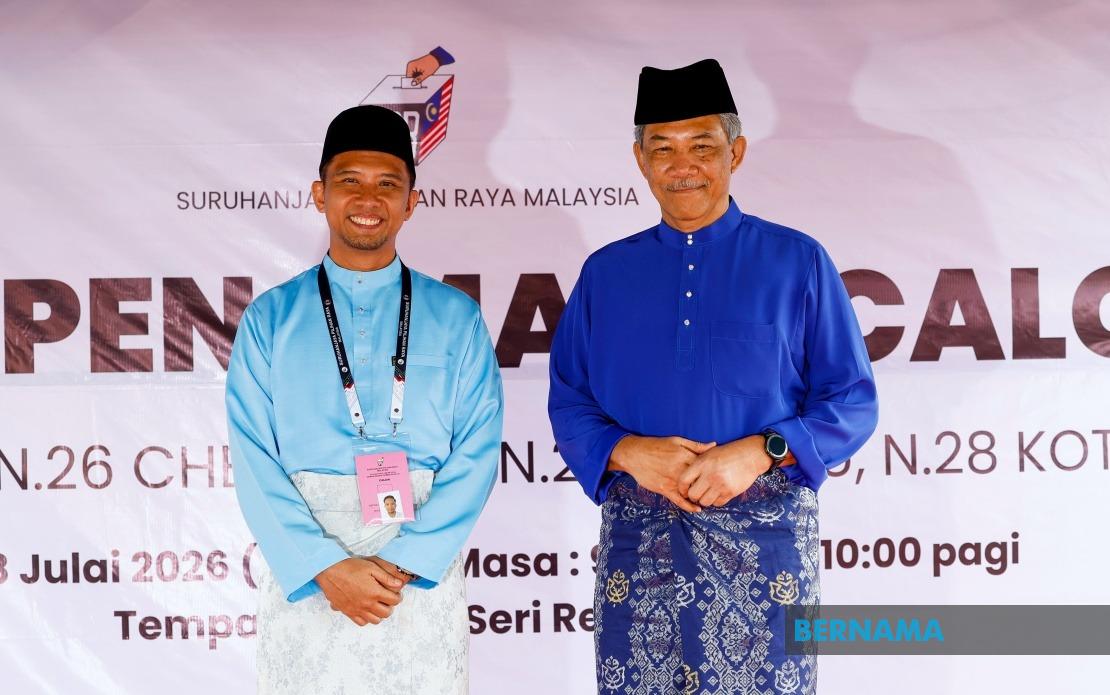
The Rantau state seat in Negeri Sembilan will be contested directly between two candidates with contrasting political pedigrees and professional backgrounds when voters go to the polls on August 1. Barisan Nasional chairman and Foreign Minister Datuk Seri Mohamad Hasan, who also serves as UMNO deputy president, will defend his long-held constituency against newcomer Dr Azizul Hakim Mahdi, the Pakatan Harapan candidate. The returning officer confirmed the two-way contest after the nomination process concluded on July 18 at Dewan Sri Rembau, signalling a concentrated battle between the two coalitions in this key state assembly division.
Mohamad's tenure in Rantau extends back two decades, having first secured the seat in 2004 and building substantial organizational strength during that period. In the 2023 state election, he dominated with 16,957 votes, overcoming his previous opponent Rozmal Malakan by an emphatic margin of 10,280 votes. This comfortable victory demonstrates the incumbent's established base of support within the constituency, though political dynamics can shift rapidly, particularly when facing a fresh, locally-embedded alternative. The straight fight configuration eliminates the possibility of a three-way split that might complicate vote distribution, presenting voters with a clear binary choice between continuity and change.
Dr Azizul Hakim's candidacy represents a generational and professional shift for the opposition in Rantau. At just 35 years old, the medical practitioner brings a decade of healthcare experience and maintains direct community ties through three private clinics located in Senawang, Puncak Alam, and Melaka. His campaign messaging centres on healthcare accessibility and addressing grassroots concerns, positioning himself as a professional outsider who understands resident needs through his medical practice rather than political machinery. This approach appeals particularly to voters seeking alternatives to established political figures, though whether such positioning can overcome institutional advantages remains uncertain.
Mohamad's campaign strategy, as articulated following nomination day, emphasizes systematic explanation of Barisan Nasional's policy platform to constituencies throughout the campaign period. His statement underscores the coalition's intention to move beyond broad messaging and engage voters directly on specific initiatives, recognizing that incumbents must actively justify their tenure rather than assume voter loyalty. The BN machinery in Negeri Sembilan has been mobilizing extensively, and the foreign minister's visibility both nationally and regionally potentially bolsters his profile, though high-profile positions sometimes prove double-edged if national policies generate dissatisfaction at the state level.
The broader context of Negeri Sembilan's 36-seat legislature shapes the significance of the Rantau contest. The state assembly was dissolved on June 5, triggering the full electoral cycle with early voting set for July 28 and general polling on August 1. Approximately 889,490 registered voters across the state will participate, including regular voters, military personnel and their families, and police early voters, each constituency therefore representing meaningful portions of the overall electoral mathematics. Political control of the state assembly carries implications for state administration, infrastructure allocation, and policy direction across sectors including health, education, and local development.
Rantau's electorate composition and demographic characteristics merit examination when assessing the contestants' respective strengths. The constituency combines urban, semi-urban, and rural elements typical of central Peninsular Malaysian constituencies, creating diverse voter priorities ranging from healthcare and education in populated areas to agricultural concerns and connectivity in less densely settled zones. Dr Azizul Hakim's healthcare focus speaks directly to urban and semi-urban voters, while Mohamad's two-decade tenure suggests deep networks across all demographic segments accumulated through traditional grassroots politics. The question becomes whether new professional credibility or established political infrastructure proves more persuasive to voters evaluating their preferences.
Pakatan Harapan's overall strategy in Negeri Sembilan involves competing across multiple constituencies simultaneously, creating resource allocation decisions for the coalition. Beyond Rantau, PH faces contests in Paroi, Chembong, and Kota among other seats, each requiring candidate quality, volunteer mobilization, and financial investment. The straight fight in Rantau concentrates opposition resources effectively, potentially allowing deeper penetration in this single constituency compared to scenarios involving three-way contests that fragment voter appeal. Conversely, BN's broader organizational reach and incumbent strength across multiple seats provides advantages in sustaining campaigns across numerous fronts simultaneously.
Regional political dynamics in Southeast Asia influence Malaysian state elections increasingly, as voters consider not only local governance questions but also implications for national trajectory and international positioning. Mohamad Hasan's role as Foreign Minister means his political fate carries potential ripple effects for Malaysia's regional diplomacy and ASEAN engagement, factors that may resonate with educated, internationally-minded voters in constituencies like Rantau. Meanwhile, opposition candidates emphasize localized service delivery and professional competence, messaging that frequently gains traction when national political leadership faces scrutiny. The Rantau contest thus reflects broader ideological tensions between institutional continuity and reform narratives present throughout Malaysian politics.
The nomination process completion marks transition from administrative election preparation to active campaigning, a phase requiring candidates to articulate compelling reasons for voter preference within limited timeframes. Media coverage, social media engagement, ground mobilization, and direct voter contact become intensive throughout the campaign fortnight leading to August 1 polling. Both Mohamad and Dr Azizul Hakim face obligations to clarify specific policies addressing Rantau residents' concerns while also connecting local issues to broader state and national agendas. The manner each candidate executes these communications efforts substantially influences how voters weigh alternatives.
Historical patterns in Malaysian state elections suggest that defending incumbents typically retain advantages despite opposition campaigns, yet recent elections have produced surprising results when opposition candidates successfully mobilize younger voters or anti-incumbency sentiment. Mohamad's two-decade tenure could appear as entrenched establishment to reform-minded voters, or alternatively as reliable stewardship to those valuing continuity and institutional knowledge. Dr Azizul Hakim must overcome name recognition and organizational deficits while capitalizing on his fresh professional credentials and younger generational identity. The Rantau contest thus encapsulates broader tensions defining Malaysian electoral politics in 2024, with implications extending beyond the single constituency to shape Negeri Sembilan's political direction and potentially influence national coalition dynamics.

