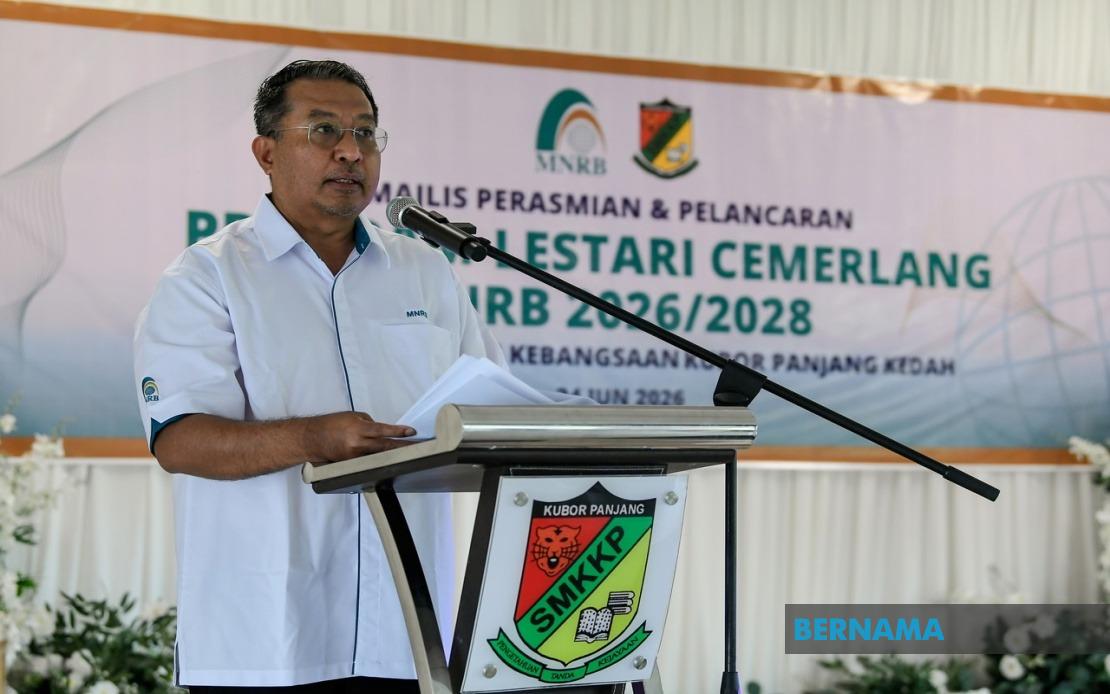
MNRB Holdings Berhad, an investment holding company with significant presence in Malaysia's financial sector, has committed nearly RM600,000 to educational development across six schools nationwide through its flagship Lestari Cemerlang Programme. The initiative was formally launched at Sekolah Menengah Kebangsaan Kubor Panjang in Pendang, Kedah, marking the programme's expansion into its sixth location following previous deployments in Perak, Pahang, Negeri Sembilan, Melaka and Selangor.
Datuk Rudy Rodzila Che Lamin, interim president and group chief executive officer of MNRB, outlined the company's long-term commitment to educational transformation, noting that the adopted school programme originated in 2011 as part of its corporate social responsibility strategy. The initiative represents a deliberate corporate shift towards addressing educational inequities, particularly in regions where schools lack sufficient resources for comprehensive student development. Rather than concentrating efforts in urban centres, MNRB has strategically selected institutions in less economically developed areas, reflecting a recognition that rural students often face systemic barriers to achieving their full academic and personal potential.
The programme operates on a holistic philosophy that transcends traditional classroom instruction. Educational excellence, according to MNRB's framework, requires simultaneous attention to academic performance, character formation, and institutional advancement. This multifaceted approach acknowledges growing evidence that student success depends on integrated support systems addressing both intellectual capability and broader personal development. By targeting rural areas specifically, MNRB recognises that geographical location frequently determines access to quality educational resources—a disparity that compounds over time and constrains future opportunities for disadvantaged cohorts.
At SMK Kubor Panjang, MNRB has implemented a comprehensive suite of interventions designed to strengthen educational outcomes. Additional tuition classes for Form Five students address critical examination preparation periods when student anxiety peaks and focused academic support generates measurable returns. Motivational camps and student development programmes create non-classroom spaces for peer interaction, leadership cultivation, and personal exploration—elements often unavailable in resource-constrained rural institutions. Physical infrastructure improvements, including upgraded learning facilities, enhance the school environment's quality and signal institutional investment that can positively influence student engagement and staff morale.
Perhaps most significantly for contemporary Malaysian education, MNRB has funded the establishment of a Smart e-Learning Room equipped with interactive television and internet connectivity. This facility addresses digital divides that have become increasingly consequential in post-pandemic education systems. Rural schools frequently lack technological infrastructure that urban counterparts take for granted, creating learning disparities that extend beyond traditional subject matter into digital literacy—capabilities essential for employment in modern economies. By providing smart learning spaces, MNRB acknowledges that twenty-first century educational equity requires technological parity alongside pedagogical quality.
Supplementary initiatives reveal MNRB's understanding that student motivation depends partially on tangible institutional support. Sponsorship of sports jerseys enables students to participate in competitive activities with confidence and dignity, removing financial barriers that quietly exclude disadvantaged youth from extracurricular engagement. A school greening programme integrates environmental consciousness into campus life while creating opportunities for collaborative community improvement. These seemingly peripheral initiatives accumulate into cultural shifts that communicate organisational respect for students and schools, potentially strengthening intrinsic motivation and institutional pride.
Beyond school-level interventions, MNRB operates a parallel scholarship initiative recognising that academic excellence alone cannot guarantee educational continuation without financial support. The Tabung Biasiswa MNRB programme targets exceptional students from adopted schools pursuing higher education in sectors aligned with MNRB's business interests—insurance, takaful, and finance. Five top-performing students from SMK Kubor Panjang have been selected as inaugural scholarship recipients, with institutional support extending across diploma, bachelor's and master's degree levels. This longitudinal approach recognises that educational equity requires sustained financial commitment extending beyond secondary education into tertiary pathways where Malaysian youth from disadvantaged backgrounds frequently abandon studies due to cost constraints.
Data from previous scholarship cohorts indicates tangible career outcomes justifying continued investment. Among fourteen students sponsored under Tabung Biasiswa MNRB from earlier adopted schools, eight have secured employment with MNRB Group upon graduation—a 57 per cent placement rate demonstrating both programme effectiveness and corporate commitment to creating employment pathways for scholarship recipients. This outcomes-based approach to corporate education spending represents a departure from philanthropy towards strategic workforce development, where corporate investment in student excellence directly generates human capital aligned with organisational needs.
The distinction between Lestari Cemerlang and Tabung Biasiswa programmes reflects sophisticated understanding of different intervention points across educational trajectories. While Lestari Cemerlang operates at the systemic school level, creating enabling environments for all students within selected institutions, Tabung Biasiswa targets exceptional individuals capable of completing tertiary qualifications in corporate-aligned fields. This layered approach maximises impact across student populations—comprehensive school support benefits entire cohorts while specialised scholarship support accelerates top-tier students into professional pathways.
For Malaysian education policy, MNRB's investment model offers insights into sustainable corporate engagement with public schools. Rather than establishing separate private institutions, MNRB strengthens existing government schools serving rural communities—an approach that acknowledges the public education system's essential role while addressing its resource limitations through strategic corporate partnership. The geographic distribution across Peninsular Malaysia's states suggests intentional coordination with educational authorities, reducing duplication and targeting schools identified by state education departments as requiring developmental support.
The launch ceremony at Sekolah Menengah Kebangsaan Kubor Panjang, officiated by Kedah State Education Department deputy director Ishak Awang, illustrates alignment between corporate initiatives and government educational priorities. Such institutional coordination strengthens programme credibility and ensures investments address officially identified needs rather than pursuing corporate preferences disconnected from systemic requirements. For rural school communities in particular, corporate support channelled through government educational structures provides legitimacy and sustainability that independent charitable initiatives may lack.
Looking beyond immediate beneficiaries, MNRB's sustained commitment since 2011 suggests corporate recognition that educational transformation requires patient capital and longitudinal perspective. Developing student excellence, strengthening institutional capacity, and creating career pathways operate on extended timelines where results manifest across years rather than quarters. As Malaysian education confronts challenges including rural-urban disparities, digital transformation, skills alignment with employer requirements, and student motivation, corporate investments functioning as complementary public education mechanisms offer models for resource mobilisation. MNRB's Lestari Cemerlang Programme demonstrates that substantial educational improvement remains achievable when corporate institutions commit sustained financial resources, institutional expertise, and strategic patience to supporting rural schools and students pursuing excellence.