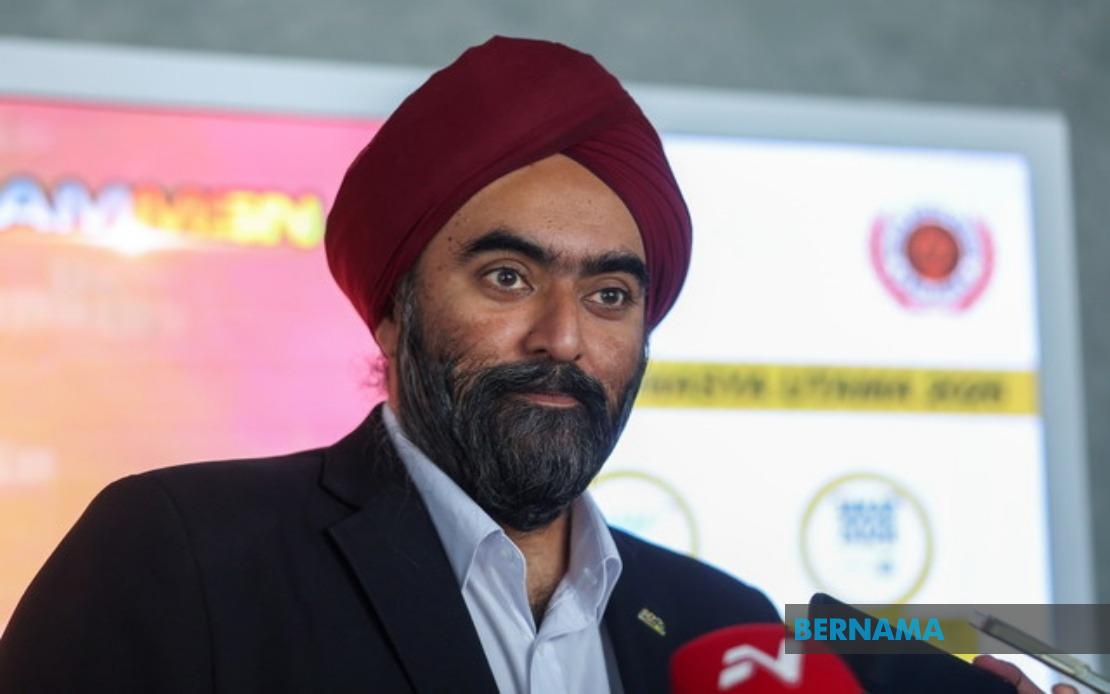
The Malaysian National Cycling Federation has moved to defuse tensions with Yayasan Sime Darby by demanding urgent high-level talks aimed at resolving the controversy that forced the postponement of the YSD Track Cycling and BMX Series 2026. Federation president Datuk Amarjit Singh Gill indicated that face-to-face negotiations between senior officials from both organisations are essential to breaking the impasse and securing the future of a crucial talent development platform for Malaysian cycling.
Datuk Amarjit's call for immediate engagement came during the launch ceremony for Le Tour de Langkawi 2026 in Putrajaya, signalling the federation's determination to move beyond what he characterised as a manageable dispute. The timing of his remarks underscores cycling's prominent position within Malaysia's sporting calendar and the significant stakes involved in maintaining the sponsorship arrangement. The YSD series has become increasingly important in identifying and nurturing emerging riders for international competition, making its disruption a matter of national concern.
Yayasan Sime Darby has attributed the postponement to technical issues involving the federation's management and operations, though specifics remain unclear. Rather than contest this characterisation publicly, Datuk Amarjit adopted a measured tone, indicating willingness to accept the foundation's framing while simultaneously contending that the underlying difficulties are neither intractable nor beyond resolution through constructive dialogue. This diplomatic approach reflects an awareness that escalating rhetorical tensions would likely entrench both parties and further damage the partnership.
The MNCF president stressed that the dispute fundamentally concerns the quality of the relationship between two institutional partners, rather than substantive disagreements about cycling development or the series' direction. He emphasised that strategic partnerships between sports federations and corporate foundations depend on a foundation of mutual respect and recognition of each organisation's distinct roles and contributions. This framing positions the conflict as one of governance and institutional relations rather than competitive sport, potentially making it more amenable to negotiated settlement.
Datuk Amarjit explicitly acknowledged Yayasan Sime Darby's substantial role in advancing Malaysian cycling through sponsorship and resource provision, indicating that the federation views the foundation as a valued partner rather than an adversary. This recognition serves multiple purposes: it demonstrates good faith, softens potential criticism that the MNCF is being obstructive, and creates space for YSD to reciprocate by engaging constructively in talks. The careful language suggests both organisations remain invested in preserving their relationship despite current disagreements.
The federation has signalled its availability for negotiations at any time convenient to Yayasan Sime Darby, removing scheduling as a barrier to progress. This flexibility indicates the MNCF considers resolution sufficiently urgent to accommodate the foundation's preferences rather than insist on a specific timeline or venue. For Malaysian cycling stakeholders—riders, coaches, and fans—such flexibility may accelerate a return to normal competition programming.
At stake is more than a single racing series. The YSD Track Cycling and BMX Series functions as a critical pipeline for developing Malaysian talent capable of competing at regional and international levels. Prolonged postponement threatens to disrupt athlete preparation schedules, discourage sponsors and investors monitoring the sport's stability, and potentially push talented cyclists toward competing for other nations. The reputational damage to both organisations could extend beyond cycling into corporate-sport relations more broadly across Malaysia's sporting ecosystem.
The backdrop of Le Tour de Langkawi 2026 preparations adds context to the timing of these negotiations. Malaysia's premier professional cycling event serves as a showcase for the nation's cycling credentials and provides a platform for domestic riders to gain international exposure. A functional domestic development system—including the YSD series—strengthens the overall competitive environment and generates talent capable of competing in prestigious overseas competitions. The postponement thus affects not only immediate programming but Malaysia's medium-term cycling trajectory.
Datuk Amarjit's intervention reflects broader trends in Malaysian sports governance, where federation leaders increasingly engage in public diplomacy rather than confrontational dispute resolution. His messaging prioritises institutional harmony and collaborative problem-solving over blame assignment or detailed public disclosure of disagreements. This approach acknowledges that sustainable sports development depends on stable institutional relationships and corporate goodwill, both of which can be damaged by acrimonious public disputes.
The MNCF's position suggests the federation believes the obstacles to resuming the series are essentially technical and administrative rather than principled or financial. If that assessment is accurate, structured dialogue at executive level—as Datuk Amarjit requested—should identify specific changes to MNCF operations or governance that would satisfy YSD's concerns while preserving the federation's institutional independence. Whether Yayasan Sime Darby will engage at the intensity and speed the MNCF envisions remains to be seen, but the federation has clearly set the tone for pursuing rapid, respectful resolution.

