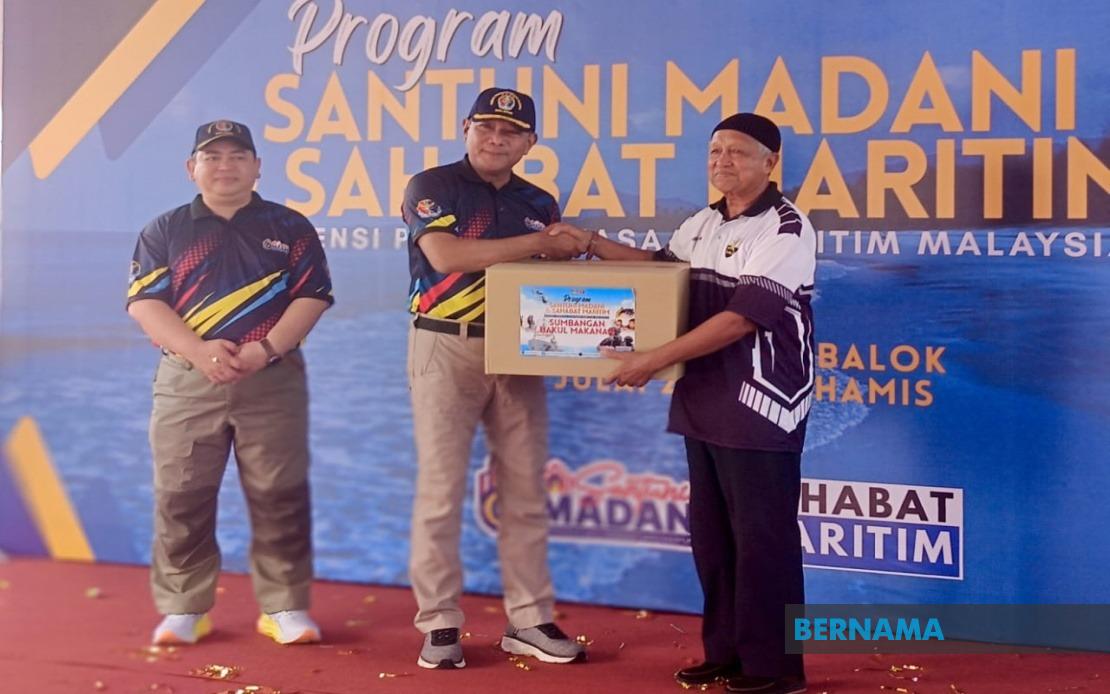
The Malaysian Maritime Enforcement Agency has strengthened its grip on illicit maritime activity, announcing RM2.29 billion in total seizures and 516 arrests during the opening six months of 2024. Maritime Admiral Datuk Mohd Rosli Abdullah, the agency's director-general, revealed the enforcement metrics at a public engagement event in Kuantan, signalling the MMEA's escalating effectiveness in territorial waters management and sovereignty protection across Malaysia's vast maritime domain.
The seizure composition tells a revealing story about the primary threats facing Malaysian waters. Confiscated local vessels dominate the figures at RM2.11 billion, representing the most substantial portion of the agency's interdiction efforts. This concentration reflects the ongoing problem of vessel trafficking and unauthorised maritime activities. Beyond vessel seizures, the MMEA captured drugs valued at RM86.06 million, underlining the persistent challenge of narcotics smuggling through maritime routes—a critical concern for the region given Southeast Asia's position within major drug trafficking networks. Foreign fishing vessels worth RM66 million were also impounded, addressing the recurring issue of illegal fishing incursions into Malaysian territorial waters that threaten both marine resources and maritime sovereignty.
Smuggling operations targeting controlled and subsidised commodities represent another significant enforcement category. Cigarette seizures totalling RM25.16 million demonstrate the economic incentive driving illicit trade, with cigarettes representing a high-value, low-volume smuggling commodity attractive to criminal syndicates. The agency additionally intercepted RM5.2 million in smuggled prawns and RM3.33 million in diesel fuel, revealing the breadth of contraband flowing through maritime corridors and the diverse revenue streams supporting organised maritime crime in the region.
Admiral Mohd Rosli emphasised that these enforcement successes reflect the MMEA's sustained commitment to protecting Malaysia's maritime interests and sovereignty. The agency's dual mandate encompasses not only suppressing traditional maritime crime but also preventing the unauthorised export of subsidised goods that drain national resources. The smuggling of controlled commodities, particularly fuel and food products sold at subsidised rates, represents a significant fiscal drain on the government and undermines domestic market stability. By intensifying border enforcement, the MMEA aims to disrupt the economics of smuggling networks that profit from price differentials between Malaysian and neighbouring markets.
Integrated maritime operations demonstrate the evolution of enforcement strategy across Southeast Asia's enforcement landscape. The MMEA's involvement in Operation Tiris, a coordinated effort with other government agencies, exemplifies this multi-institutional approach to maritime security challenges that transcend individual agency capabilities. Admiral Mohd Rosli highlighted a prominent success from June 2024, when MMEA operations in Tawau, Sabah, intercepted a major cigarette smuggling operation involving a vessel and contraband valued collectively at RM64 million. This single seizure represents the scale of some individual smuggling enterprises and underscores the necessity for sustained, sophisticated enforcement across Malaysia's extensive coastline and territorial waters.
The Santuni MADANI and Sahabat Maritim programmes alongside which these figures were released represent a softer enforcement approach that complements traditional interdiction. Rather than relying exclusively on law enforcement, the MMEA recognises that coastal community engagement, maritime safety awareness, and cooperative relationships with fishing communities and local stakeholders create conditions for voluntary compliance and community-based intelligence gathering. This dual strategy—combining enforcement with community partnership—reflects international best practices in maritime governance and addresses the reality that sustainable maritime security depends partly on civilian cooperation and understanding of maritime regulations.
Search and rescue operations and maritime crime prevention constitute the broader operational framework within which seizure operations occur. The MMEA's responsibilities extend beyond enforcement to encompassing humanitarian maritime rescue, environmental protection, and the maintenance of safe shipping lanes. This multifaceted mandate demands sophisticated coordination, advanced surveillance capabilities, and substantial personnel deployment across Malaysia's expansive maritime zone, which encompasses significant portions of the South China Sea, the Sulu and Celebes Seas, and waters around Peninsular Malaysia and East Malaysia.
The regional context for these enforcement results reflects the complex maritime security environment characterising Southeast Asia. Malaysia's position as a major shipping hub, combined with its extensive coastline and maritime boundaries with Thailand, Indonesia, Brunei, and the Philippines, creates natural vulnerability to transnational maritime crime. Smuggling networks exploit maritime routes where enforcement capacity remains thin, and the economic incentives driving contraband trade—particularly drugs, cigarettes, and controlled fuel—remain substantial given price differentials and demand in the region. The MMEA's enforcement efforts therefore serve not merely domestic security interests but contribute to regional stability and the suppression of transnational criminal networks operating across maritime Southeast Asia.
Looking forward, the MMEA's declared intention to intensify operational tempo suggests recognition that current enforcement levels, while substantial in absolute terms, remain insufficient to fully suppress illicit maritime activity. The agency's emphasis on enhanced integrated operations indicates a strategic pivot toward coordinated, multi-agency approaches that leverage complementary capabilities of different government institutions. This operational philosophy aligns with emerging international maritime security frameworks emphasising intelligence sharing, coordinated patrols, and capacity building among regional partners to address shared maritime security challenges.
The enforcement results also carry implications for Malaysia's maritime industries and legitimate commerce. By disrupting smuggling networks that undercut legitimate traders through illicit goods movement, the MMEA protects the commercial interests of law-abiding businesses and preserves fair market competition. Additionally, suppressing illegal fishing operations protects marine resource sustainability and the long-term viability of Malaysia's fishing industry, balancing short-term enforcement concerns against broader environmental and economic sustainability objectives.
The announcement reflects the MMEA's operational success within the constraints of its current resources and mandate, yet also implies ongoing struggles against well-organised smuggling enterprises with substantial financial resources. The persistence of high-value seizures despite years of enforcement efforts suggests that criminal networks continue recruiting vessels, coordinating supply chains, and adapting tactics faster than enforcement agencies can eliminate them. Sustained, escalating enforcement investment and technological enhancement therefore represent necessary conditions for meaningful progress toward the maritime security standards the MMEA and the Malaysian government seek to achieve across the nation's waters.

