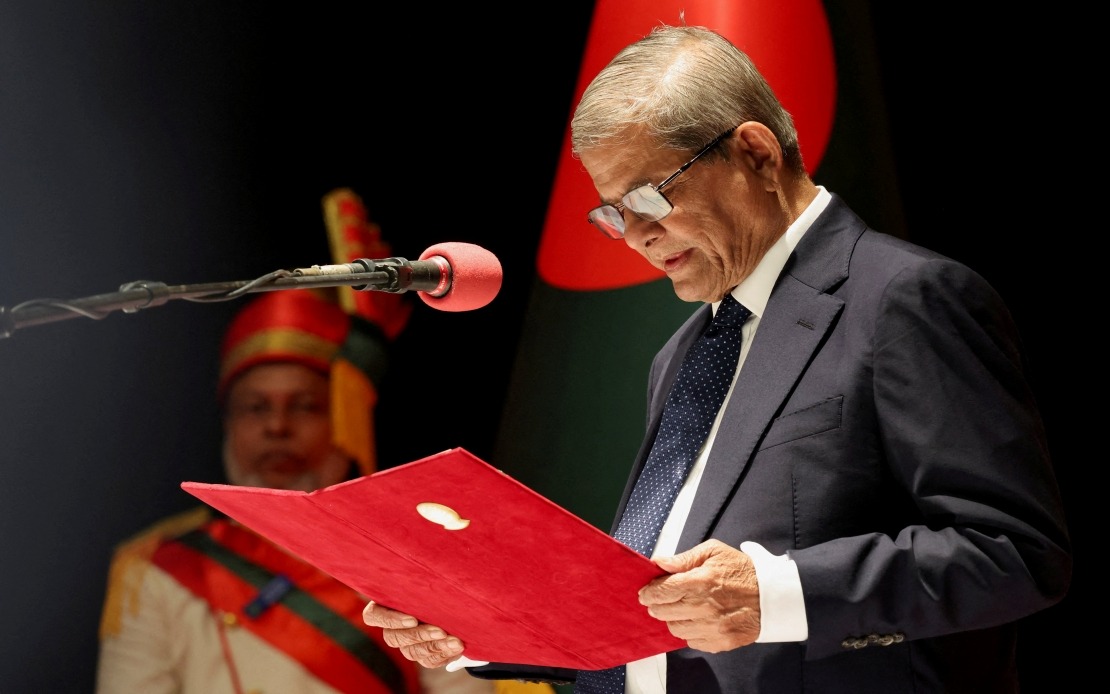
Mirza Fakhrul Islam Alamgir was formally inaugurated as Bangladesh's 23rd President on Friday evening in a solemn ceremony held at the Darbar Hall of Bangabhaban, the nation's official presidential residence. The oath administration took place at 7.30 pm local time, with Acting Speaker Barrister Kayser Kamal presiding over the constitutional proceedings. The swearing-in represents a milestone transition in Bangladesh's political landscape, bringing to the presidency a figure who has spent decades navigating the country's complex and often turbulent political terrain.
Fakhrul arrived at the presidential palace to a formal reception from senior state officials, who greeted him in his new capacity. Acting President Hafiz Uddin Ahmad Bir Bikram then formally received the incoming head of state before the ceremony commenced. The gathering brought together the nation's political and administrative hierarchy, with Prime Minister Tarique Rahman, the Chief Justice, members of the Cabinet, foreign diplomatic representatives, parliamentarians, and senior military and civil service officials present to witness the constitutional moment. The international attendance underscored the significance of the transition and Bangladesh's place within the global community.
The ceremonial aspects of the inauguration followed Bangladesh's constitutional protocols with precise formality. Following the oath administration, the President and the outgoing Acting President exchanged seats in a symbolic gesture denoting the official handover of executive authority. Fakhrul subsequently affixed his signature to both the oath of office and the oath of secrecy, binding him legally and morally to the responsibilities of the presidency. The ceremony concluded with the singing of the national anthem, a traditional capstone to Bangladesh's presidential inaugurations.
Fakhrul's elevation to the presidency reflects his standing as one of Bangladesh's most prominent and enduring political figures. His career trajectory has established him as a significant player in the country's governance structures over multiple decades. Prior to this appointment, he served as secretary-general of the Bangladesh Nationalist Party, the major political organisation often referred to as the BNP, a position that placed him at the centre of one of the nation's two dominant political forces. Parliament elected him to the presidency in accordance with the constitutional procedures governing such appointments, confirming his selection through the formal legislative process.
The timing and context of this presidential transition carry weight for Bangladesh's immediate political future. The presidency in Bangladesh operates within a parliamentary system where the Prime Minister holds executive authority, yet the presidential office remains a crucial constitutional institution commanding significant ceremonial and formal powers. Fakhrul's assumption of the role occurs against the backdrop of Bangladesh's ongoing political dynamics and the administration of Prime Minister Tarique Rahman, suggesting continuity in certain political alignments while potentially signalling shifts in others.
For Southeast Asian observers and Malaysia in particular, Bangladesh's political transitions merit attention given the two nations' longstanding diplomatic and economic relationships. Bangladesh represents a significant economic actor in the region and maintains important trade and people-to-people connections with Malaysia. Changes in Bangladesh's political leadership, particularly at the presidential level, can influence bilateral relations and regional stability. The fact that Fakhrul brings substantial political experience to the presidency may provide a degree of institutional stability beneficial to regional predictability.
Fakhrul's background in the BNP, one of Bangladesh's traditional conservative and nationalist political movements, may shape his approach to various domestic and foreign policy considerations. The BNP has historically maintained distinctive positions on economic development, civil society governance, and Bangladesh's regional role. How Fakhrul interprets and exercises the presidential office—particularly its ceremonial, diplomatic, and constitutional advisory functions—will contribute to the overall tenor of governance during his tenure.
The presidential election process that resulted in Fakhrul's selection reflects the parliamentary democracy framework within which Bangladesh operates. Rather than direct popular election, members of parliament chose the president, a system that emphasises legislative primacy and interparty negotiation. This mechanism ensures that the presidency goes to a figure with significant political acceptance across parliamentary constituencies, though it also concentrates selection power within the political establishment.
The composition of attendees at the inauguration ceremony itself conveyed important signals about political consensus and institutional continuity. The presence of Prime Minister Tarique Rahman, the Chief Justice, and military leadership demonstrated alignment of the major institutional forces within the state. Foreign diplomats' attendance highlighted Bangladesh's position within international diplomatic circles and suggested that the transition was proceeding smoothly from an external relations perspective. Such ceremonial cohesion can contribute to domestic and international confidence in political stability during leadership transitions.
Looking forward, Fakhrul's presidency will be evaluated partly through his stewardship of the ceremonial and diplomatic dimensions of the office, as well as his potential advisory role in constitutional matters. Presidents in parliamentary systems operate with different constraints and opportunities than in presidential systems, requiring skilled navigation of the political landscape. Fakhrul's extensive experience in party politics and electoral campaigns may serve him well in these respects, allowing him to maintain relationships across different constituencies while maintaining the dignity and independence expected of the office.
The broader implications of this presidential transition extend to questions about Bangladesh's institutional development and democratic consolidation. Regular, constitutionally mandated transfers of executive authority represent positive indicators for democratic health. That the 23rd presidency is being assumed through formal parliamentary election, with appropriate ceremonial recognition and international observation, reflects institutional maturation and procedural regularity that contribute to governmental legitimacy.
As Fakhrul settles into his new role, his presidency will likely be characterised by the specific political circumstances of Bangladesh's moment. The nation faces ongoing economic challenges, development imperatives, and regional considerations requiring deft statecraft. The new President's ability to provide institutional leadership while respecting the constitutional boundaries of the office will shape both his personal legacy and Bangladesh's political trajectory during his tenure.

