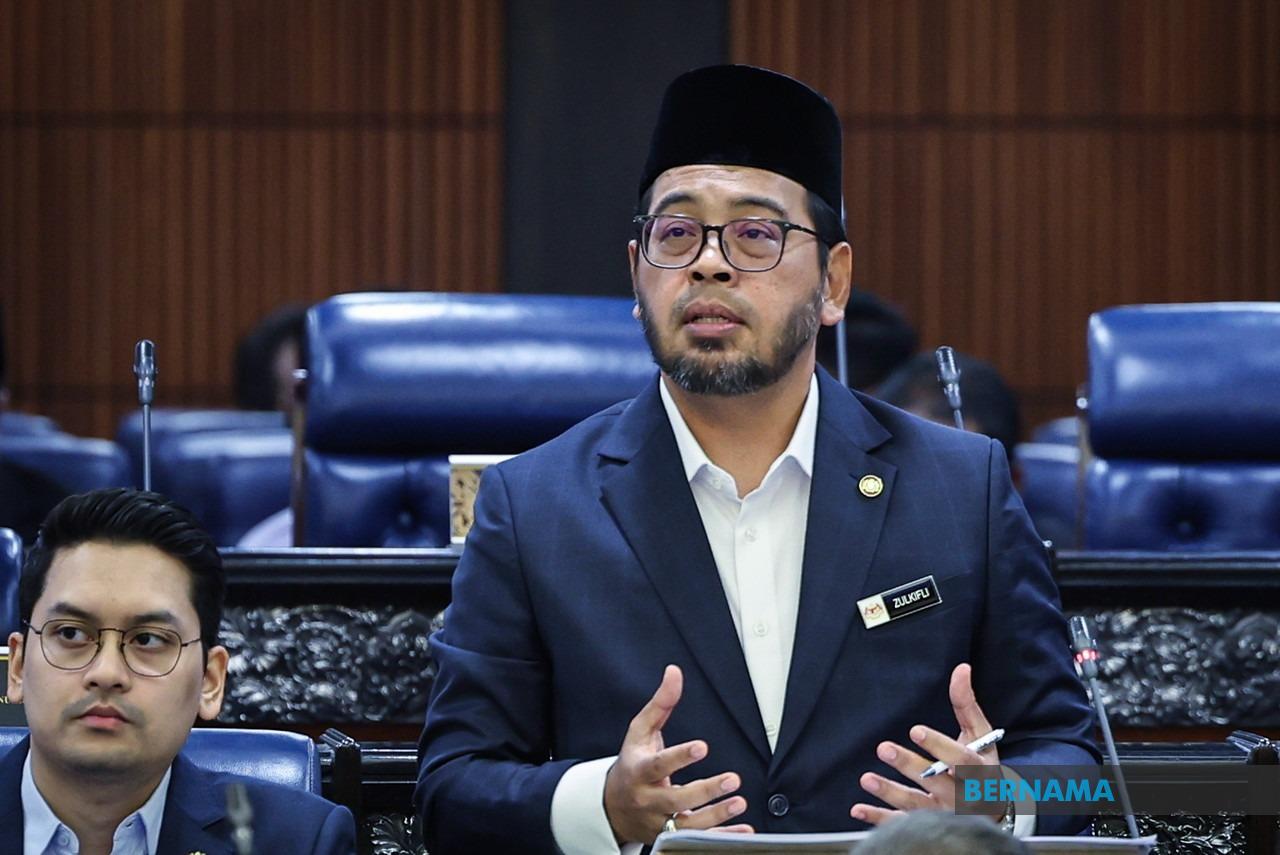
Religious Affairs Minister Dr Zulkifli Hasan has drawn public attention to years of financial manipulation at Tabung Haji by employing an everyday analogy that underscores the gravity of the Islamic pilgrimage fund's misconduct. During parliamentary debate on the Royal Commission of Inquiry report into the institution, Zulkifli used the story of a single mother named Mak Cik Senah to illustrate how TH's leadership created an illusion of profitability whilst the fund's underlying financial health deteriorated dangerously. The minister's plain-spoken explanation demonstrates the growing determination of senior government figures to hold the institution's former management accountable and to communicate the scale of the fraud to ordinary Malaysians whose retirement savings were at stake.
At the heart of Zulkifli's critique lies a fundamental legal violation. Under the Tabung Haji Act, the fund may only distribute profits to depositors when its total assets exceed its total liabilities and other obligations. Yet the RCI investigation uncovered systematic misrepresentation of TH's balance sheet between its inception and 2018, allowing the institution to declare profit distributions that bore no relation to its actual financial performance. The minister explained that TH's managers achieved this deception through what amounted to creative accounting—a scheme that resembles the mechanics of a Ponzi scheme or the infamous Skim Pak Man Telo, a notorious investment scam that defrauded thousands of Malaysians. What made this particularly egregious was that depositors believed they were receiving legitimate returns on legitimate investments, when in reality they were receiving dividends paid from money that did not exist.
The primary mechanism of financial manipulation involved the deliberate inflation of asset values through a process called Realisable Asset Value, or RAV, conducted entirely outside the institution's audited financial statements. This method allowed TH to present inflated figures to the public whilst keeping the true valuations hidden from scrutiny. Of the total assets valued at RM4.6 billion, the RCI found that merely RM556 million had been assessed by professional valuers—less than 12 percent of the claimed portfolio. The remainder of the asset base rested on valuations that lacked independent professional verification, a glaring red flag that should have alerted depositors and regulators to the fund's precarious position. Zulkifli emphasised that this selective professional valuation was undertaken with a singular purpose: to manufacture the appearance of solvency so that TH could justify announcing high profit distributions to a trusting public.
The role of external auditors in enabling this fraud warrants careful examination, and Zulkifli took pains to clarify the responsibilities of the firms involved. PricewaterhouseCoopers, TH's actual auditor, produced a 2018 report that confirmed the financial manipulation and the compliance failures with Malaysian Financial Reporting Standards. Ernst & Young, by contrast, was never TH's auditor and played no role in asset valuation; the firm was merely retained to review pro forma statements that TH itself had prepared. This distinction matters because it underscores that the fraud was not the result of technical accounting disputes, but rather deliberate policy decisions made by TH's leadership to misrepresent the fund's condition. The manipulation extended to changes in impairment policies designed specifically to avoid reflecting the true value losses that had accumulated across the portfolio.
The consequences of this decade-long deception have proven catastrophic for Malaysia's public finances. The government was forced to inject more than RM10 billion into Tabung Haji to prevent the institution's complete collapse, a rescue that became necessary to protect the savings of millions of Muslim Malaysians who had entrusted their money to what was supposed to be a secure, religiously sanctioned savings mechanism. Zulkifli deployed this figure to devastating effect in his parliamentary address, noting that the same RM10 billion could have constructed dozens of hospitals, schools, mosques, and other public facilities urgently needed by Malaysian communities. The opportunity cost of rescuing a failed institution stands as a powerful indictment of the negligence and criminality that characterised TH's management during the pre-2018 period.
The implications for Malaysian governance and regulatory oversight extend well beyond the particulars of Tabung Haji's case. The fund's collapse revealed serious gaps in how government-linked institutions are monitored and how their financial statements are verified. The fact that TH's manipulated accounts went unchallenged for years raises uncomfortable questions about the efficacy of Malaysia's auditing profession and the accountability mechanisms supposed to protect public funds. More broadly, the scandal underscores the vulnerability of ordinary Malaysians who place their savings in institutions backed by implicit government guarantees—depositors reasonably assume that official oversight and religious authority provide adequate protection, yet the Tabung Haji episode demonstrates that such assumptions can be dangerously misplaced.
Zulkifli's intervention signals that the current administration intends to use the RCI findings to pursue accountability and to prevent similar frauds from occurring in future. His decision to explain the fraud in accessible language, using the Mak Cik Senah analogy rather than technical accounting jargon, suggests a determination to ensure that public debate about institutional failure does not remain confined to specialists and parliamentary chambers. By bringing the story down to the level of a single mother managing a household budget, the minister makes clear that TH's managers committed not merely technical violations but betrayals of trust. The depositors who suffered from this fraud were often modest-income Malaysians saving for the pilgrimage to Mecca, one of Islam's fundamental obligations, making the institutional failure particularly acute in moral terms.
The path forward for Tabung Haji remains uncertain, but the RCI report and government commentary make clear that structural reforms will be necessary. Enhanced oversight, mandatory independent valuations of all significant assets, stricter compliance mechanisms, and potentially criminal prosecutions of those responsible for the fraud represent the logical next steps. The government's willingness to spend RM10 billion rescuing the fund suggests political commitment to preserving it as an institution, but that commitment must be matched by unwillingness to tolerate future malfeasance. Malaysian policymakers and regulators must learn from this experience to strengthen the governance frameworks surrounding all government-linked institutions, particularly those managing public savings and handling charitable funds. The stakes are high: public confidence in legitimate institutions depends upon demonstrable accountability when fraud occurs.

