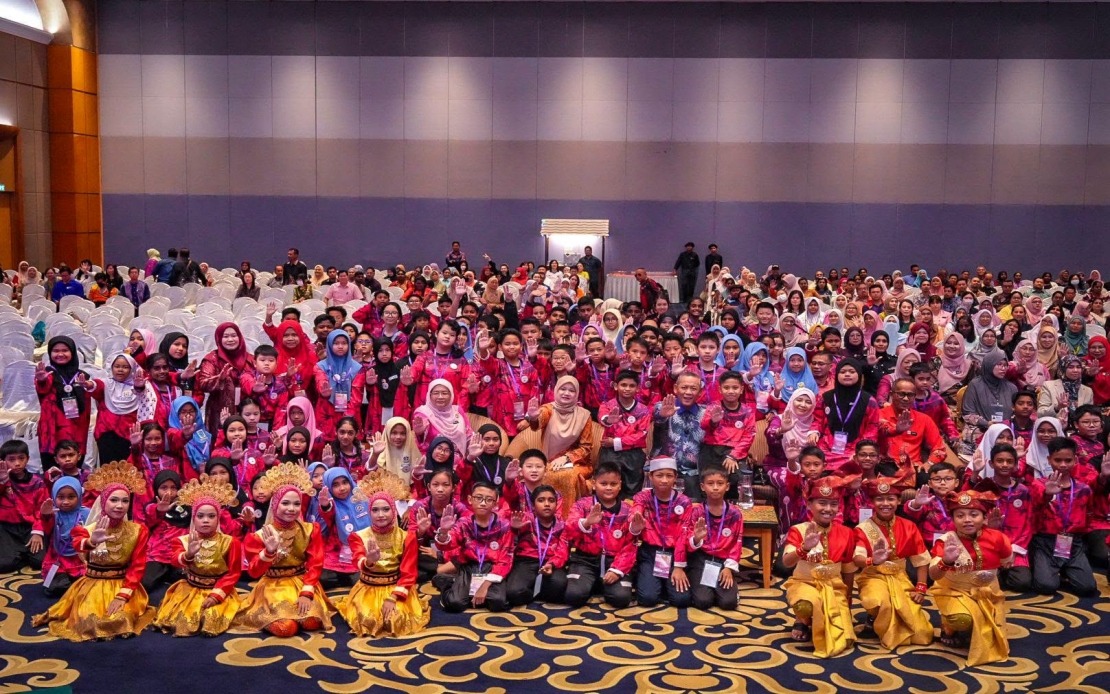
Education Minister Fadhlina Sidek has underscored the necessity of a coordinated, multi-stakeholder strategy to tackle the mounting challenges surrounding school safety, declaring that protecting students demands unwavering commitment from all segments of society. Speaking at the Mutiara Diri Programme, attended also by Negeri Sembilan Menteri Besar Datuk Seri Aminuddin Harun, Fadhlina articulated that creating secure educational environments transcends routine institutional procedures and instead represents a fundamental obligation to the nation's youth.
The escalating complexity of safety concerns within schools has prompted the Ministry of Education to position student protection as a non-negotiable priority. Fadhlina made clear that her ministry maintains a zero-tolerance stance on any circumstances that compromise the physical wellbeing or emotional security of children. This uncompromising position reflects growing public concern over incidents and vulnerabilities that have emerged within Malaysian educational institutions in recent years, prompting heightened scrutiny of systemic safeguards.
Central to the ministry's approach is the restoration and reinforcement of public confidence in the school system. Fadhlina emphasised that Malaysian families must have complete assurance that their children are continuously safeguarded throughout their time in educational facilities. This confidence-building exercise proves particularly important given the psychological dimensions of school safety, which extend beyond physical security infrastructure to encompass emotional stability and psychological wellbeing.
The Education Ministry has established clear directives that all institutions operating under its purview must rigorously implement comprehensive safety guidelines and child protection protocols. These frameworks are designed to function as mandatory operational standards rather than discretionary recommendations. By mandating strict compliance across the entire educational landscape, the ministry seeks to eliminate inconsistencies in safety measures that might otherwise create vulnerabilities in specific regions or institution types.
Mental health support has emerged as an equally critical component of the safety framework. Recognising that psychological challenges frequently underpin behavioural issues within schools, the ministry is directing institutional resources toward identifying and supporting students experiencing emotional distress. This holistic perspective acknowledges that genuine safety encompasses not merely the prevention of physical harm but also the creation of conditions where students' psychological needs are addressed proactively.
The Mutiara Diri Programme represents more than a conventional awareness initiative, according to Fadhlina's characterisation. Rather, it functions as a deliberate advocacy campaign designed to mobilise societal understanding and engagement with student safety challenges. By convening parents, educators, and government officials in a common forum, the programme facilitates dialogue about institutional vulnerabilities and collaborative solutions that transcend departmental silos.
Fadhlina's specific appeal to parents and educators present at the programme highlighted the necessity of enhanced coordination and mutual reinforcement of protective mechanisms. She framed school safety not as the exclusive responsibility of educational administrators but as a collective undertaking requiring substantive contributions from households and teaching professionals alike. This distributed responsibility model reflects recognition that students spend significant portions of their formative years in multiple environments, with continuity of protective measures essential across all contexts.
The articulation of children's fundamental rights provided moral grounding for the ministry's initiatives. Fadhlina asserted that every student deserves access to an educational environment characterised by safety, dignity, and opportunity for positive development. This rights-based framing establishes school safety not as an administrative convenience but as a prerequisite for fulfilling constitutional commitments to Malaysian youth and realising national educational objectives.
For Malaysian educators and administrators, these directives signal intensified expectations regarding institutional accountability and preventive vigilance. Schools must now demonstrate not simply that incidents are managed reactively but that comprehensive systems exist to prevent violations before they occur. This shift toward proactive institutional design carries implications for staff training, physical facility upgrades, and the embedding of protection protocols into daily operational routines.
The involvement of state-level leadership, evidenced by Menteri Besar Aminuddin Harun's attendance, indicates that school safety has transcended departmental boundaries to become a whole-of-government concern. State governments and federal authorities increasingly recognise that educational safety represents not merely a sectoral issue but one with implications for social stability, public health, and national developmental outcomes. This elevated political attention is likely to accelerate resource allocation and institutional reforms addressing identified vulnerabilities.
For Malaysian families, the minister's pronouncements suggest an evolving institutional commitment to transparency and accountability in educational safety matters. Parents increasingly expect schools to communicate openly about safety challenges and to demonstrate measurable improvements in protective systems. The emphasis on building public confidence indicates that the ministry acknowledges previous deficits in this area and is committed to restoring parental trust through demonstrable action rather than rhetorical commitment.
Moving forward, the effectiveness of these safety initiatives will depend substantially on whether rhetoric translates into sustained institutional change. The comprehensive implementation of safety guidelines across diverse school settings, varying regional contexts, and institutions with differing resource constraints presents genuine operational challenges. Success will require not merely top-down ministerial directives but genuine transformation of school cultures, adequate resourcing of protection mechanisms, and sustained vigilance by educational communities.

