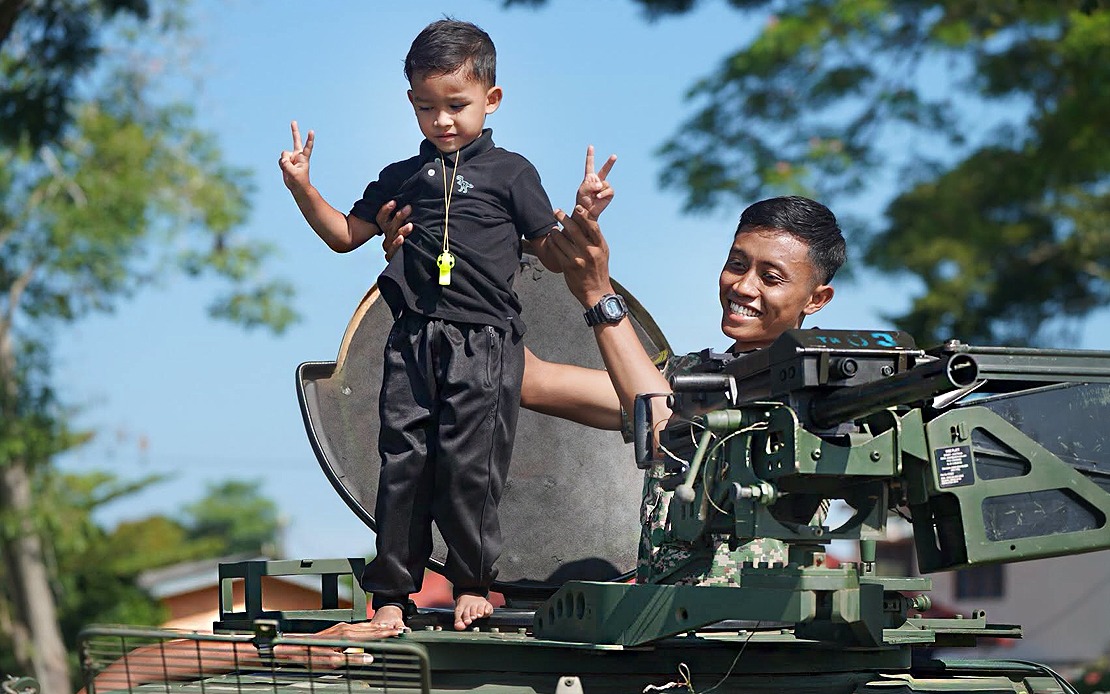
The Ministry of Defence marked a significant milestone in its community outreach efforts by conducting the 'Program Jiwa Murni MADANI' initiative in Alor Gajah, bringing together military personnel and civilians for a day of shared service and mutual understanding. Held at Padang Awam Kampung Gadek, the programme demonstrated the ministry's sustained commitment to bridging the gap between Malaysia's armed forces and ordinary citizens through tangible, neighbourhood-level interventions that address real community needs.
At its core, the initiative reflects a deliberate strategic pivot toward what the military establishment terms civil-military cooperation, or CIMIC. Rather than maintaining a purely security-focused presence, the Malaysian Armed Forces are increasingly positioning themselves as partners in community development. This shift carries particular significance for Southeast Asia, where civil-military relations can be fraught with tension. By anchoring military engagement in welfare provision and infrastructure improvement, MINDEF is attempting to reshape public perception of the armed forces as custodians of national development rather than distant security apparatus.
The practical dimensions of the programme extended well beyond symbolic gestures. Health screenings offered residents direct access to medical assessment without cost, while career exhibitions provided employment pathways for young people in a district that, like many rural Malaysian areas, faces limited economic opportunities. The inclusion of RAHMAH Sales—referring to the government's subsidised goods programme targeting lower-income households—underscored an effort to integrate defence ministry activities with broader MADANI economic objectives centred on inclusive growth and poverty alleviation.
The infrastructure component proved particularly impressive in scale. The 9th Squadron of the Royal Engineers Regiment undertook five distinct projects valued at RM179,200, each addressing specific community infrastructure gaps. These ranged from playground rehabilitation in Kampung Baru, Pondok Batang, to fence repairs at a Tamil-language national school, futsal court upgrades, and religious facility improvements across multiple kampungs. Such work is rarely glamorous, yet it carries outsized significance in rural constituencies where municipal budgets often struggle to maintain basic facilities. By deploying military engineering expertise toward civilian infrastructure, MINDEF effectively recasts military capability as a development resource.
Deputy Defence Minister Adly Zahari's presentation of RM133,000 in cheques further illustrated the programme's financial commitment. The funds targeted eight community recipients, including surau committees, temple associations, and a school's environmental learning laboratory. The deliberate inclusion of multiple religious institutions—suraus and temples alongside Chinese shrines—signalled an approach to CIMIC grounded in religious and ethnic inclusivity. In a Malaysian context where communal harmony remains a foundational national objective, such deliberate representation sends important messaging about the armed forces' role as guardians of pluralism.
The distribution of 500 RAHMAH baskets to military veterans and residents carried dual significance. For pensioned servicemen and women, the gesture acknowledged the government's welfare responsibilities to those who served. For ordinary residents, it represented concrete support during periods of economic strain. This dual beneficiary approach—simultaneously addressing veteran welfare while providing general community assistance—highlighted how defence ministry programming can serve multiple policy objectives simultaneously.
Complementing the welfare-focused initiative, the Religious Corps of the Malaysian Armed Forces conducted a separate programme at Masjid Kelemak, combining spiritual observance with community engagement. This parallel track—the 'Program Ilmu dan Muafakat MADANI'—included congregational prayers, religious lectures, and charity distributions. The deliberate pairing of these spiritual and material dimensions reflects a holistic understanding of community needs that extends beyond physical infrastructure or economic assistance into the realm of social cohesion and moral development.
These initiatives align explicitly with the government's broader MADANI framework and the National Defence Strategic Plan 2026-2030, particularly its Core 4 commitment to deepening civil-military bonds. This alignment indicates that community engagement programmes are not ad-hoc charity efforts but rather systematic components of long-term defence strategy. For Malaysian policymakers and regional observers, this signifies an intentional recalibration of military institutional roles to encompass development partnership alongside security provision.
The Alor Gajah initiative offers instructive lessons for other Southeast Asian militaries grappling with questions of civil-military relations and public legitimacy. By investing military resources—engineering capacity, personnel time, institutional credibility—into tangible community benefits, MINDEF is building a foundation of public trust and goodwill that proves durable precisely because it addresses immediate neighbourhood concerns rather than abstract patriotic appeals. This approach proves particularly effective in rural districts where citizens may have limited regular interaction with state institutions beyond the military.
For Malaysian residents in localities targeted by such programmes, the practical benefits are unambiguous: improved facilities, accessible health services, livelihood opportunities, and demonstrated government responsiveness. Yet the significance extends beyond individual communities. Sustained CIMIC programming contributes to a broader institutional narrative about the armed forces as development partners rather than security-only apparatus. This narrative carries electoral and social consequences, shaping how civilians evaluate military institutional performance and defence spending priorities.
The repetition and systematisation of these initiatives—PIKAT and PJM programmes organised consecutively across different locations—indicates operational durability rather than isolated gestures. Institutionalising community engagement within military quarterly activities suggests MINDEF views such work as integral to contemporary military purpose. This represents a meaningful departure from strictly soldier-centric institutional identities that characterised many armed forces historically.
Looking forward, the Alor Gajah experience demonstrates that successful civil-military cooperation requires sustained financial commitment, operational integration across military units, and genuine responsiveness to articulated community priorities. Whether MINDEF can maintain this momentum as such initiatives scale across multiple districts remains an open question, particularly given resource constraints that Malaysian defence budgets typically face. Yet the foundational principle—that military institutions possess unique capacity to advance community welfare alongside security missions—has taken concrete, observable form in this Melaka district, with implications extending across Malaysia's defence establishment and potentially across the region.

