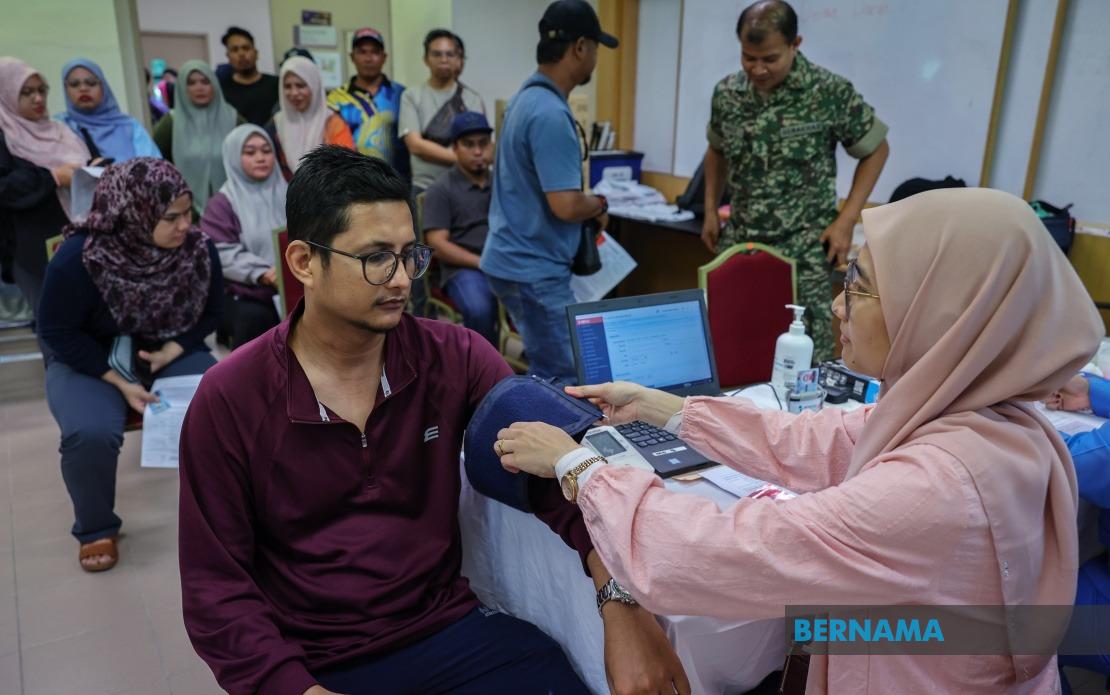
The Royal Malaysian Armed Forces brought comprehensive healthcare services directly to residents in the Baling district of Kedah through a civil-military cooperation initiative, demonstrating a model of public engagement that aims to deepen the relationship between the military and civilian populations. The "Military with the People" programme, which concluded on July 11 at Sultan Abdul Halim Mu'adzam Shah International Islamic University (UniSHAMS) in Kuala Ketil, offered free dental examinations, treatments, and general health screenings to hundreds of visitors across a two-day period. The event served as the closing ceremony for the Basic Commando Course (Series AK/1/26), transforming a military milestone into an opportunity for community service delivery.
Operating under the Civil-Military Cooperation (CIMIC) framework, the initiative deployed two key programmes to deliver healthcare. The Medical Community Assistance Programme (MEDCAP) and Dental Community Assistance Programme (DENCAP) provided immediate, on-site treatment rather than referral-only services, fundamentally reducing barriers to access for residents who might otherwise delay or forego care. This approach proved particularly valuable in a district where scheduling appointments at civilian clinics often involves time constraints and travel difficulties. The collaboration between the Royal Medical Corps (KKD), the Civil Defence Force (APM), and the Baling District Health Office leveraged existing military medical infrastructure and personnel to address community healthcare gaps, representing a practical manifestation of civil-military cooperation beyond traditional security roles.
The response from residents revealed significant unmet healthcare demand and enthusiasm for accessible services. Factory worker Siti Salmiah Said, 28, exemplified the programme's impact by receiving immediate dental scaling treatment that would ordinarily require scheduling at civilian facilities. Her account highlighted how families accessed multiple services simultaneously, with her husband receiving scaling and her six-year-old child obtaining a filling, all within a single visit. The convenience factor proved critical: residents appreciated avoiding the administrative burden of making separate appointments at different clinics, compressing what might be weeks of healthcare navigation into hours of direct service delivery. Legal assistant Adam Ruzlan, 26, similarly benefited from immediate treatment coupled with preventive education, receiving advice on dental decay and tartar buildup that extended the visit's value beyond procedural intervention.
For some residents, the programme evoked memories of earlier military-community healthcare initiatives while demonstrating tangible improvements in service quality. Devindran, 37, recalled a comparable effort from 28 years prior but noted the current iteration's superior speed and enhanced medical equipment. His experience encompassed dental examination and filling through DENCAP alongside comprehensive health screening including blood pressure, blood sugar, and Body Mass Index measurements through MEDCAP. This multi-faceted approach addressed both acute dental needs and chronic disease risk factors, reflecting a broader understanding that community health extends beyond single-system interventions. The accessibility of multiple screening modalities allowed residents to develop a more complete picture of their health status than they might obtain through conventional clinic visits.
The programme demonstrated responsiveness to medical emergencies despite its primary preventive orientation. When a child experienced dizziness and nausea during the event, Civil Defence Force personnel quickly transferred the patient to the MEDCAP tent, where military medical staff conducted comprehensive vital sign assessments including temperature, blood pressure, and oxygen saturation before administering anti-nausea medication. This capability to manage minor acute presentations illustrated that military medical infrastructure, when deployed to civilian communities, can provide emergency stabilisation beyond routine screening. Housewife Norhasliza Nayan, 44, praised both the efficiency of this response and the wider programme structure, explicitly calling for similar health initiatives at other large-scale public events. Her endorsement suggested that successful community healthcare delivery might influence future event planning across Kedah and potentially other states.
Capt. Dr Muhammad Afiq Ishak, a dental officer from the 2nd Medical Battalion assigned to DENCAP, outlined the clinical parameters guiding service delivery. Dental interventions focused on foundational treatments including fillings, scaling, and extractions, complemented by oral health awareness promotion. The programme incorporated risk stratification, with military dental officers identifying elderly patients presenting indicators of systemic conditions such as hypertension and diabetes, conducting screenings, and arranging referrals to civilian dental clinics for advanced care. This tiered approach acknowledged the limitations of field-based care while maximising the contribution of military resources within appropriate clinical boundaries. The prevalence of scaling procedures among treated patients suggested significant populations with untreated periodontal disease, indicating substantial oral health burden in the district.
Lt Dr Atiff Abdul Aziz, the Medical Officer at the Special Warfare Training Centre overseeing both MEDCAP and DENCAP operations, characterised the initiative as a strategic partnership between the Ministry of Health and the armed forces. The Baling District Health Office contributed general health screening services and mental health awareness programming aimed at reducing stigma associated with psychological conditions. This collaborative structure distributed responsibilities according to institutional strengths: the military provided medical personnel and field infrastructure, while civilian health authorities ensured alignment with public health priorities and facilitated integration with the healthcare system's existing referral pathways. The partnership model offers a replicable template for other districts seeking to extend healthcare access without requiring substantial new civilian health facility investment.
Beyond clinical services, the programme incorporated a blood donation drive administered by Sultan Abdul Halim Hospital (HSAH) in Sungai Petani, extending across both days of the event with a daily collection target of approximately 100 blood bags. This component addressed critical supply-side constraints in the national blood banking system while simultaneously engaging the community in preventive health participation. Blood donation also served as a screening mechanism, as donors undergo health questionnaires and basic assessments before donation, further expanding the programme's preventive reach. The blood collection effort demonstrated how military community engagement initiatives can advance multiple public health objectives simultaneously, combining direct patient care with support for the broader healthcare infrastructure.
The initiative's success in Baling carries implications for healthcare access strategy across Malaysia's more rural and semi-urban districts, where civilian health facility density and specialist availability remain constrained. The model demonstrates that military medical capacity, when strategically deployed through civil-military cooperation frameworks, can efficiently deliver preventive and basic curative services to populations that might otherwise experience extended delays in accessing care. The enthusiasm from diverse resident demographics—factory workers, legal professionals, retirees, and families—suggests cross-demographic appeal for accessible healthcare delivery mechanisms. However, sustained impact requires integration with civilian health systems to ensure appropriate follow-up for referred cases and to prevent the perception that military provision diminishes civilian facility utilisation.
Looking forward, the programme's structure offers lessons for healthcare accessibility planning in Southeast Asia more broadly. Malaysia's experience demonstrates that civil-military cooperation frameworks, traditionally conceived in security contexts, can effectively address public health challenges when medical personnel and infrastructure are deployed through community engagement initiatives. The Baling programme's emphasis on accessibility, tiered referral pathways, and integration with civilian health authorities provides a model that other nations with similar geographic and demographic healthcare access challenges might adapt. Replicating this initiative across multiple districts would require systematic training of military medical personnel in community health principles, development of standardised protocols for referral to civilian facilities, and formal coordination mechanisms with provincial and district health authorities. The resident testimonials suggest substantial demand for such expansion, indicating that healthcare access remains a significant priority for Malaysian communities beyond major urban centres.

