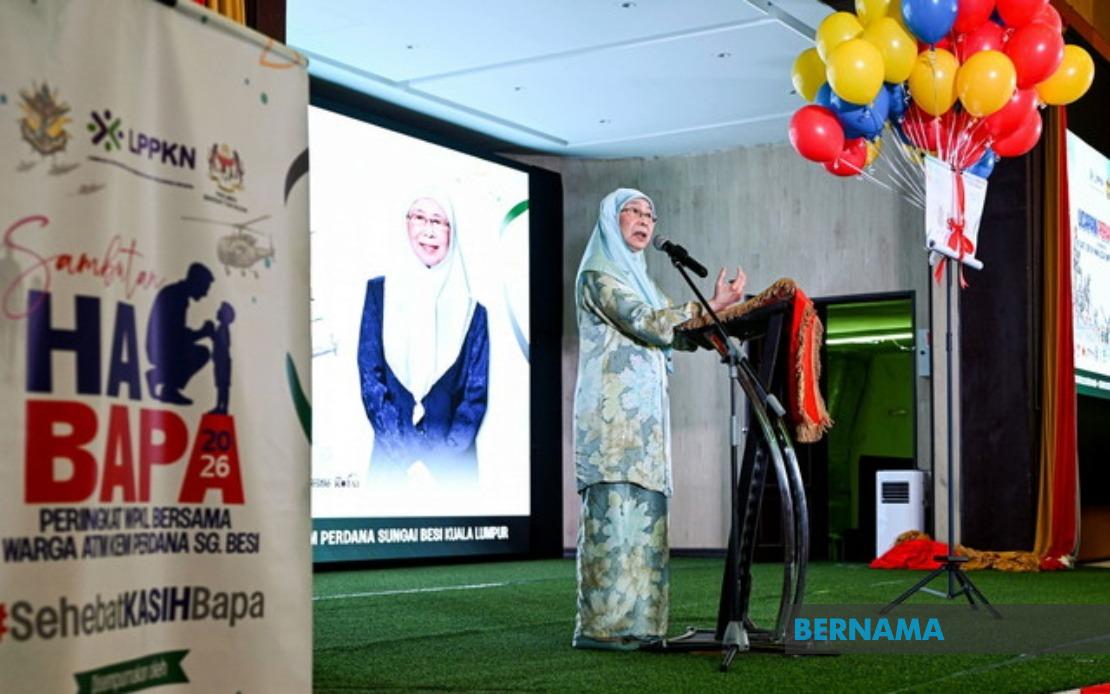
Dr Wan Azizah Wan Ismail, wife of the Prime Minister and Member of Parliament for Bandar Tun Razak, has underscored the critical importance of strengthening support systems for fathers within the Malaysian Armed Forces, recognising their unique challenges in balancing national service with family obligations. Speaking at the 2026 Federal Territory of Kuala Lumpur Father's Day Celebration, she highlighted how military personnel frequently face extended periods away from their loved ones while fulfilling their constitutional duty to safeguard the nation's sovereignty and territorial integrity.
The initiative to centre this year's Father's Day observance on military families reflects a broader recognition that those in uniform experience distinct pressures that civilians may not encounter. When soldiers, sailors, and air force personnel deploy on operations or undertake extended training assignments, their absence creates a cascade of responsibilities that spouses and children must manage independently. Dr Wan Azizah's remarks suggest that government policy should account for these realities by creating targeted interventions that acknowledge the sacrifices made by military families across the region.
Central to her advocacy is the National Family Compassion Policy, which she identified as a cornerstone mechanism for assisting military fathers navigate their dual responsibilities. This policy framework aims to bridge the gap between professional military obligations and domestic family leadership, recognising that effective fatherhood requires both presence and preparedness. For Armed Forces personnel, preparedness takes on added significance—it means ensuring that even when physically distant, fathers can maintain meaningful connections with their children and equip spouses with the resources needed during separations.
Dr Wan Azizah stressed that empowerment of male family members extends beyond individual fathers to strengthen the broader family institution itself. In Malaysian culture, the father's role as household leader carries profound symbolic weight, and military fathers embody this responsibility while also serving as defenders of national interests. By investing in their development and support, policymakers reinforce the notion that fatherhood itself merits institutional attention and resources, challenging any marginalisation of men's roles in family-building conversations.
The event brought together approximately 500 participants, including military fathers, their spouses, children, and representatives from government agencies, creating a community of shared experience. This gathering served not merely as a ceremonial occasion but as a platform for disseminating practical resources and reinforcing social messages about the importance of paternal engagement. The collaborative organisation by the National Population and Family Development Board and the Malaysian Armed Forces demonstrates institutional commitment to this agenda.
Among concrete initiatives designed to support this vision are the Fatherhood Module and the Men Empowerment Network. The Fatherhood Module concentrates specifically on parenting skills development, acknowledging that being an effective father requires learned competencies rather than innate knowledge. For military personnel, such training takes on heightened relevance given the stress factors unique to military life, including deployment anxiety, reintegration challenges, and the psychological impact of service-related trauma on family dynamics.
The Men Empowerment Network represents a systemic approach to supporting masculine identity within contemporary family structures. Rather than positioning male engagement as ancillary to family wellbeing, this network framework treats men as primary stakeholders in family development. For military fathers, membership in such networks provides both practical mentorship and emotional validation of their experiences, potentially reducing isolation and improving resilience.
Malaysia's approach to supporting military families reflects regional and global trends recognising that military readiness depends not only on equipment and training but also on personnel morale and family stability. Countries throughout Southeast Asia increasingly acknowledge that soldiers with secure, supported families demonstrate higher retention rates and better psychological adjustment. By prioritising father empowerment within the Armed Forces, Malaysia positions itself alongside international best practices in military personnel welfare.
The implications extend beyond individual families to institutional effectiveness. When military fathers feel empowered and supported, they bring greater focus to operational duties, unburdened by anxiety about their family circumstances. Conversely, inadequate family support systems can lead to distraction, reduced performance, and potentially higher attrition rates among experienced personnel. This recognition positions family policy not as a social welfare matter but as a strategic national security consideration.
Dr Wan Azizah's advocacy also reflects evolving understandings of gender and family roles in contemporary Malaysia. The emphasis on father empowerment complements rather than contradicts efforts to strengthen women's roles, recognising that family stability requires engaged participation from both parents. Military families, where traditional gender roles sometimes persist due to occupational structures, particularly benefit from messaging that validates diverse approaches to parenting and household leadership.
Looking forward, the success of these initiatives will depend on sustained resource allocation, institutional coordination between defence and social development agencies, and genuine engagement with military families about their actual needs. The National Family Compassion Policy provides a policy framework, but implementation requires ongoing evaluation and adaptation based on feedback from beneficiaries. Whether current initiatives adequately address the specific challenges faced by military fathers—particularly those stationed in remote locations or deployed internationally—remains an area warranting continued attention and assessment.

