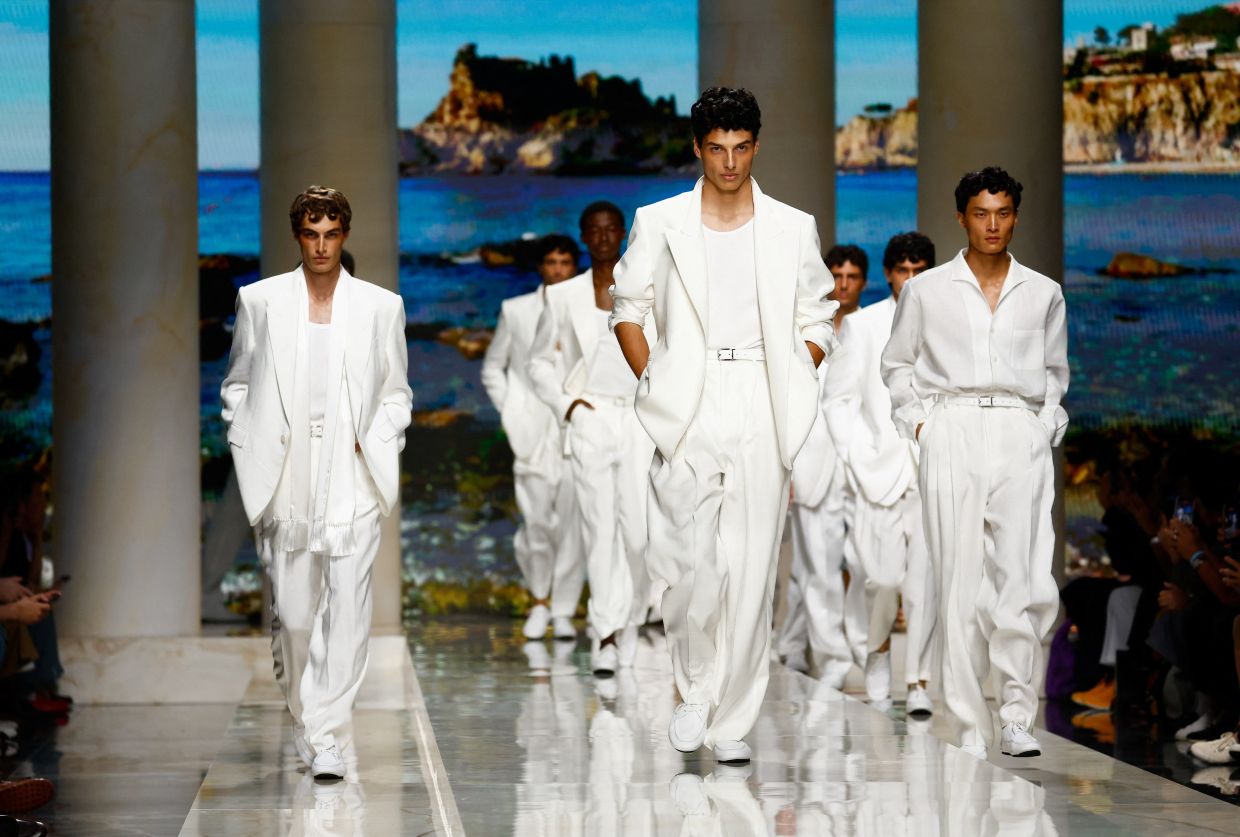
Milan's menswear designers have responded to a turbulent global climate by stripping collections back to essentials, prioritising clean lines and reimagined proportions over ornamentation as the fashion capital navigated sweltering temperatures during last week's Fashion Week. The collections that closed on Monday presented a marked departure from the oversized silhouettes that have dominated menswear for years, signalling a deliberate recalibration in how the industry approaches dressing the contemporary man. This shift reflects not merely aesthetic preference but a deeper conversation about practicality, restraint and how fashion adapts when economic uncertainty and geopolitical tensions create demand for authenticity over excess.
Prada set the tone through co-creative directors Miuccia Prada and Raf Simons, who championed simplicity by reimagining familiar garments through unexpected proportions and material innovation. Their approach suggested that luxury need not rely on complexity or volume, a philosophy that rippled through many of Milan's most respected houses. The strategy proved particularly compelling because it acknowledged the fundamental tension between fashion's desire to create desire and the current moment's call for restraint. Rather than abandoning the language of high fashion, Prada and peers demonstrated how reduction itself could function as a marker of sophistication, a quieter form of status in uncertain times.
Yet achieving comfort in Milan's oppressive heat while maintaining sartorial standards presented genuine technical challenges that designers approached with surprising innovation. The persistence of leather across multiple collections proved the season's most striking paradox—a material fundamentally associated with warmth and weight dominated runway presentations despite temperatures that would typically demand breathable fabrics. Designers resolved this contradiction through engineering, employing woven and perforated techniques that maintained leather's luxurious aesthetic while increasing airflow. Prada's interpretation drew inspiration from the universality of denim, translating traditional five-pocket jean construction into cropped leather jackets paired with slim trousers, creating a contemporary uniform that acknowledged both heritage and innovation.
The relationship between tailoring and ventilation emerged as a central preoccupation for Milan's menswear community. Rather than abandoning formal dressing, designers fundamentally reimagined how suits and tailored pieces could accommodate climate realities without sacrificing formality. Softened construction techniques, opened necklines and experimental fabric combinations allowed air circulation while preserving the structured silhouettes that define menswear tradition. This approach represented genuine problem-solving rather than marketing rhetoric—the suit remains culturally central to masculine identity, but surviving rising temperatures requires architectural rethinking. American designer Thom Browne's return to Milan after a fifteen-year absence demonstrated this evolution through layered suiting constructed from summer-friendly seersucker and pleated elements, materials historically associated with warm-weather dressing now reinterpreted through his distinctive design vocabulary.
The emphasis on closer-to-body tailoring reflected a broader industry consensus that menswear has moved beyond the oversized proportions that defined the previous decade. This transition carries particular significance for Southeast Asian markets where heritage tailoring traditions remain culturally embedded and where body-conscious dressing aligns with regional aesthetic preferences. Designers broadly agreed that a well-dressed man still requires a suit, but the conversation centred on proportion, silhouette and how garments interact with the body. Dolce & Gabbana pushed this dialogue furthest with dramatic microshorts that exposed leg musculature, while other brands experimented with transparent fabrics and unbuttoned dress shirts that functioned more as layering pieces than traditional shirts. These choices reflected confidence that fashion could evolve masculine presentation without abandoning established codes.
Designers adopted varying philosophies regarding ornamentation and restraint, revealing a creative conversation between minimalism and maximalism that enriched the season's overall narrative. While much of Milan embraced pared-down aesthetics, certain designers defiantly pursued decoration and embellishment, refusing to sacrifice glamour for simplicity. Philipp Plein presented crystal-encrusted denim ensembles requiring days of handwork, while Dolce & Gabbana incorporated beaded accents evoking coral forms, approaches that unapologetically celebrated labour-intensive luxury and visual spectacle. This creative tension—between reduction and maximalism—suggested that Milan remained a marketplace for diverse visions rather than monolithic trends, acknowledging that luxury consumption encompasses both restraint and opulence depending on individual sensibility.
A lighter schedule allowed emerging designers to gain meaningful visibility alongside established houses, expanding the conversation beyond familiar names. Martin Quad made his Milan debut with unconventional tailoring techniques that had previously garnered attention in Copenhagen, while Domenico Orefice explored leather and richly woven textiles through co-ed collections that questioned gender distinctions in formal wear. These inclusions demonstrated Milan's commitment to generational renewal and creative diversity, essential considerations as the industry navigates sustainability pressures and changing consumer values. Japanese designer Shinya Kozuka's Shinyakozuka label delivered one of the season's most poetically executed collections, exemplified by a shirtless model wearing a billowing sheer teal coat with baggy white trousers—an image that captured the season's embrace of contradiction, simultaneously exposing and concealing the body while prioritising movement and ease over conventional masculinity.
For Malaysian and broader Southeast Asian fashion consumers and industry professionals, Milan's Spring/Summer 2027 menswear direction carries specific implications. The emphasis on breathable construction and lightweight tailoring directly addresses regional climate realities that have historically positioned tropical markets as secondary considerations in global fashion calendars. The embrace of closer-fitting silhouettes aligns with regional aesthetic traditions and body-conscious dressing practices that differ markedly from Western oversized conventions. Furthermore, the demonstrated commitment to heritage craftsmanship—evident in Prada's reinterpretation of denim construction and Thom Browne's engagement with historical summer fabrics—suggests that regional tailoring traditions and material innovations possess renewed relevance within international fashion discourse.
The broader narrative emerging from Milan suggests that designers and consumers have arrived at a moment where luxury and practicality need not occupy opposing positions. Economic uncertainty and geopolitical tensions have catalysed conversations about authenticity, craftsmanship and the genuine value of well-constructed garments that function across diverse contexts. This philosophical shift holds particular resonance for Southeast Asian markets where tailoring traditions, understanding of climate-appropriate dressing and heritage craftsmanship remain embedded in cultural practice. Milan's collections indicate that the fashion industry increasingly recognises simplicity, technical innovation and material excellence as luxury markers, a perspective that validates regional approaches to dressing and suggests expanded opportunities for local designers and manufacturers to contribute meaningfully to global conversations. The suit, it appears, is evolving—not diminishing—in response to contemporary challenges.