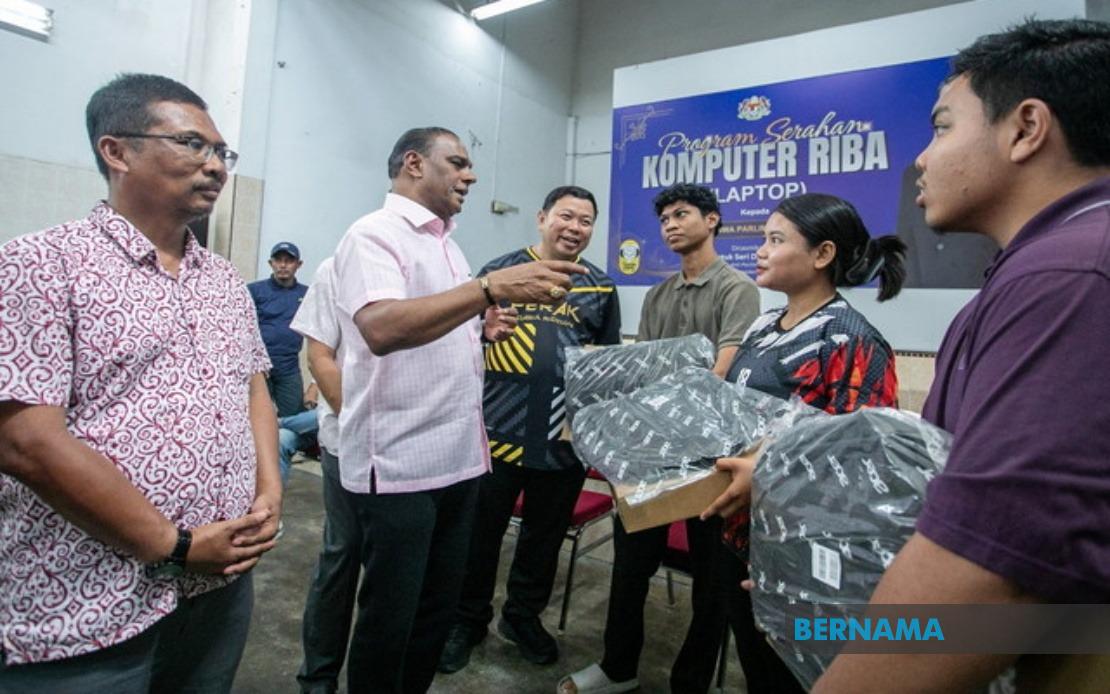
The Malaysian Indian Congress will firmly hold its existing parliamentary representation in Melaka whilst simultaneously exploring opportunities to expand its electoral footprint, according to statements made by the party's deputy president Datuk Seri M. Saravanan. Speaking in Tapah, the senior politician confirmed that defending the Gadek constituency remains an immediate priority for the party, though leadership is conducting a comprehensive evaluation of whether to venture into neighbouring seats that might offer viable prospects for the ruling coalition.
Saravanan explained that the party is exercising caution before committing to additional electoral contests, citing multiple variables that must align favourably before expansion takes place. The assessment encompasses whether available constituencies possess the demographic characteristics and voter composition that favour MIC's traditional support base, the calibre and public standing of prospective candidates the party can field, and most critically, realistic evaluations of winning probabilities in each targeted area. This methodical approach reflects broader coalition strategy, where component parties must optimise resource allocation across competitive races rather than spreading efforts thinly across marginal terrain.
The party presidency, under Tan Sri S A Vigneswaran, is currently immersed in the candidate evaluation process, examining potential nominees across various constituencies to identify those whose track records and community connections might translate into electoral advantage. Saravanan indicated that definitive decisions regarding both candidate selection and seat expansion would crystallise within the coming weeks, allowing the party sufficient preparation time before nomination day. This timeline aligns with broader Barisan Nasional coordination mechanisms, where coalition partners must synchronise their announcements to prevent contradictory positioning or public perception of internal discord.
Prior to formal electoral preparations accelerating, MIC has already commenced foundational organisational work that underpins successful campaign execution. Party operatives are systematically mapping voter populations across constituencies, with particular emphasis on identifying and cataloguing the party's core support base—traditionally comprising Indian Malaysian communities concentrated in urban and semi-urban centres. Understanding this demographic's current political sentiment, evolving concerns, and receptiveness to party messaging provides the evidentiary foundation upon which campaign messaging and resource allocation decisions rest.
Contemporaneously, the party is conducting environmental scanning to identify salient issues likely to dominate the electoral discourse in Melaka. Beyond bread-and-butter concerns affecting ordinary voters, MIC recognises that specific grievances within Indian Malaysian communities—ranging from educational access and economic opportunity to representation in corporate boardrooms and civil service advancement—must feature prominently in party positioning. This dual-track approach of voter identification and issue mapping ensures that campaign strategies remain tethered to grassroots realities rather than detached party orthodoxy.
MIC's historical performance in Melaka provides both encouragement and cautionary lessons. In the 2021 state election contested under Barisan Nasional's colours, the party successfully retained the Gadek seat through candidate VP Shanmugam, who prevailed in a competitive six-candidate contest with a slender 559-vote majority. Such narrow victory margins underscore the volatility of contemporary Malaysian electoral politics and the fragility of what might superficially appear as secure strongholds. The modest margin simultaneously demonstrates voter receptiveness to MIC's presence in this particular constituency whilst highlighting vulnerability to determined challengers from competing parties.
For Malaysia's Indian Malaysian community, MIC's strategic positioning in Melaka carries broader implications regarding minority representation within the nation's federal structure. As a component of the broader Barisan Nasional coalition, the party's electoral performance in state contests signals the coalition's capacity to maintain multiethnic appeal and distribute electoral spoils equitably among component communities. Conversely, any contraction of MIC's parliamentary presence would reinforce narratives of declining minority political influence within the dominant coalition, potentially accelerating realignment toward opposition alternatives perceived as offering greater minority empowerment.
The Melaka election itself occurs within a complex political environment where state-level contests increasingly reflect national political tremors rather than functioning as isolated localised exercises. Voter sentiment regarding national governance, perceived economic management, and the Barisan Nasional administration's handling of inflation and cost-of-living pressures will inevitably colour voting decisions in Melaka, regardless of state-specific issues dominating local discourse. MIC's campaign messaging must therefore navigate between addressing localised constituency concerns and contributing to the broader coalition narrative regarding national governance competence.
From a Southeast Asian perspective, MIC's electoral strategy illustrates broader patterns observable across the region's plural societies, where minority political parties face perpetual tension between maintaining distinctive community representation and maximising electoral viability through coalition participation. The party's deliberative approach to seat expansion reflects sophisticated understanding that expanded ambition unmatched by organisational capacity or candidate quality merely disperses limited resources across unwinnable terrain, ultimately diminishing rather than enhancing political influence.
Looking ahead, the coming weeks will prove decisive in determining whether MIC emerges from internal deliberations with an ambitious expansion agenda or maintains focused concentration on defending existing territory whilst selectively targeting one or two additional constituencies where conditions favour success. Either trajectory carries distinct implications for the party's long-term trajectory within Malaysian politics and its capacity to mobilise Indian Malaysian electoral support in an increasingly fragmented political marketplace where traditional communal voting patterns have substantially eroded.

