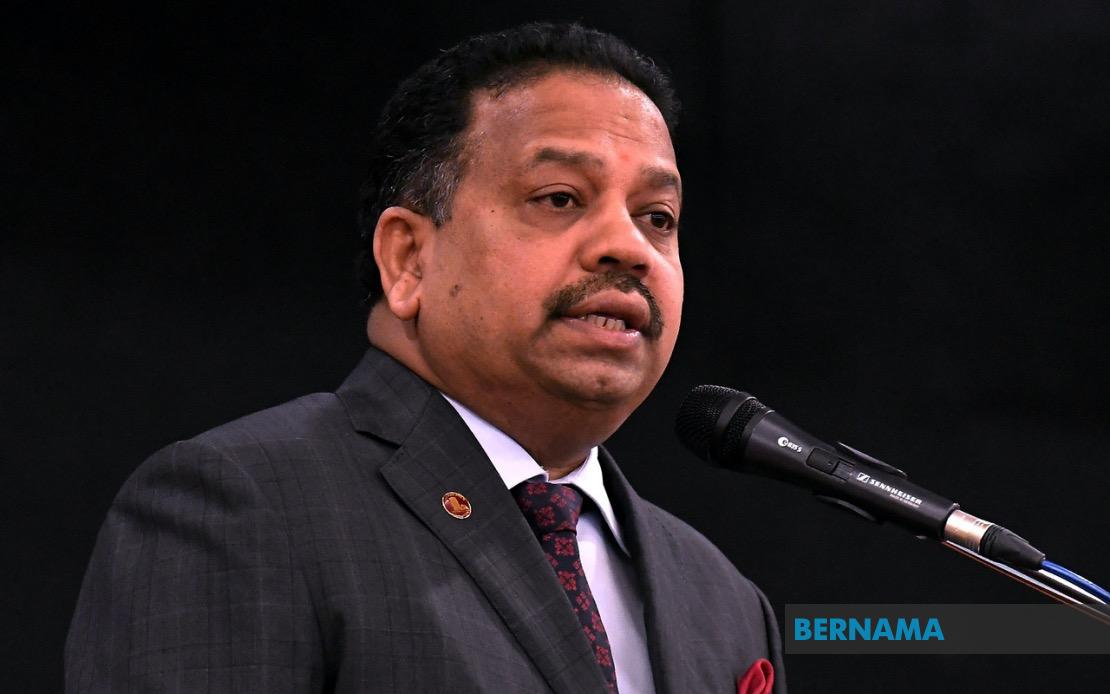
The Malaysian Indian Congress enters the 16th Johor state election with considerable optimism about retaining support from the Indian electorate. MIC president Tan Sri S.A. Vigneswaran laid out this position at a press conference in Kulai on July 10, underscoring what the party views as a robust partnership with both federal and state administrations in tackling issues of particular concern to the Indian community. The party's four candidates contesting tomorrow—K. Raven Kumar in Kemelah, V. Rugendran in Kahang, P. Pannir Selvam in Perling, and R. Kumaran in Bukit Batu—represent MIC's presence across strategic constituencies within the state.
Vigneswaran's assertion rests on what he characterises as constructive engagement between MIC, the Johor state government, and federal authorities. Rather than merely articulating grievances, the MIC leader emphasised that the party seeks representatives capable of fostering genuine cooperation with state governance structures. This framing positions MIC not as an opposition voice but as a facilitator between community needs and government machinery, a positioning strategy particularly relevant to minority politics in Malaysia where coalition participation often determines resource allocation and policy responsiveness.
Throughout the campaign period, MIC has adopted what Vigneswaran describes as a measured approach, deliberately eschewing personal attacks on rival candidates in favour of presenting policy solutions. This restraint reflects a broader calculation within BN component parties to maintain coalition discipline while competing for voter loyalty. For the Indian community in Johor, this means the party's campaign messaging has centred on tangible governance outcomes rather than partisan rhetoric, though the strategic choice to avoid aggressive campaigning may also reflect awareness of demographic shifts and voting pattern volatility among minority groups.
The four MIC candidates represent a modest presence within the larger Johor electoral landscape, yet their performance will carry symbolic weight for the party's position within BN and its credibility as a representative of Indian interests. These races serve as a barometer of whether traditional voting patterns persist or whether younger Indian voters and those in urban areas are diversifying their political allegiances. The concentration of MIC candidates in specific constituencies suggests a strategic focus rather than statewide contestation, allowing the party to concentrate resources and ground operations where historical support bases exist.
Beyond electoral positioning, Vigneswaran used the platform to address allegations regarding party financing that had circulated through Tamil-language media outlets. A report claimed MIC had received government funds totalling RM221 million, a figure the party leadership characterised as fundamentally inaccurate and deliberately misleading. This clarification became necessary, presumably, because such claims can damage the party's standing by suggesting either financial impropriety or excessive dependence on state patronage—both narratives damaging to political legitimacy.
The president explained that MIC receives no direct annual subsidy of the magnitude alleged. Instead, the party chairs a foundation-owned educational institution, AIMST University, which receives annual government grants. Since Datuk Seri Anwar Ibrahim assumed office as Prime Minister in 2023, these allocations have stabilised at RM25 million yearly, funding operational requirements and capital improvements. This distinction—between party funding and institutional grants—proves crucial for understanding the financial architecture of Malaysia's political system, where ruling coalition parties often maintain affiliated non-governmental entities that receive public resource flows.
The university grants fund infrastructure upgrades including dormitory renovations and renewable energy installations, alongside subsidising operational expenses. By reducing institutional overhead, these allocations enable the university to maintain lower student fee structures, ostensibly broadening access to higher education for Indian students and others. This multiplier effect—whereby government grants compress consumer costs—represents a tangible, if indirect, benefit to the Indian community that party messaging can highlight during campaigns.
Vigneswaran indicated that MIC's legal representatives have been instructed to issue formal demands for the Tamil portal to retract and correct the report, characterising the original allegations as defamatory. This adversarial response signals the party's determination to contest the narrative actively rather than allowing the claim to circulate unchallenged. In Malaysia's competitive media environment, where ethnic-language publications often serve particular community constituencies, such disputes over financial claims carry political consequence and can influence voting behaviour if left unaddressed.
The broader context involves MIC's ongoing struggle to maintain relevance and voter mobilisation within Malaysia's Indian community. Successive elections have shown erosion of traditional support, with younger voters, educated professionals, and urban populations increasingly splitting their votes across multiple parties. MIC's emphasis on collaboration rather than confrontation, and its highlighted role in accessing government resources for community-directed projects, represents a deliberate strategy to combat perceptions that the party merely rubber-stamps BN decisions without advocating assertively for Indian interests.
For Southeast Asian observers and Malaysian policymakers, the Johor election outcome provides insight into whether BN's component party system remains functional in maintaining minority group loyalty, or whether structural changes in Malaysian politics are eroding traditional patronage networks. If MIC candidates perform strongly despite demographic currents favouring political diversification, it would suggest that direct resource delivery and institutional positioning continue driving minority voting behaviour. Conversely, poor performance would indicate that even improved governance collaboration and educational access cannot fully offset competition from opposition parties or independent candidates.
The election tomorrow will test whether confidence in continued BN governance and the promise of collaborative problem-solving resonates with Johor's Indian voters. Vigneswaran's pre-election statements signal that MIC anticipates maintaining support, but final results will reveal whether this optimism reflects genuine community sentiment or wishful thinking. For a party seeking to remain relevant in Malaysian coalition politics, the stakes extend beyond individual seat tallies to encompass broader questions about representation, resource access, and the future configuration of ethnic-based political organisation in Malaysia.

