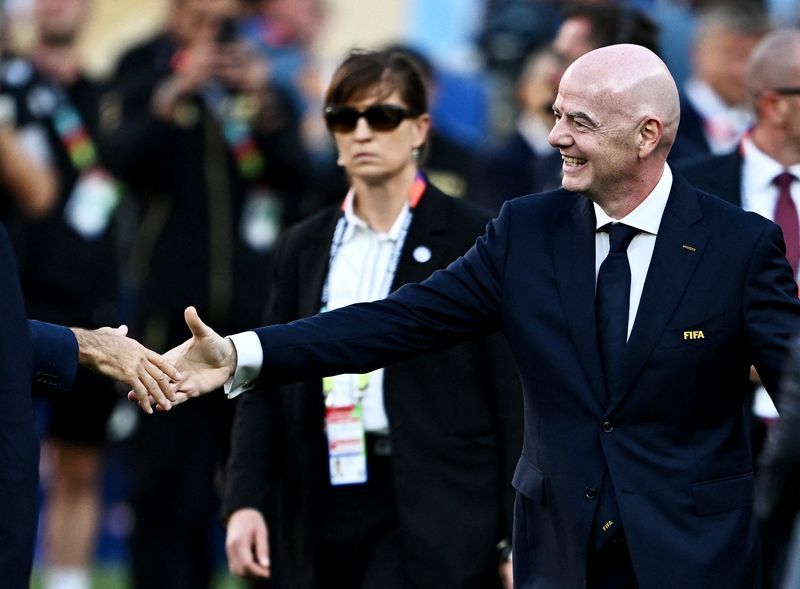
FIFA President Gianni Infantino has secured backing from two major football associations as he navigates a deepening leadership crisis triggered by an aborted scheme to sell commercial rights to the World Cup. Mexico's football federation and Argentina's AFA have both publicly endorsed Infantino's continued stewardship, breaking away from a coordinated pushback by most of the sport's regional confederations that has threatened his reelection bid.
The Mexican Football Federation's decision to support Infantino marks a significant split within the North and Central American football structure. While CONCACAF, the regional confederation that Mexico belongs to, formally demanded a "comprehensive reckoning" with Infantino's presidency, Mexico chose to distance itself from this collective position and instead affirmed confidence in the FIFA leader. This divergence underscores the complexity of opposition to Infantino, with individual national associations weighing their interests against unified regional stances.
Argentina's position carries particular weight given the country's status as the reigning World Cup champion. In a detailed letter to Infantino, the Argentine football association praised FIFA's work over the preceding decade, emphasising its contribution to global football development and institutional stability through transparent governance frameworks. While acknowledging that the controversial proposal had created significant uncertainty and that procedural errors occurred, Argentina argued that the path forward required continued cooperation under FIFA's direction rather than destabilising leadership changes.
The geographic split in support for Infantino reveals the fractures running through world football's governance. Africa's confederation unanimously backed Infantino on Thursday, providing crucial support from a bloc representing 54 nations. South America's CONMEBOL took a measured approach, rejecting any leadership transition that bypassed a formal vote involving all 211 FIFA member associations. Asia's confederation aligned with the more critical positions adopted by UEFA and CONCACAF, signalling solidarity with those demanding accountability.
Europe's stance remains the most confrontational. UEFA announced it would persist with its boycott of World Cup and other FIFA competitions, demonstrating that regional powerhouses remain unwilling to accept Infantino's explanations regarding the abandoned proposal. This European resistance carries substantial implications given the continent's economic muscle and traditional influence within international football governance structures.
The controversy emerged from FIFA's push to generate additional commercial revenue by monetising World Cup broadcasting and marketing rights beyond their traditional sale cycles. Following a meeting in Rabat, FIFA issued a formal apology to member associations, conceding that procedural failures and communication breakdowns accompanied the initiative. The organisation committed to reviewing the decision-making processes that produced the proposal, attempting to contain damage ahead of the crucial March Congress in Morocco.
Infantino's reelection for a fourth term appeared assured merely two months prior to the commercial rights debacle. The absence of a viable challenger willing to campaign against him suggested his political position was insurmountable. However, the controversy has transformed the landscape, creating openings for potential opposition while simultaneously demonstrating that Infantino retains sufficient support among key regional blocs to survive the current turbulence. The question of whether a credible alternative candidate will materialise by March remains unresolved.
Individual national associations have begun withdrawing their support for Infantino, with Croatia joining England and Albania in reversing previous endorsements. Croatia's federation explicitly cited the commercial rights proposal and related governance discussions as catalysts for reassessing its position. These departures signal that while Infantino maintains regional confederation support in Africa and South America, his standing among some established football powers has eroded.
The International Federation of Professional Footballers union responded to the crisis by characterising the commercial rights proposal as exceeding procedural lapses. FIFPRO's statement framed the initiative as a fundamental abuse of presidential authority, suggesting that player representation organisations view the episode as symptomatic of deeper governance pathologies within FIFA. This critique strikes at the legitimacy question beneath the surface controversy: whether Infantino's centralised decision-making style has corroded the institutional safeguards introduced more than a decade ago.
FIFA has maintained that all actions undertaken regarding the commercial rights proposal remained consistent with existing regulations, attributing the backlash to communication failures and process deficiencies rather than breaches of substantive governance rules. This legalistic defence attempts to separate procedural criticism from accusations of institutional breakdown, positioning the controversy as a correctable management problem rather than evidence of systemic corruption or authoritarian leadership.
For Malaysian and Southeast Asian football observers, the dispute carries implications extending beyond FIFA's internal politics. The regional confederations' varied responses illustrate how global governance tensions manifest unevenly across football structures. Asia's alignment with UEFA and CONCACAF's more critical positions suggests that regional independence from Infantino's sphere influences the confederation's own governance autonomy, a consideration relevant to how Asian football interests fare within FIFA's decision-making architecture.
The March Congress in Morocco will determine whether the controversy crystallises into a genuine electoral challenge or recedes as another episode in FIFA's contentious recent history. The balance between Infantino's demonstrated capacity to retain support from strategically important regions and the accumulating defections from individual associations suggests an outcome dependent on whether alternative leadership candidates emerge and whether wavering associations prove responsive to sustained pressure from UEFA and other critics.

