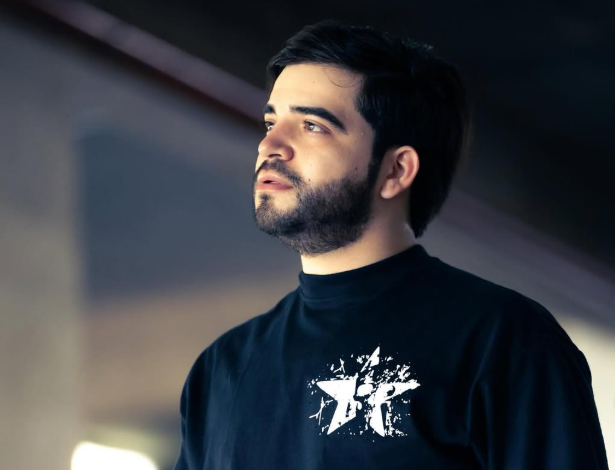
A Mexican social media influencer with nearly 600,000 followers on TikTok has been killed in a brazen daytime shooting that occurred while he was broadcasting live to his audience outside a fast food establishment in Culiacan. Cesar Gastelum, 25, was struck by gunfire delivered from a motorcycle-riding assailant on Tuesday, with the horrifying incident captured in real time before the platform terminated the transmission. Local authorities subsequently confirmed the death, though initial police reports had mistakenly identified the victim as a delivery worker before correcting the record.
The attack unfolded with stark brutality caught on camera. Video evidence reviewed by international media shows two individuals on a motorcycle, both helmeted, approaching Gastelum and his companions. The driver is seen discharging a firearm directly at the young influencer, whose comedy-focused content had built him a substantial following across Mexico's social media landscape. Although the livestream was swiftly taken down, images and footage have continued spreading through various online channels, documenting an act of extreme violence committed in public view.
For Southeast Asian audiences, the incident offers a sobering illustration of how criminal organisations in the Americas are increasingly targeting content creators and social media personalities. Unlike gang-related violence that remains largely confined to specific communities, these shootings often involve public figures whose deaths generate widespread attention and panic among younger demographics who form the core audience for platforms like TikTok. The targeting of influencers suggests organised crime groups are either using such killings as psychological warfare or settling scores with individuals who may have unwittingly or deliberately provoked them through their content.
Culiacan, the capital of Sinaloa state in northwestern Mexico, has emerged as one of the country's deadliest cities due to intense turf wars between competing drug trafficking organisations. The region has become synonymous with cartel-related violence, with rival factions engaged in ongoing battles for territorial control and logistical dominance. This environment of lawlessness and criminalised governance creates conditions where violence operates with minimal consequences, as institutional capacity to investigate and prosecute such crimes remains severely compromised.
Gastelum's death represents the second killing of a prominent Mexican content creator during a TikTok livestream in recent months, underscoring a disturbing trend. In May 2025, beauty influencer Valeria Marquez, aged 23, was shot to death inside a salon where she worked in Zapopan, located in Jalisco state. That attack involved an unidentified assailant who entered the premises and opened fire, with authorities subsequently investigating the case under femicide protocols. The similarity between these incidents—both involving livestreamed killings of young influencers—suggests either copycat violence or a more systematic campaign against content creators.
Investigative developments following Marquez's death have provided insights into the criminal networks responsible for such killings. Mexican security authorities arrested Ramon Angel Alvarez Ayala, operationally known as "El R-1," in Jalisco in July. Security Minister Omar Garcia Harfuch identified Alvarez Ayala as a leader within a criminal cell affiliated with the Jalisco New Generation Cartel, commonly abbreviated as CJNG. Law enforcement has linked this individual to Marquez's murder and further accused him of ordering and financing the November 2025 assassination of Uruapan's mayor, Carlos Manzo.
The involvement of major cartel infrastructure in these killings elevates their significance beyond random street violence. The CJNG, one of Mexico's most powerful organised crime syndicates, operates across multiple states and has demonstrated capacity for coordinated, targeted eliminations of specific individuals. When security officials directly connect cartel leadership to influencer murders, it indicates these are not spontaneous acts but rather deliberate operations sanctioned at organisational levels. This professionalisation of violence targeting social media figures represents a troubling evolution in how criminal groups exercise control and intimidation within territories they dominate.
From a regional perspective, these developments carry implications for social media safety across Latin America and potentially beyond. Content creators operating in violence-affected regions face unprecedented risks that extend beyond conventional street crime. The livestream format itself—which broadcasts in real time to thousands or millions of viewers—may attract criminal attention, either because assailants seek maximum visibility for their actions or because content creators unknowingly transgress unwritten rules enforced by local criminal governance structures. In fragile institutional environments, informal power brokers sometimes dictate what can and cannot be publicly broadcast, and violations can prove fatal.
The halting of Gastelum's livestream and subsequent removal of footage by TikTok raises questions about platform responsibility and content moderation during moments of genuine emergency. While removal of graphic violence serves legitimate protective purposes, such actions also eliminate immediate evidence that could aid investigations. The continued circulation of the footage through alternative channels demonstrates the challenge platforms face in controlling information flow once graphic content enters the digital ecosystem. For victims' families and investigators, this dynamic creates both evidentiary complications and the additional trauma of seeing violent moments repeatedly resurface.
Mexican law enforcement response involved deployment of military and police personnel to the scene in Culiacan, with forensic teams collecting evidence. However, the established pattern of cartel violence in this jurisdiction suggests investigative outcomes may prove limited. Culiacan's security apparatus has historically struggled to prosecute cases involving major criminal organisations, partly due to resource constraints and partly due to infiltration by cartel interests. The likelihood of identifying, apprehending, and successfully prosecuting those responsible for Gastelum's death remains uncertain given these systemic challenges.
For content creators and their families across Mexico and Central America, Gastelum's death serves as a grim reminder that social media prominence offers no protection against organised violence in regions where cartel governance supersedes state authority. Young influencers who have built audiences through comedy, beauty, music, or lifestyle content now operate in an environment where their visibility and popularity may inadvertently place them in danger. This chilling effect threatens to reshape how creators operate and what they feel safe documenting publicly, potentially stifling creative expression in already-constrained environments.
The broader context involves Mexico's ongoing struggle with violence that claimed tens of thousands of lives annually in recent years. While national homicide statistics have shown marginal improvements, certain cities and regions continue experiencing intensity of violence that rivals active conflict zones. Culiacan's position as a cartel stronghold, combined with regional competition between criminal factions, ensures that such incidents will likely continue absent significant security intervention or fundamental changes in the political economy of drug trafficking. International observers monitoring Mexico's security situation will need to track whether influencer murders become an established tactic within criminal organisations' repertoires or remain episodic incidents.

