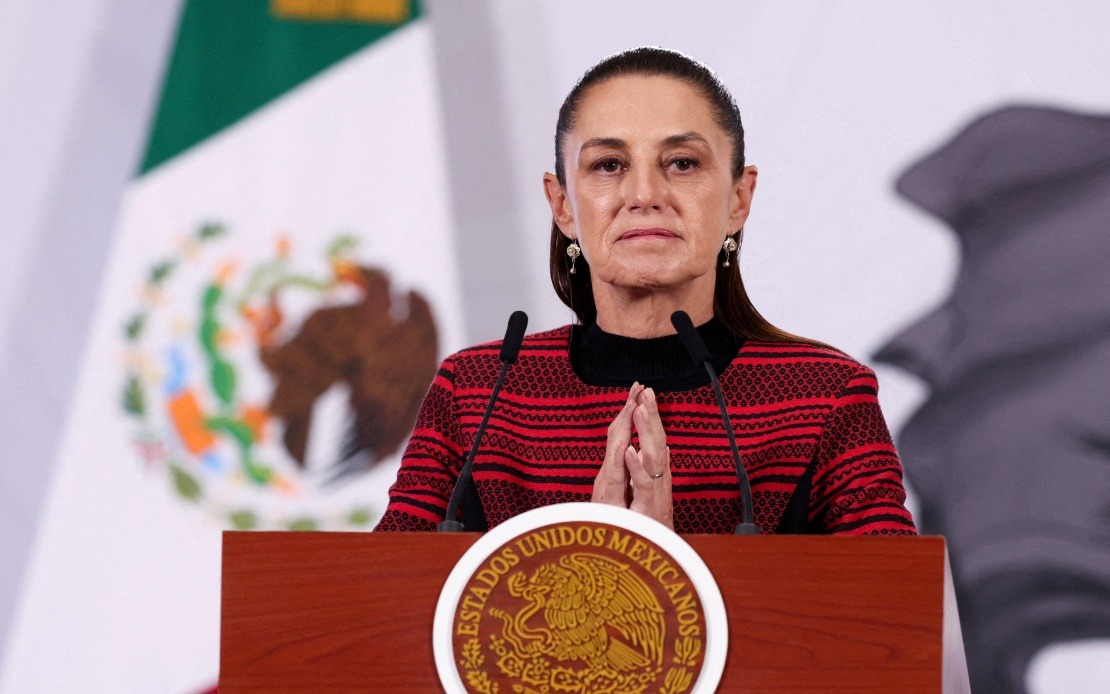
Mexican President Claudia Sheinbaum will travel to the World Cup final in New York this weekend at the personal invitation of United States President Donald Trump, according to reports from the German Press Agency. The announcement came after Sheinbaum confirmed to journalists on Friday that she had received a direct invitation from the American leader. Prime Minister Mark Carney of Canada, the third co-hosting nation, is also expected to attend the championship match between Argentina and Spain in East Rutherford.
The development marks a notable shift in optics between two neighbouring countries whose relations have become increasingly fraught over trade disputes and cross-border security challenges. The bilateral relationship has faced considerable strain in recent months, with contentious discussions around tariffs, immigration enforcement, and drug trafficking dominating the agenda. By accepting Trump's invitation to witness the final at MetLife Stadium, Sheinbaum appears to be extending an olive branch at a moment when constructive dialogue between Mexico City and Washington remains critical.
Sheinbaum's decision carries particular symbolic weight given her conspicuous absence from the World Cup opening ceremony at Azteca Stadium in June. At that occasion, she opted not to attend the inaugural match of the tournament her own nation was co-hosting, choosing instead to gift her ticket to an indigenous woman passionate about football. That choice reflected her administration's priorities regarding equitable access to national events, though it also underscored her selective approach to World Cup engagements.
This will be only the second in-person meeting between the two leaders since Trump assumed office. Their first encounter occurred in December at the World Cup draw ceremony held in Washington, where they had limited opportunity for substantive discussions amid the formal proceedings. The final in New York will provide a different setting—one of celebration rather than official protocol—potentially offering more informal space for conversation between the two executives.
The Mexican president's itinerary in Quintana Roo state required significant rearrangement to accommodate her attendance at the final on Sunday. Such schedule modifications underscore the importance her administration places on this gesture, despite the diplomatic complexity it navigates. Mexican media outlets have closely tracked these arrangements, recognising the diplomatic implications of her acceptance.
Spain's royal family will also grace the occasion with their presence. King Felipe VI, Queen Letizia, Crown Princess Leonor, and Infanta Sofía are confirmed to attend the final to support La Roja. Their participation reflects the traditional role European monarchies play in major sporting events, providing ceremonial gravitas and national representation.
Argentina's President Javier Milei, by contrast, has chosen to remain absent from the stadium itself, citing personal superstition as his reasoning. This decision reflects the deeply rooted cultural traditions within Argentine football culture, where lucky rituals and superstitious practices hold considerable significance among fans and political figures alike. Milei's absence from the stands will not diminish Argentine interest in the match, given the national passion for football and the country's quest for another championship.
The World Cup final represents far more than a sporting spectacle within the geopolitical context of North American relations. For Mexico, co-hosting one of the world's largest sporting events carries expectations of diplomatic engagement at the highest levels. Trump's invitation to Sheinbaum, and her acceptance, suggest that despite public tensions and policy disagreements, both capitals recognise the utility of maintaining channels of communication and demonstrating a capacity for civility on the international stage.
For Malaysian observers, the scene unfolding at MetLife Stadium carries relevant lessons about how neighbouring nations navigate disputes while maintaining bilateral engagement. ASEAN's emphasis on dialogue and non-confrontational diplomacy finds parallels in this North American dynamic, particularly when major nations must balance competing interests with the necessity of functional relationships. The World Cup final becomes not merely a football match but a venue where international leaders perform their commitment to ongoing engagement, even amid underlying disagreements.
The convergence of American, Mexican, Spanish, and Argentine leadership at the final also demonstrates how sporting events continue to serve as platforms for soft diplomacy and informal dialogue. In an era of increasing polarisation, such occasions offer opportunities for leaders to reset narratives and signal openness to constructive engagement. Sheinbaum's decision to attend, particularly after skipping the opening ceremony, reflects a calculated diplomatic calculation about how best to advance Mexican interests within the complex relationship with its northern neighbour.

