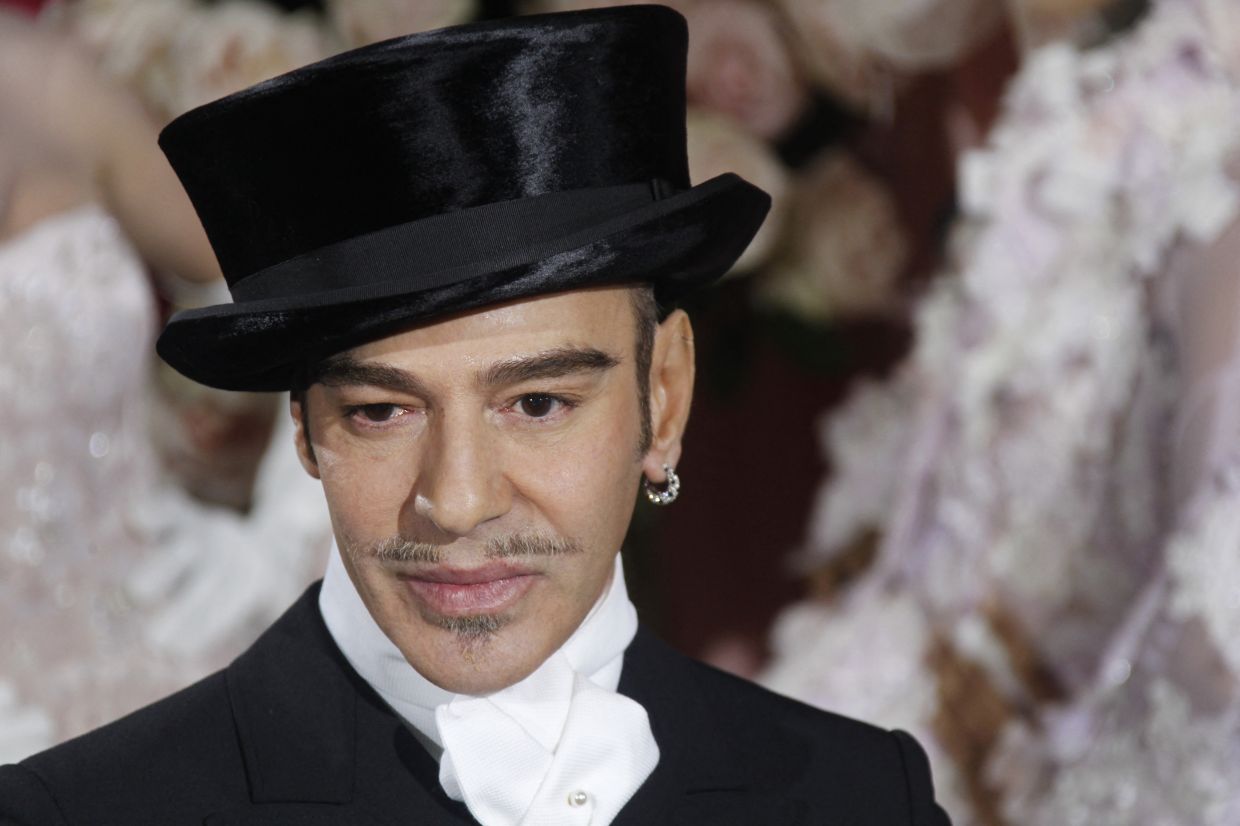
The Metropolitan Museum of Art's Costume Institute will dedicate next year's exhibition to John Galliano, a British designer whose career trajectory exemplifies both extraordinary creative achievement and the severe consequences of personal misconduct in the fashion world. Galliano will become only the third living designer to receive a solo retrospective at the prestigious institution, an honour typically reserved for fashion titans whose influence has fundamentally shaped the industry. Yet this particular exhibition represents far more than a conventional celebration of design excellence; it stands as a carefully constructed examination of how institutions reckon with artistic accomplishment when tempered by ethical failures that once seemed career-ending.
Galliano's ascent to the pinnacle of global fashion appeared unassailable during his 15-year tenure as creative director at Christian Dior, arguably fashion's most storied heritage house. His tenure was marked by increasingly theatrical, audacious collections that pushed the boundaries of haute couture and established him as a visionary capable of honouring a historic brand whilst simultaneously propelling it into new artistic territory. His work became synonymous with the glamour and excess that defined early 2000s luxury fashion, and he commanded unparalleled respect amongst industry peers and critics alike.
That edifice crumbled in 2010 and 2011 when Galliano made a series of antisemitic and racist comments that were captured on video and rapidly circulated across emerging social media platforms. A particularly damaging recording showed him expressing support for Adolf Hitler, comments that triggered immediate outrage from Jewish community organisations, civil rights groups, and the fashion establishment. The virality of these incidents meant that the damage extended far beyond industry circles; Galliano became a symbol of unchecked privilege and bigotry within elite cultural spaces. He was subsequently convicted by a Paris court for public insults based on race, religion, ethnicity, and origin, and Dior terminated his position without hesitation.
What followed was an extended period of professional exile and personal reckoning. Galliano withdrew from public life and undertook documented efforts toward rehabilitation, including treatment for substance addiction and what the museum characterises as both public and private attempts to address the harm his words had caused. For several years, the fashion world seemed to have made a definitive judgment that his career had ended. However, in 2014, the Paris fashion house Maison Margiela extended him an opportunity to rebuild, hiring him as creative director—a decision that was initially controversial but gradually gained acceptance as Galliano demonstrated sustained commitment to his rehabilitation and produced a decade of critically acclaimed collections.
The Metropolitan Museum's decision to mount a comprehensive exhibition dedicated to Galliano thus represents a significant cultural moment that extends well beyond fashion circles. For Malaysian and Southeast Asian observers, the exhibition raises fundamental questions about how societies and institutions balance artistic merit against ethical accountability, particularly when individuals occupy positions of cultural influence. The fashion industry has historically been criticised for enabling problematic behaviour amongst celebrated designers, and this exhibition appears to signal a shift toward more transparent confrontation of such issues.
Museum leadership has taken considerable pains to signal that this exhibition will not function as a whitewashing of Galliano's past. In an official statement released on Friday, July 31st, the Costume Institute emphasised that the show would examine "derogatory conduct that fundamentally altered his career and public reception" alongside his creative accomplishments, positioning artistic achievement and ethical accountability as inextricably linked rather than separate categories. This framing represents a deliberate curatorial choice that reflects evolving cultural values regarding how institutions should present controversial historical figures.
Preparation for the exhibition included substantive consultation with Jewish community leaders in New York, a process that Andrew Bolton, the museum's principal fashion curator who oversees nearly all major fashion exhibitions, undertook alongside Galliano himself and Vogue editor-in-chief Anna Wintour. These consultations presumably ensured that the museum's approach would be sensitive to the concerns of communities directly affected by antisemitic rhetoric, and demonstrated institutional recognition that such exhibitions carry responsibilities extending beyond aesthetic considerations.
The exhibition will unfold across three distinct thematic sections that guide viewers through different dimensions of Galliano's career and its complications. The first section, titled "Bearings," directly confronts the rupture created by his 2010-2011 conduct, explicitly documenting the antisemitic, racist, and anti-Asian remarks that precipitated his dismissal from both Christian Dior and his eponymous label. This section will also address his subsequent treatment for substance dependency and his evolving acknowledgment of his actions—a structural choice that frames rehabilitation as part of the historical record rather than a redemptive epilogue.
The second section, "Horizons," shifts focus toward examining the creative sources and inspirations that have animated Galliano's design philosophy throughout his career. By exploring his engagement with history, geography, art, storytelling, and performance, this section positions Galliano's undeniable talents within the broader context of artistic influence and intellectual tradition. The third section, "Atlas Of Transformation," concentrates on his technical innovations, craftsmanship, and experimental approaches to fashion design—the elements that established his reputation as a singular creative force.
For Malaysian fashion enthusiasts and industry professionals, this exhibition offers instructive lessons about how heritage houses and cultural institutions navigate contemporary ethical expectations. The fashion industry remains deeply influential in shaping cultural values and aesthetic sensibilities across Southeast Asia, where younger designers and emerging brands look toward European fashion capitals for direction and validation. An exhibition that transparently examines both excellence and misconduct within this context may encourage more nuanced conversations within the region's own creative communities about professional responsibility and accountability.
The May 2025 Met Gala, which will launch this exhibition, is likely to generate intense international scrutiny and debate. The red carpet appearance of Galliano, combined with his designs displayed throughout the Costume Institute, will inevitably prompt reflection on questions of redemption, the possibility of rehabilitation for public figures, and whether sufficient time and effort can render past transgressions forgivable within elite cultural spaces. These conversations will likely reverberate across global fashion industries and cultural institutions grappling with similar questions about how to reckon with problematic legacies.
Ultimately, the Metropolitan Museum's approach appears to signal a maturation in how major cultural institutions confront complex historical narratives. Rather than either celebrating Galliano uncritically or permanently erasing him from the historical record, the museum is attempting a more demanding curatorial task: creating space for simultaneous acknowledgment of artistic brilliance and serious ethical failures, recognising that redemption remains possible but incomplete, and insisting that artistic achievement and personal accountability cannot be separated into convenient categories. Whether this exhibition succeeds in that ambitious goal will likely influence how other institutions approach similar challenges in the years ahead.

