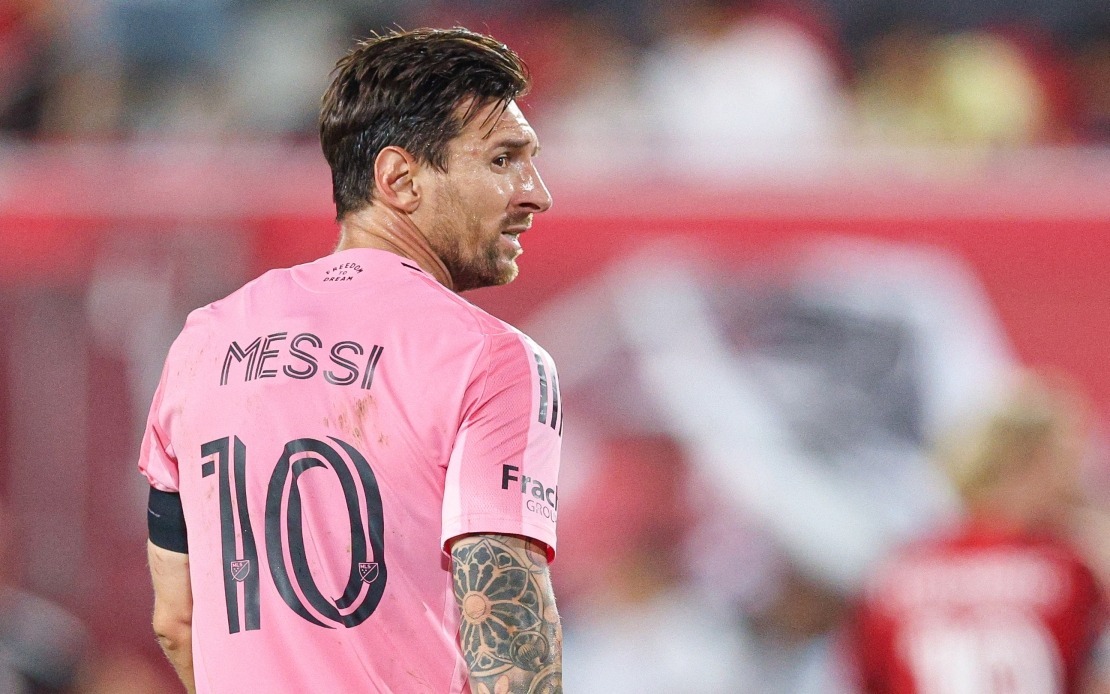
Lionel Messi took to the field for Inter Miami on Wednesday evening, marking his first appearance for the Major League Soccer franchise since his father Jorge passed away last week. The Argentina captain entered the match as a second-half substitute during his team's 3-2 defeat to Leon in the final group stage fixture of the Leagues Cup, a significant moment as he navigates one of the most challenging periods of his life both personally and professionally.
The 37-year-old had conspicuously withdrawn from competitive action following his father's death, missing Inter Miami's previous match against Monterrey on Saturday, which his team lost 2-1. That same Sunday, Messi attended a private funeral service held at a cemetery in Perez, a town adjacent to his Argentine hometown of Rosario. His absence had fuelled widespread speculation about the state of his mental wellbeing and whether the grief might influence a decision to step away from professional football entirely.
The emotional weight of the moment became evident when Messi shared a deeply personal statement on social media in the days leading up to his return. In the message, he expressed profound anguish at his father's passing, reflecting on their lifelong bond and the pivotal role Jorge had played throughout his extraordinary career. "You were by my side from the beginning; there was so little left until the end. Why couldn't you hold on just a little longer so we could finish it together?" he wrote, adding that he was uncertain whether he possessed the resolve to continue competing at the highest level.
Messi's relationship with his father extended far beyond the typical parent-child dynamic. Jorge had served as his son's agent from the age of fourteen, witnessing and facilitating his transformation into one of football's greatest talents. The elder Messi remained by his side through countless triumphs, including the 2022 FIFA World Cup victory in Qatar, where his son captained Argentina to the sport's greatest prize. Most recently, Jorge had reportedly encouraged his son to participate in what may be his final World Cup tournament, despite his health visibly declining in the lead-up to the competition held this summer in the United States.
That recent tournament in North America ended in heartbreak for Messi and Argentina, who reached the final only to fall to Spain 1-0 in extra time. The timing made Jorge's illness and subsequent passing particularly poignant, as the tournament represented what could well be Lionel's last opportunity to add another World Cup medal to his legacy. In his statement, Messi acknowledged that his father had pushed him to make one final World Cup appearance, a request that was fulfilled but with bittersweet consequences.
The question of whether Messi would continue playing had become a matter of genuine uncertainty within football circles. His declaration that he was "not sure if I'll carry on doing it for much longer" suggested the possibility that grief might prompt an unexpected retirement. However, his appearance on Wednesday, though coming as a substitute late in the match, provided an initial indication that he may be attempting to channel his emotions through the sport that has defined his entire existence.
Inter Miami's manager Guillermo Hoyos addressed the situation with considerable empathy following the match, drawing on his own experience of paternal loss. He described the death of a parent as "a very painful thing" that requires extended time for processing, whilst emphasising that Messi's father held tremendous importance not merely as a family figure but as a guiding force in his son's life and decision-making. Hoyos's comments underscored the difficulty of navigating professional obligations whilst managing profound personal grief.
The opposition manager, Javier Gandolfi of Leon, offered a different perspective that highlighted Messi's enduring quality despite the obvious emotional turmoil. Gandolfi remarked that the Inter Miami captain demonstrated once again why many consider him the finest player in football history, suggesting that Messi's character and ability transcend the ordinary struggles that confront most athletes. Such observations, whilst well-intentioned, perhaps underestimate the genuine emotional and psychological challenges Messi now faces.
The broader context for Malaysian and Southeast Asian observers is worth considering. Messi's situation reflects universal human experiences—the loss of a parent, the struggle to continue with professional responsibilities whilst grieving, and the question of when it becomes appropriate to step back from demanding careers. In a region where family bonds and filial devotion hold particularly significant cultural weight, Messi's public expression of grief and his gradual return to activity may resonate with audiences who understand the complexity of balancing personal loss with public expectations.
Looking forward, Messi's continued presence in Inter Miami's squad will likely depend on his emotional recovery and his capacity to find meaning in football without his father's presence. Whether the return on Wednesday represents the beginning of a renewed commitment to the sport or a temporary engagement before eventual retirement remains unclear. What is evident, however, is that even athletes of Messi's extraordinary ability must confront the profound disruptions that life inevitably presents, reminding audiences that no amount of sporting genius exempts anyone from the human condition.

