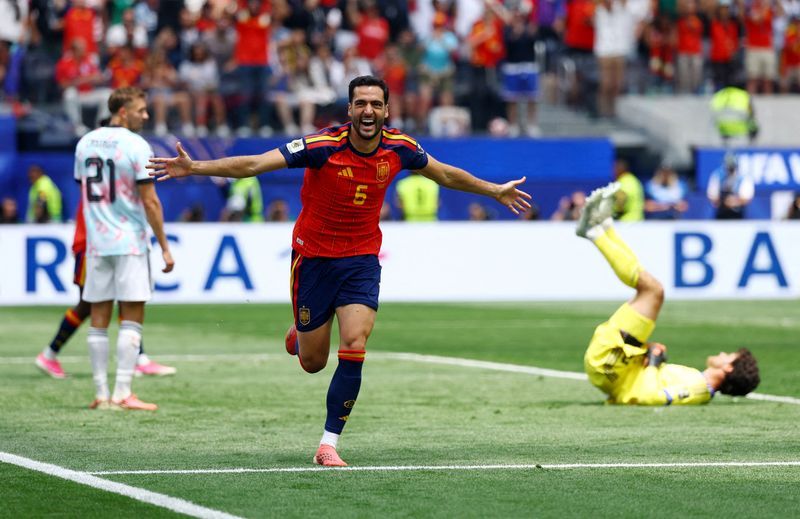
In a tightly contested quarter-final encounter at Los Angeles Stadium on Friday, Spain overcame a determined Belgium side to secure a 2-1 victory and a berth in the World Cup semi-finals. The European champions will now face tournament favourites France in Dallas on Tuesday for the chance to compete for the coveted trophy. The result represents a significant milestone for the Spanish squad, as they reach the final four for the first time since their triumphant 2010 campaign.
The narrative of the match was shaped considerably by Belgium's mounting injury concerns. Captain Youri Tielemans was withdrawn from the starting eleven shortly before kick-off due to a warm-up injury, forcing coach Roberto Martinez to shuffle his midfield with Hans Vanaken stepping into the lineup. The Belgian contingent was further depleted by the absence of midfielder Amadou Onana, who sustained an anterior cruciate ligament tear during their previous knockout-stage elimination of the United States. These absences created palpable gaps in Belgium's midfield orchestration, ultimately contributing to their downfall.
Fabian Ruiz provided the opening breakthrough for Spain in the 30th minute, capitalizing on a moment of uncertainty from Belgian goalkeeper Thibaut Courtois. The Paris Saint-Germain midfielder demonstrated predatory instincts, firing between defender Timothy Castagne's legs after Courtois had produced a stunning diving save moments earlier. The goal vindicated Spain coach Luis de la Fuente's tactical gambit to start Ruiz ahead of Barcelona's Pedri, signalling a willingness to prioritize physicality and directness in midfield against a compromised Belgian setup.
Belgium responded swiftly, finding an equalizer eleven minutes later through Charles De Ketelaere. The attacker showed impeccable positioning to direct Castagne's cross past Spanish keeper Unai Simon, marking the first goal Spain had conceded throughout the entire tournament. The equaliser injected renewed vigour into the Belgian performance, and the remainder of the opening period witnessed an intense midfield battle under oppressive heat conditions at the stadium.
Following the interval, Spain emerged with reinvigorated intent, dominating possession and systematically probing the Belgian defensive structure. The introduction of 18-year-old winger Lamine Yamal provided Spain with electric attacking impetus down the flanks, his youthful exuberance and technical quality proving consistently troublesome for the Belgian backline. As the second half progressed, the pattern became increasingly predictable—Spain pressing relentlessly while Belgium defended with diminishing resources and mounting fatigue.
The decisive moment arrived in the 86th minute when Mikel Merino, introduced as a substitute minutes earlier, pounced on a critical error from Belgian goalkeeper Senne Lammens. Following Pau Cubarsi's low effort, Lammens failed to secure the ball cleanly, allowing it to bobble loose in the penalty area. Merino displayed the composure and awareness to capitalize immediately, firing home the goal that would prove decisive. The striker's clinical finishing extended his remarkable tournament narrative—he had previously scored the winning goal as a substitute in Spain's round-of-16 victory over Portugal, making him an unprecedented figure in World Cup history to achieve such a feat twice in knockout competition.
Following his match-winning contribution, Merino articulated his philosophy with characteristic confidence. "There are no such things as coincidences," he reflected in the immediate aftermath. "If you go into a match well-prepared, things tend to happen again." His comments underscored the psychological edge Spain had cultivated through their methodical approach and superior fitness levels. The striker added prophetically: "We are two matches away from winning the World Cup and that is what we are going after."
Belgium's veteran contingent, led by Manchester City's Kevin De Bruyne and striker Romelu Lukaku, mounted a desperate search for another equalizer in the closing stages, but their compromised squad composition ultimately proved inadequate against Spain's superior intensity and cohesion. Despite generating several promising attacking opportunities, the Belgians lacked the tactical coherence necessary to unlock the Spanish defense in the final minutes.
Spanish coach Luis de la Fuente acknowledged the formidable challenge ahead with measured respect. "We're going to work hard to try and beat France," he stated, recognizing the calibre of opposition awaiting his team. "They'll be just as worried as we are," he added, attempting to frame the upcoming semi-final as an evenly-matched contest rather than an insurmountable hurdle. The comment reflected both Spain's newfound confidence and a realistic assessment of France's continued status as tournament favourites.
The victory carries particular significance for Spanish football, representing a return to World Cup prominence following years of inconsistent international performances. The 2010 triumph represented a unique moment in the nation's sporting culture, and the current generation now possesses a genuine opportunity to emulate that achievement. With key performers like Merino demonstrating crucial mental fortitude and younger talents such as Yamal flourishing under tournament pressure, Spain has constructed a balanced squad capable of competing at the tournament's highest level.
For Malaysian and Southeast Asian observers, Spain's progression illustrates the enduring competitive strength of European football establishments. The tournament continues to showcase the technical sophistication and tactical discipline that characterizes top-tier European teams, elements increasingly relevant as Asian football seeks to close the quality gap with established continental powers. Spain's approach—emphasizing possession, positional discipline, and clinical finishing—represents a template that developing football nations across Asia continue to study and emulate.

