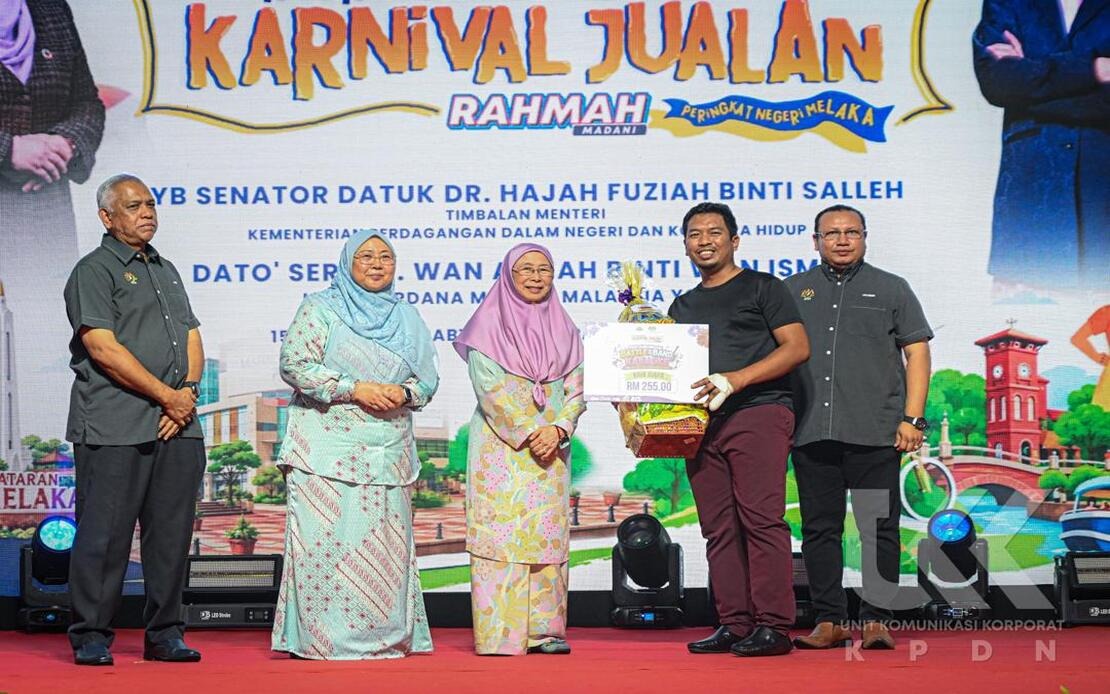
The government's Menu RAHMAH initiative continues to expand its reach across Malaysia, with Domestic Trade and Cost of Living Deputy Minister Datuk Dr Fuziah Salleh announcing that 3,210 food and beverage premises have now registered as participating operators nationwide as of July. The growing involvement of these establishments signals increasing commercial enthusiasm for supporting the administration's broader agenda to address affordability challenges facing ordinary Malaysians. The deputy minister emphasised that the programme represents far more than a temporary relief measure, instead constituting a permanent pillar of government policy designed to maintain cost-of-living as a sustained priority for the nation.
The composition of participating operators reveals broad engagement across Malaysia's diverse food service sector. Food stalls and food court establishments lead participation with 1,016 registrations, reflecting their importance as affordable dining destinations for working-class and middle-income consumers. Beyond these venues, the initiative encompasses traditional restaurant operators, independent hawkers, mobile food trucks, and bazaar-based vendors, demonstrating that the programme accommodates multiple food service models. This diversity ensures that the menu options reach consumers across different neighbourhoods and through varied purchasing patterns, from daily commuters purchasing meals at food courts to shoppers browsing weekend bazaars.
Strategic geographic expansion forms a key component of Menu RAHMAH's rollout strategy. The government has deliberately prioritised Rest and Service Areas on major highways, recognising that travellers represent a significant consumer base often subject to premium pricing at such locations. By introducing affordable meal options at these high-traffic nodes, the initiative addresses a genuine gap in the market where pricing typically reflects captive consumer circumstances. This targeted approach reflects pragmatic policymaking that focuses resources on areas demonstrating genuine public demand rather than pursuing universal coverage without regard to impact.
Promotion efforts surrounding Menu RAHMAH have been systematised through the 'Jom Cari Menu RAHMAH' campaign, which builds consumer awareness of participating establishments and available menu items. The Ministry of Domestic Trade and Cost of Living intends to intensify these promotional activities while simultaneously cultivating relationships with industry associations and additional food operators to expand menu variety and geographic distribution. This two-pronged approach—demand creation through consumer marketing coupled with supply-side expansion through operator recruitment—reflects recognition that both consumer awareness and business participation require sustained cultivation.
Complementing the Menu RAHMAH food initiative, the government has expanded the MADANI RAHMAH Sales Programme to bring essential commodities to more citizens at substantially reduced prices. As of July 2026, this programme had completed 19,322 implementations, surpassing the annual target of 17,500 occasions by a considerable margin. The scale of transaction volume, reaching nearly 25.5 million transactions nationwide, indicates that Malaysian households are genuinely utilising these purchasing opportunities. The programme consistently delivers savings ranging from 10 to 30 per cent relative to conventional retail pricing, encompassing staple protein sources including chicken and fish, essential oils and fats, grains, fresh produce, and household supplies that form the foundation of household budgets.
The geographic scope of the MADANI RAHMAH Sales Programme underscores its ambition to achieve nationwide penetration. Implementation stretches across 600 state constituencies and extends throughout 40 zones in the Federal Territories, representing comprehensive national coverage that extends beyond major urban centres to reach suburban and potentially rural constituencies. Focusing on areas demonstrating acute affordability challenges ensures that resources concentrate where they generate maximum benefit, avoiding wasteful deployment in already-well-serviced locations. This targeted geography reflects policy maturity in understanding that cost-of-living pressures manifest differently across Malaysia's diverse socioeconomic landscape.
The Melaka-level KPDN Mini Carnival showcased the government's integrated approach to cost-of-living initiatives by assembling multiple programmes under a unified event structure. The carnival brought together Menu RAHMAH promotion alongside MADANI RAHMAH Sales Programme activations, supplemented by government advisory services and business-matching opportunities. This integrated format allows citizens to encounter multiple government support options simultaneously, reducing the friction typically associated with accessing programmes dispersed across separate venues and timeframes. The carnival also featured consumer-facing activities including competitive events and entertainment programming, transforming what might otherwise be bureaucratic transactions into community engagement occasions.
Participation by 27 traders offering reasonably priced merchandise, combined with stage performances and an electronic sports tournament conducted in collaboration with Todak, transformed the carnival into authentic community events rather than mere government information booths. This programming approach acknowledges that achieving genuine public engagement requires entertainment and community experience beyond functional service delivery. The recorded attendance of approximately 3,000 visitors on the inaugural day, with expectations for continued growth toward the programme's conclusion, validates the effectiveness of this integrated event strategy in reaching the target demographic.
For Malaysian policymakers and citizens alike, the Menu RAHMAH expansion and MADANI RAHMAH Sales Programme represent substantive implementation of cost-of-living commitments rather than announcements devoid of operational follow-through. The accumulating registrations from food operators and the transaction volumes generated through sales programmes indicate genuine economic participation extending beyond government subsidies into market-based solutions where private operators willingly engage. The evidence suggests that business operators perceive participation as commercially viable, not merely charitable obligation, indicating sustainable programme economics. For Malaysian households, the availability of affordable meals and subsidised essential goods provides genuine relief from inflationary pressures that disproportionately impact lower and middle-income earners who dedicate substantial income portions to food and household necessities.
The expansion trajectory suggests the government views these initiatives as foundational infrastructure for Malaysia's social compact, warranting ongoing resource allocation and policy attention. Unlike temporary relief measures employed during crisis periods, the explicit characterisation of Menu RAHMAH as permanent government policy signals long-term commitment to affordability as a governance priority. This framing matters considerably for business operators planning inventory and promotional strategies, as well as for citizens budgeting household expenditures. The question moving forward concerns whether programme expansion can maintain cost-effectiveness as it scales further, and whether private sector participation can be sustained through voluntary mechanisms or whether incentive structures require adjustment as economic circumstances evolve.

