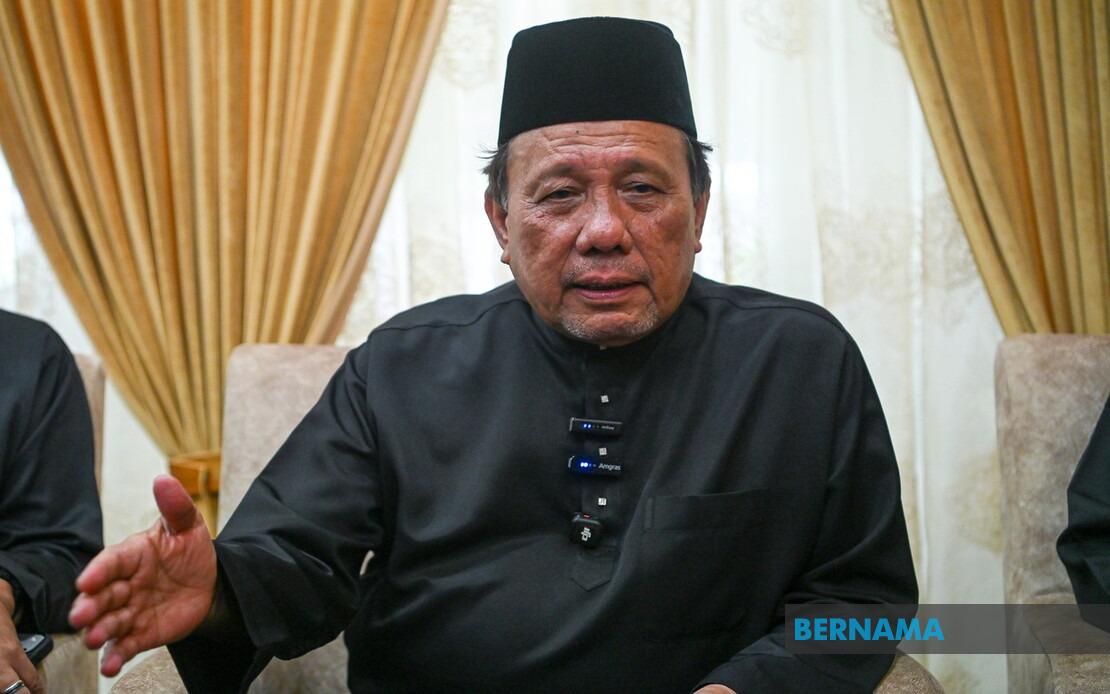
Datuk Ismail Lasim, Negeri Sembilan's Menteri Besar, has taken on a new responsibility beyond his political duties, stepping into the chairmanship of Negeri Sembilan Football Club (NSFC) effective immediately. The appointment represents a shift in leadership at the state-level football institution, with Ismail succeeding Datuk Seri Aminuddin Harun, who recently stepped down from the role.
The transition comes at a pivotal time for Malaysian football, as state clubs continue grappling with questions of sustainability and competitive viability in an increasingly professionalised domestic league system. The appointment was formalised by Tunku Besar Tampin Tunku Syed Razman Tunku Syed Idrus Al-Qadri, president of the Negeri Sembilan Football Association (PBNS), who expressed confidence in Ismail's capacity to navigate the club through its developmental challenges. The timing of the leadership change underscores the commitment of state authorities to inject fresh strategic direction into the organisation.
Ismail brings substantial football credentials to the position, having served the Negeri Sembilan football ecosystem in various capacities over three decades. His tenure as state team manager spanning the 1990s and early 2000s provided him with intimate knowledge of the grassroots infrastructure, player development pathways, and the distinctive football culture that defines Negeri Sembilan's identity within the Malaysian footballing landscape. Beyond his managerial experience, he previously held the position of PBNS vice-president in 2010, providing him with governance-level exposure to football administration and policy formulation at the state association level.
The appointment reflects a broader strategic vision articulated by the football association regarding the club's future trajectory. Rather than importing external expertise from outside the state, the PBNS leadership has chosen to harness institutional memory and continuity by bringing back a figure deeply rooted in Negeri Sembilan's football fabric. This approach prioritises preservation of the club's values and identity, concerns that frequently get sidelined when new leadership arrives without established connections to the organisation's historical mission and community roots.
Ismail's mandate encompasses multiple dimensions of club development, requiring him to balance immediate competitive objectives with medium-term structural improvements. As chairman, he will shape the club's strategic direction while simultaneously strengthening collaborative relationships between NSFC, the state football association, the Negeri Sembilan state government, and wider stakeholder networks including sponsors, community groups, and supporter associations. This interconnected approach recognises that isolated club management divorced from broader state football ecosystems produces suboptimal outcomes.
The club itself faces the multifaceted challenge of operating as a professional, sustainable, and competitive entity within Malaysia's football structure. State clubs occupy an increasingly ambiguous position in the domestic football hierarchy, caught between aspirations to match the resources and reach of better-funded private franchises while maintaining roots in their local communities. NSFC's strategic priorities therefore reflect this tension: developing professional playing and administrative standards, establishing robust youth development infrastructure, strengthening commercial revenue streams, and nurturing genuine supporter engagement rather than treating fans as passive consumers.
Player development emerges as a critical focal point for Ismail's tenure. Malaysian state clubs have historically functioned as production lines for talent that subsequently transfers elsewhere, creating a revolving-door dynamic where investment in youth systems yields benefits that accrue primarily to wealthier clubs. Reversing this pattern requires sustained commitment to player welfare, competitive pathway clarity, and competitive compensation structures that incentivise young talents to extend their development within the state club framework rather than seeking opportunities immediately elsewhere.
The structural dimensions of club operations—encompassing administrative processes, financial management, governance protocols, and operational efficiency—will require systematic attention. Many Malaysian state clubs operate with inherited systems designed for different eras, creating inefficiencies that constrain competitiveness and drain resources. Ismail's experience navigating both playing and administrative spheres positions him to identify and address such systemic obstacles systematically rather than pursuing superficial cosmetic changes.
Commercial viability represents another significant challenge requiring strategic innovation. State clubs typically operate with constrained commercial budgets compared to privately-funded competitors, limiting their capacity for competitive team assembly during transfer windows. Identifying alternative revenue pathways—through community engagement initiatives, merchandise development, stadium hospitality optimisation, and strategic sponsorship cultivation—becomes essential for financial sustainability. Ismail's dual standing as both club chairman and state leader potentially creates avenues for government-backed initiatives that purely private clubs cannot access.
The broader Malaysian football context makes timing particularly significant. The domestic league system has experienced considerable turbulence in recent years, with questions regarding fixture consistency, administrative transparency, and competitive balance casting shadows over the sport's credibility. Within this uncertain environment, state clubs occupy vulnerable positions, dependent on government support that can fluctuate with political circumstances. Ismail's embedded position within state government structures potentially provides NSFC with greater advocacy power regarding resource allocation and league policy influence.
Community connection represents perhaps the most distinctive potential advantage of Ismail's appointment. State clubs survive or flourish based substantially on community support, attendance figures, and grassroots engagement levels. A chairman with established relationships throughout Negeri Sembilan's football networks and community constituencies possesses considerable advantage in rebuilding supporter confidence and participation, particularly crucial for clubs seeking to transition from struggling institutions into respected community assets.
Ismail's appointment ultimately signals a deliberate choice by Negeri Sembilan football authorities to invest in continuity, institutional knowledge, and locally-rooted leadership rather than pursuing shortcuts through external recruitment. Whether this philosophy translates into competitive improvement and sustainable club development will depend substantially on the resources committed to his tenure and the willingness of stakeholder institutions to align behind a coherent developmental strategy. The coming months will reveal whether Ismail's football experience and political standing combine effectively to navigate NSFC through its multifaceted challenges.

