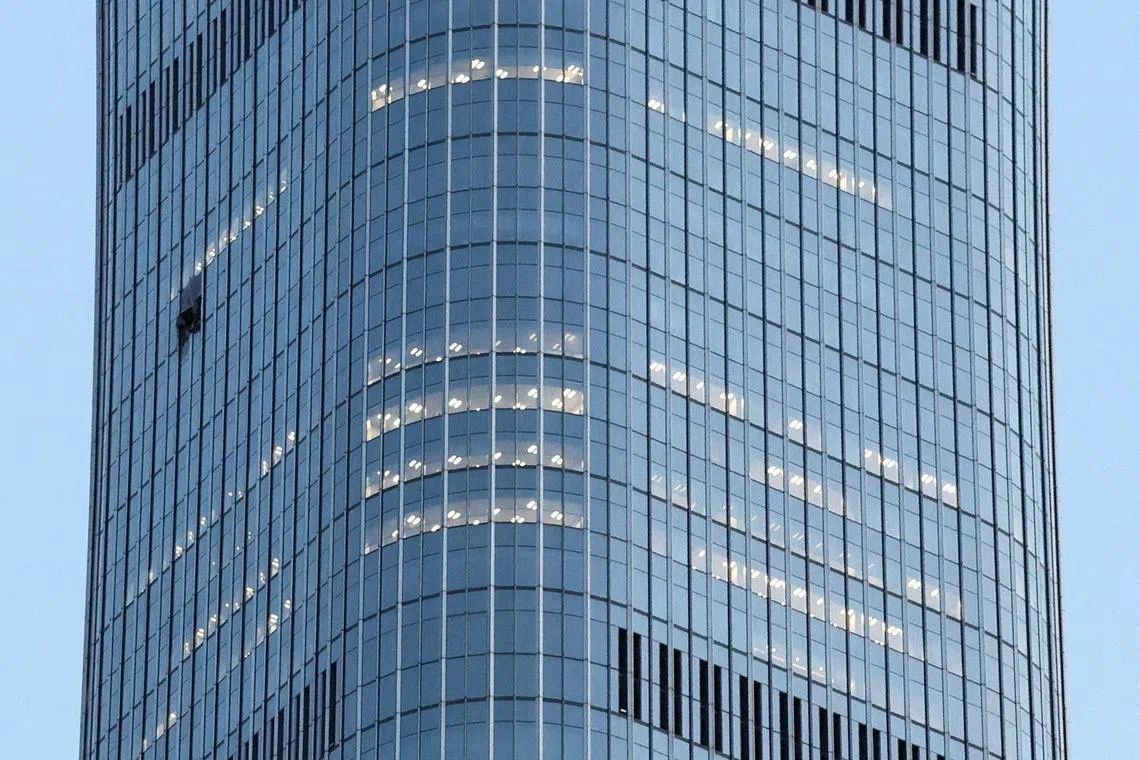
A 66-year-old pilot who flew a light aircraft into Beijing's CITIC Tower on 26 June, injuring 13 people, had long battled mental health problems and left written records expressing thoughts of suicide, according to statements released by the capital's Chaoyang district government on Thursday. The crash, which saw the two-seat propeller-driven aircraft strike the 528-metre skyscraper in the city's Central Business District, has prompted fresh questions about aviation security in one of the world's most tightly controlled airspaces and in close proximity to Zhongnanhai, the fortified compound housing China's top political leadership.
The pilot, identified only by the surname Liu, lived a solitary existence following a divorce and had obtained both his sport pilot license in 2021 and private pilot license in 2024. According to the government statement, Liu had endured prolonged struggles with insomnia and anxiety, with his personal diary containing repeated references to ending his life. The authorities classified the incident as a public safety crisis stemming from personal circumstances rather than a systemic failure, a characterisation that has not entirely satisfied observers questioning how such an event could occur in an airspace renowned for its stringent controls.
On the day of the incident, Liu departed from a general aviation facility in the suburban Pinggu district and conducted both supervised and solo flights. During his final solo mission, conducted in the afternoon, he deviated significantly from his approved flight corridor and subsequently lost radio contact with airport authorities before striking the tower at 5.55pm local time. The precise sequence of events during those final moments remains somewhat opaque, with official accounts focusing on the deviation and loss of communication rather than exploring the mechanics of how the aircraft penetrated restricted zones.
What has emerged as particularly puzzling for aviation observers and security analysts is the fundamental question of airspace management. The CITIC Tower sits approximately seven kilometres from Zhongnanhai, situated within a region that should have been subject to multiple layers of protective measures. China maintains some of the world's most rigid airspace protocols, with all flights, including general aviation operations, requiring advance approval through state flight-control authorities. General aviation operators must typically submit detailed flight plans to authorities by 3pm on the day preceding takeoff, yet Liu managed to deviate from his designated area during daylight hours without immediate intervention.
The crash occurred mere days before the Communist Party's 105th anniversary celebrations scheduled near Tiananmen Square, an event that typically triggers elevated security measures across the capital. The timing has not gone unnoticed by observers attempting to understand why such an incident could occur during a period of heightened vigilance. Furthermore, the aircraft had to traverse or approach airspace designated for commercial traffic using Beijing Capital Airport, one of the city's two major aviation hubs, raising fundamental questions about separation protocols and radar monitoring capabilities.
Authorised to fly under registration number B-12PP, the aircraft was a modest general aviation platform typical of flight schools and private operators across China. However, the path from a suburban airfield to central Beijing's most prominent commercial district was neither accidental nor geographically inevitable. This geographical anomaly has generated considerable online speculation, though discussion on Chinese social media platforms has been systematically removed, with police preventing journalists and bystanders from photographing or documenting the damaged building's exterior.
For Malaysian and Southeast Asian observers, the incident underscores the complexity of balancing aviation accessibility with security imperatives. Countries across the region managing rapid aviation growth and urbanisation must grapple with similar tensions between facilitating general aviation operations and maintaining protective perimeters around sensitive infrastructure and leadership compounds. The incident demonstrates that even highly sophisticated state apparatus and rigidly controlled airspace environments can experience unexpected breaches when individual operators deliberately or negligently exceed approved parameters.
The medical screening requirements for obtaining a private pilot license in China, according to aviation professionals familiar with the certification process, include comprehensive physical examinations and appropriate health certifications. How Liu's documented mental health struggles, including chronic insomnia and anxiety, were assessed or managed within these certification frameworks remains unclear. The question implicitly raised is whether psychological screening protocols adequately address the risk profiles of individuals exhibiting suicidal ideation.
Authorities have deliberately confined their explanation to personal motivations and mental health factors, sidestepping broader discussions about systemic vulnerabilities that such an incident inevitably exposes. Internet users posting on Chinese social media platforms seeking clarification about security gaps found their queries deleted almost immediately following the official statement. This information management approach, while reflecting standard practice in sensitive security matters, has left unresolved the technical and procedural questions that aviation safety specialists would typically examine following such occurrences in less restricted jurisdictions.

