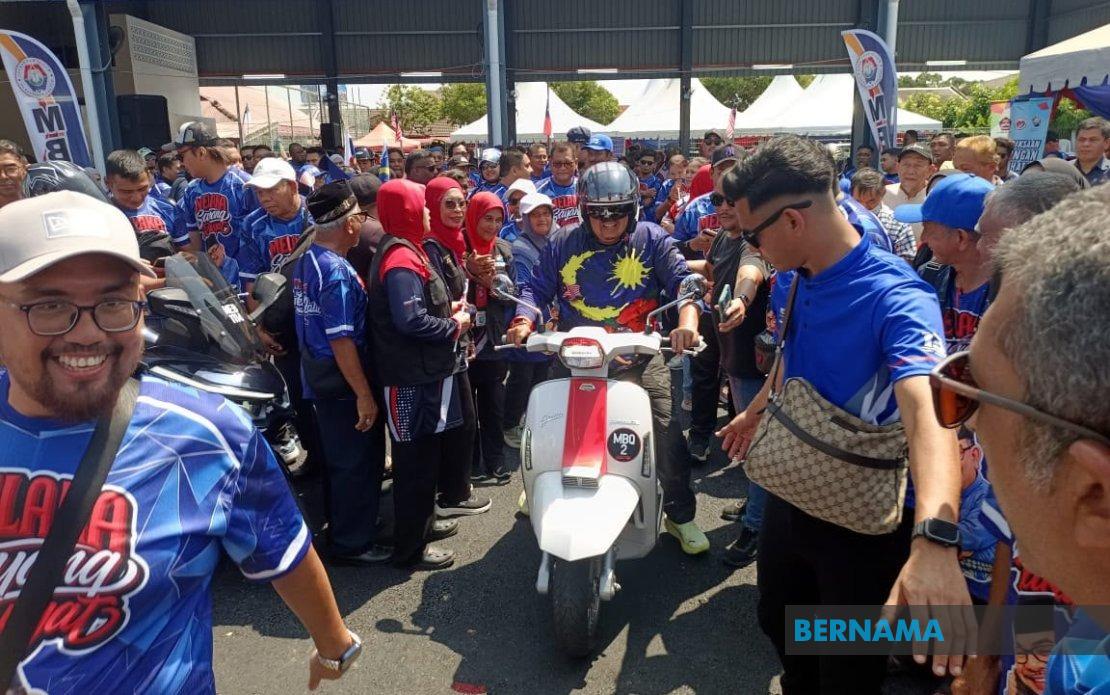
The Melaka state government's latest 'Jelajah Ketua Menteri Sayang Rakyat' initiative demonstrates a systematic approach to grassroots governance that extends beyond conventional political campaigning. Chief Minister Datuk Seri Ab Rauf Yusoh has positioned the tours as the natural continuation of the 'Wakil Rakyat Untuk Rakyat' (WRUR) framework, which the administration launched two years ago to ensure government representatives remain directly connected to constituent concerns. This longstanding commitment precedes any electoral cycle, according to Ab Rauf, reflecting what he describes as the state government's foundational policy to prioritise community welfare.
The 10th edition of the Jelajah Ketua Menteri Sayang Rakyat recently visited Pengkalan Batu, a state constituency within Taman Cempaka, where officials claimed substantive progress on multiple outstanding issues. The tour model integrates feedback from earlier WRUR initiatives and the separate 'Hari Exco Bersama Rakyat' (HEBAT) programme, creating a continuous feedback loop between constituents and state administration. This tiered engagement structure, while administratively complex, allows the government to track issue resolution rates and demonstrate follow-through on public commitments. The presence of both Science, Technology, Innovation and Digital Communications Committee chairman Datuk Fairul Nizam Roslan and the local Pengkalan Batu assemblyman Datuk Kalsom Noordin underscores the integration of state and constituency-level representatives in implementing these initiatives.
Among tangible outcomes highlighted during the Pengkalan Batu visit was the resolution of eight outstanding matters from previous WRUR and HEBAT engagements. A particularly sensitive issue—acquisition of land for a Muslim cemetery—saw resolution through an unusual arrangement: the Chinese landowner offered a 50 per cent discount from the prevailing market value. Ab Rauf characterised this gesture as particularly meaningful within the community context, reflecting a collaborative cross-communal approach to local governance. Such arrangements illustrate how direct political engagement can facilitate problem-solving at the community level where bureaucratic structures alone might prove insufficient.
Housing remains a visible component of the state government's outreach strategy. During the Pengkalan Batu tour, officials supervised repairs to five deteriorating residential properties and distributed a house valued at RM100,000 under the 'Baiti Jannati' programme, implemented in partnership with Tenaga Nasional Berhad (TNB). Infrastructure development also featured prominently, with the Melaka Historic City Council (MBMB) handing over a newly constructed community hall in Pengkalan Batu. These tangible improvements—housing repairs, subsidised property distribution, and public facilities—form the material foundation of the government's public engagement narrative, providing measurable evidence of responsive governance.
Ab Rauf's emphasis on hands-on governance reflects an understanding that elected representatives must maintain direct familiarity with their constituencies' material conditions to make informed policy decisions. The chief minister framed this not merely as good political practice but as essential to understanding the authentic needs of represented populations. This perspective challenges the notion that governance can function effectively through purely administrative channels; instead, it suggests that physical presence, visible responsiveness to grievance, and documented resolution of specific issues constitute legitimate elements of democratic accountability.
The WRUR programme's progression toward completion offers insight into the state government's methodical approach to comprehensive constituency coverage. Having reached the 25th series of WRUR tours with only five state constituencies remaining to be covered, the administration appears to be systematically working through the entire electoral map. This comprehensive coverage strategy differs from selective or strategic engagement, suggesting either genuine commitment to universal outreach or calculated efforts to ensure no geographic constituency remains overlooked before electoral contests. The distinction carries implications for how constituencies evaluate government responsiveness—those visited later may perceive the programme as increasingly urgent, while early-visit constituencies might question whether improvements prove sustainable.
The integration of WRUR, HEBAT, and Jelajah Ketua Menteri Sayang Rakyat programmes indicates evolving governance architecture within Melaka. Rather than discrete initiatives, these appear as layered mechanisms designed to capture public feedback at multiple intervals and representative levels. This redundancy might enhance responsiveness but could equally create administrative complexity or encourage public expectation that every grievance receives immediate resolution. The sustainability of such comprehensive engagement networks depends considerably on institutional capacity and consistent political commitment across electoral cycles.
For Malaysian observers, Melaka's model offers a case study in how state governments attempt to operationalise constituent engagement beyond election periods. The approach mirrors governance trends in other developed democracies where direct public consultation shapes policy implementation. However, the effectiveness of such programmes depends on several factors: whether identified issues receive resolution within reasonable timeframes, whether resource distribution reflects genuine need or political calculation, and whether the programme continues consistently regardless of electoral pressures. Early evidence from the Pengkalan Batu visit suggests material outcomes, but longer-term evaluation would require tracking issue resolution rates across all constituencies and assessing whether improvements persist.
The framing of Jelajah Ketua Menteri Sayang Rakyat as distinct from campaign activity carries political significance in the Malaysian context. Election laws restrict certain government activities during campaign periods, and positioning these tours as permanent governance features rather than campaign initiatives attempts to circumvent such restrictions. This distinction merits scrutiny—whether these programmes genuinely operate independently of electoral cycles or function primarily as sustained campaign infrastructure. The geographical and temporal distribution of tours, the timing of tangible improvements, and the visibility of visiting political figures all influence whether constituents perceive such initiatives as authentic governance or sophisticated political marketing.
The programme's expansion reflects broader Malaysian political trends toward competitive governance innovation at state level. As competitive electoral dynamics intensify across Malaysia, state governments increasingly employ sophisticated public engagement strategies to demonstrate responsiveness and build constituent satisfaction. Melaka's multi-layered approach—integrating quarterly WRUR tours, periodic HEBAT sessions, and the chief minister's roving engagement—creates multiple touchpoints between government and public. This saturation model potentially increases public perception of government accessibility, regardless of whether each engagement produces substantive policy outcomes.
Looking forward, the completion of WRUR coverage across Melaka's remaining five constituencies will test whether the state government sustains these engagement mechanisms or scales them back once comprehensive coverage concludes. The transition from expansion to maintenance phase typically reveals whether such programmes reflect institutionalised governance philosophy or function primarily as strategic political tools. Malaysian constituencies across other states will likely monitor Melaka's experience as reference point for evaluating their own state governments' engagement efforts and establishing benchmarks for constituent responsiveness.
The Pengkalan Batu tour exemplifies how specific government actions—cemetery land acquisition, housing assistance, public infrastructure—function simultaneously as policy implementation and political communication. Ab Rauf's public articulation of these outcomes, combined with direct constituent testimony and visible improvements, constructs a narrative of responsive governance. Whether such narratives translate into sustained public confidence or electoral advantage depends on consistency, comprehensiveness, and genuine problem-solving capacity rather than symbolic gesture. As the state government approaches conclusion of its initial WRUR cycle, demonstrating tangible, durable improvements across all constituencies will prove essential to validating the underlying governance philosophy.

