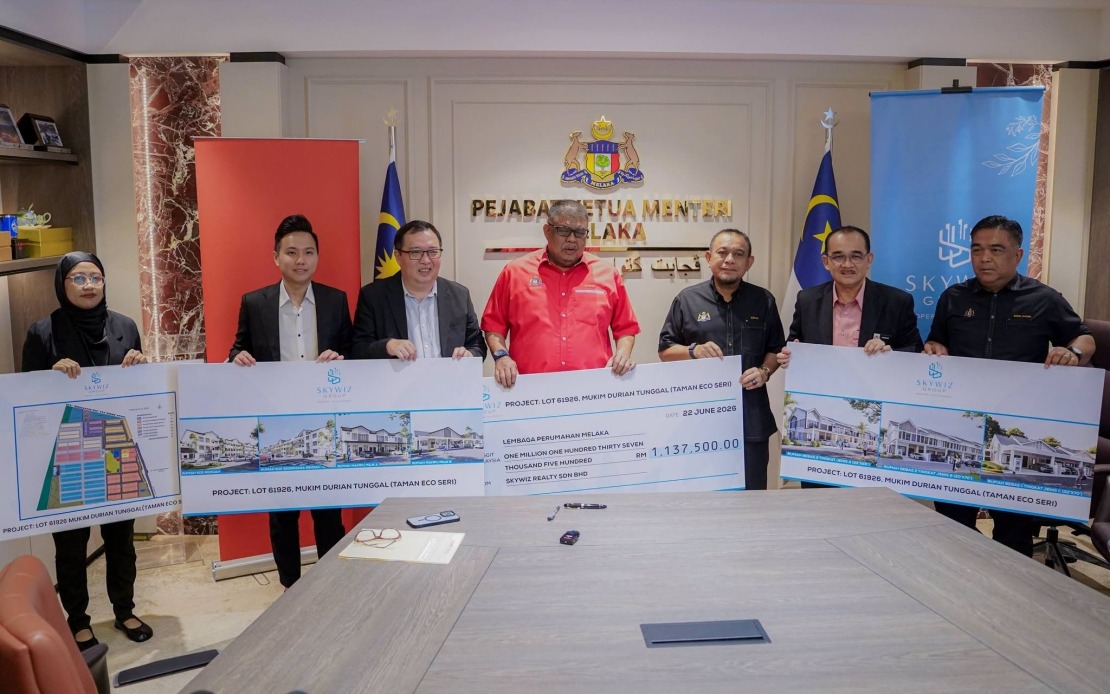
Melaka's Chief Minister Datuk Seri Ab Rauf Yusoh has signalled that the state is preparing to make lift installations a compulsory feature in newly constructed shoplots and residential buildings exceeding two storeys, a move designed to tackle both accessibility barriers and the persistent problem of unsold properties across the region. Speaking in Melaka on July 7, Ab Rauf emphasised that lift facilities should be treated as an essential infrastructure requirement rather than a luxury amenity, particularly given the needs of the state's ageing population and the importance of creating inclusive living environments.
The Chief Minister's announcement came during the signing of an Affordable Housing Development Agreement between the Melaka Housing Board (LPM) and Skywiz Reality Sdn Bhd, and signals growing government concern about structural obstacles limiting property sales. Ab Rauf highlighted specific problem areas where multi-storey residential and commercial units have languished unsold, including developments in Kota Laksamana, Banda Hilir and Melaka Raya. He attributed part of this sluggish market performance to the absence of lift access, a factor that discourages purchasers and limits the demographic appeal of these buildings.
The state government's proposed intervention reflects a deeper shift in how Malaysian property regulators view accessibility standards. Rather than leaving lift installation decisions entirely to market forces and developer preferences, Melaka appears poised to introduce legislation that would require all proposed shoplots and three-storey residential properties to include functioning lift systems. This regulatory approach mirrors growing recognition across Southeast Asia that demographic ageing and disability inclusion require deliberate policy action, not voluntary compliance.
Beyond the immediate lift mandate, Melaka is pursuing an ambitious broader housing agenda. The state government has set its sights on constructing more than 38,440 affordable homes in coming years, reflecting a strategic priority to expand homeownership among lower and middle-income residents. To date, 23,514 such units have been completed, representing substantial progress toward this target. These efforts operate under the MeSRa (Melaka Sayang Rakyat) initiative, the state's flagship affordable housing programme that positions homeownership as foundational to family stability, community cohesion and long-term socioeconomic development.
The Skywiz Reality project exemplifies the government's housing strategy at work. The developer has committed to creating 903 housing units across a 26.56-hectare site in Mukim Durian Tunggal, Alor Gajah, with work scheduled to commence within ninety days of obtaining Form B clearance from the Hang Tuah Jaya Municipal Council (MPHTJ). The development breaks down into 453 affordable units—comprising 61 low-cost houses, 54 low-medium cost units, 200 Type A affordable homes and 138 Type B affordable homes—alongside 450 open-market properties to ensure financial viability and mixed-income community formation.
Financially, the project is expected to generate RM2.38 million in returns for the LPM, creating a sustainable revenue stream that can support future affordable housing initiatives. This financial model is critical for understanding how Melaka intends to maintain its housing development momentum without excessive reliance on state budget allocations. By structuring projects to include both subsidised and market-rate units, the LPM achieves cross-subsidy arrangements that make large-scale affordable housing economically feasible while preserving developer profit incentives.
Ab Rauf's framing of homeownership as central to inclusive development reflects wider policy thinking across Malaysia regarding housing's role in poverty reduction and social stability. The Chief Minister specifically stated that the state government views home ownership not merely as meeting a practical shelter need but as the cornerstone upon which resilient families, stable communities and equitable regional development are constructed. This philosophical positioning justifies government intervention in the housing market and explains why Melaka is willing to impose regulatory requirements like mandatory lifts.
The emphasis on elderly accessibility carries particular significance for Malaysian policymakers confronting rapid demographic shifts. With the population ageing steadily, the housing stock must adapt to accommodate seniors who wish to remain in properties they own or occupy long-term. Lift accessibility directly affects whether elderly residents can continue inhabiting upper-storey units or whether physical limitations force them into relocation. By mandating lifts in new construction, Melaka is effectively future-proofing its housing stock and reducing barriers that prevent elderly citizens from aging in place within their own homes.
The state government has committed to rigorous monitoring of project implementation to ensure developers fulfil all contractual obligations regarding timelines, construction specifications and quality standards. This oversight approach indicates Melaka's determination to prevent the quality shortcuts and delays that have plagued affordable housing projects elsewhere in Malaysia. LPM's executive director Datuk Murad Husin presence at the agreement signing underscores the administrative seriousness with which the state treats these initiatives.
Melaka's policy shift regarding lift mandates will likely influence housing development practices across the broader region, as other state governments observe whether the initiative succeeds in accelerating sales of multi-storey properties whilst improving accessibility for elderly and disabled residents. Should the approach prove effective, neighbouring states may adopt similar regulatory frameworks, potentially reshaping construction standards across Malaysia's property sector. The policy also signals that affordability alone insufficient to guarantee successful housing projects; design considerations directly affecting usability and demographic suitability matter equally in determining whether developments achieve their intended social impact.

