The Melaka government has announced plans for a substantial infrastructure investment designed to overhaul how cargo moves through the state's port facilities and inland logistics zones. The new 12-kilometre highway, budgeted at RM129 million, will directly connect Kuala Linggi International Port (KLIP) with Ayer Molek and Kuala Sungai Baru. The project represents a strategic bid to position Melaka as a more efficient hub for regional container traffic and general freight operations, addressing longstanding connectivity gaps that have hampered the state's logistics competitiveness against ports in Johor and Selangor.
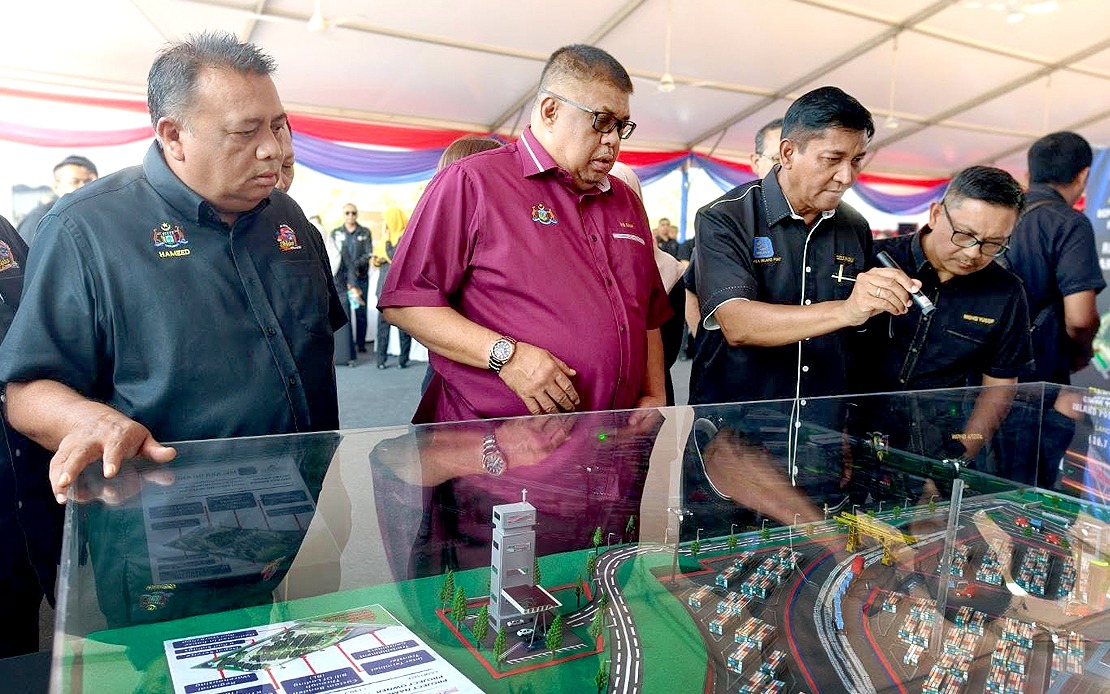
According to Datuk Hameed Mytheen Kunju Basheer, chairman of the Melaka State Public Works, Infrastructure, Public Facilities and Transport Committee, the new route will strategically traverse the Melaka Inland Port (MIP) area, creating a seamless network between the port terminals and the inland facility. This integrated approach reflects an evolving understanding among Malaysian port authorities that modern freight logistics demands more than individual terminal efficiency—it requires coordinated infrastructure that allows trucks and containers to move fluidly across multiple handling points without backtracking or congestion. The announcement came during a groundbreaking ceremony for the MIP presided over by Melaka Chief Minister Datuk Seri Ab Rauf Yusoh.
The immediate appeal of the new road lies in its dramatic reduction of travel distance for vehicles servicing port operations. Currently, journeys from certain logistics points to port facilities require approximately 28 kilometres of travel. Once the new road opens, this distance will compress to roughly 12 kilometres—a 57 percent reduction that translates directly into savings on fuel, driver time, and vehicle maintenance for logistics operators. For industries reliant on just-in-time delivery models, such efficiency gains compound over thousands of annual journeys, making the difference between profitable and unprofitable operations in price-sensitive sectors like manufacturing and export-oriented agriculture.
The project remains in preliminary design phases, with engineering work being conducted by the Ministry of Works. The state government expects to move through quotation and tender processes during 2024, with contractor selection anticipated to follow. This timeline suggests actual construction may commence in late 2024 or early 2025, placing completion at an estimated two to three years hence—though infrastructure projects in Malaysia frequently experience delays beyond initial projections. The deliberate pacing through design and tender stages, however, reflects lessons learned from past port infrastructure missteps and suggests a commitment to minimizing cost overruns and quality issues that have plagued some regional projects.
Beyond the flagship 12-kilometre project, Melaka's broader vision encompasses several complementary road upgrades that collectively reshape the geography of regional freight movement. Officials plan to widen the existing corridor from Tangga Batu to Sungai Udang, enhancing connections to Tanjung Bruas Port. This parallel improvement acknowledges that ports do not operate in isolation; their utility depends on surrounding road networks being capable of handling increased traffic flows without bottlenecks forming at older sections. The cumulative effect of these parallel upgrades will be a modernised logistics spine running through coastal Melaka.
A second major road component involves constructing a new six-kilometre highway from Telok Gong through Kampung Pulau to Paya Lebar, with an estimated cost of RM49 million. This secondary route serves a dual function: it establishes alternative connectivity between port areas and the MIP while simultaneously providing communities with direct access to logistics facilities without requiring detours through residential zones. The route planning reflects an emerging awareness among Malaysian infrastructure planners that new transportation corridors must balance economic efficiency with community impact mitigation. The Telok Gong-Kampung Pulau-Paya Lebar segment currently exists in various design and quotation phases, suggesting staged implementation rather than a single, simultaneous deployment.
The completion timeline for these secondary routes extends to approximately 2028 or 2029, creating a staggered infrastructure rollout spanning four to five years. This extended schedule may frustrate stakeholders eager for immediate logistics improvements, yet it allows the state to sequence expenditures prudently and monitor early-stage project performance before committing to subsequent phases. The extended timeframe also provides flexibility to adapt designs based on market conditions or technological developments in freight handling—important considerations given that container ship sizes and logistics practices continue evolving at rapid rates.
For Malaysia's broader logistics sector, Melaka's investment signals growing recognition that port performance increasingly determines regional competitiveness. The country's three major port clusters—Klang Valley, Johor, and Melaka—operate in direct competition for containerised cargo and specialised freight. Ports with inferior hinterland access systematically lose market share to better-connected alternatives, regardless of terminal operational excellence. By deliberately upgrading road infrastructure linking ports to inland facilities, Melaka attempts to offset geographic disadvantages relative to the larger Klang and Johor facilities, potentially attracting shippers seeking alternatives to congested northern and southern routes.
The project also carries implications for traffic dynamics across the Melaka corridor. New roads of this scale inevitably alter settlement patterns and commercial development trajectories, potentially spurring industrial expansion in previously isolated zones. Communities along planned routes face twin outcomes: improved accessibility and economic opportunity balanced against construction disruption and possible environmental impacts. The stated commitment to routing the Telok Gong-Paya Lebar road without passing through traditional villages suggests planners have considered community concerns, though implementation will ultimately determine whether such promises materialise.
From a regional perspective, Melaka's infrastructure push occurs within the context of broader Southeast Asian port competition. Singapore's continued dominance as the region's premier transshipment hub remains largely unchallenged, yet Malaysian ports increasingly compete for feeder cargo, domestic traffic, and emerging specialised functions like offshore logistics support. Melaka's road investments chip away at the competitive gap, though substantial challenges remain. The state's capacity limitations relative to Klang and the Port Klang Authority's established relationships with major shipping lines constrain growth potential regardless of hinterland improvements.
The financial commitment of RM129 million plus RM49 million in companion road projects demonstrates serious state government commitment to logistics infrastructure investment. Viewed against Malaysia's broader transportation spending patterns, these allocations represent meaningful resource deployment, though whether they will prove sufficient to fundamentally reshape regional logistics dynamics remains uncertain. Success ultimately hinges on whether improved road access translates into actual cargo volume increases and whether shipping lines and logistics operators perceive Melaka as offering genuine competitive advantages worth operational restructuring.
Looking forward, the projects also set precedents for how Malaysian states approach infrastructure planning in the post-pandemic era. Rather than pursuing singular, flagship projects, Melaka appears to favour integrated networks where multiple facilities and routes reinforce each other's utility. This systems-thinking approach, though common internationally, represents a comparative shift from Malaysia's historical preference for individual mega-projects. Whether this philosophy extends to other development initiatives and whether the state executes the projects within stated timelines and budgets will significantly influence how policymakers evaluate Melaka's infrastructure competence in coming years.

