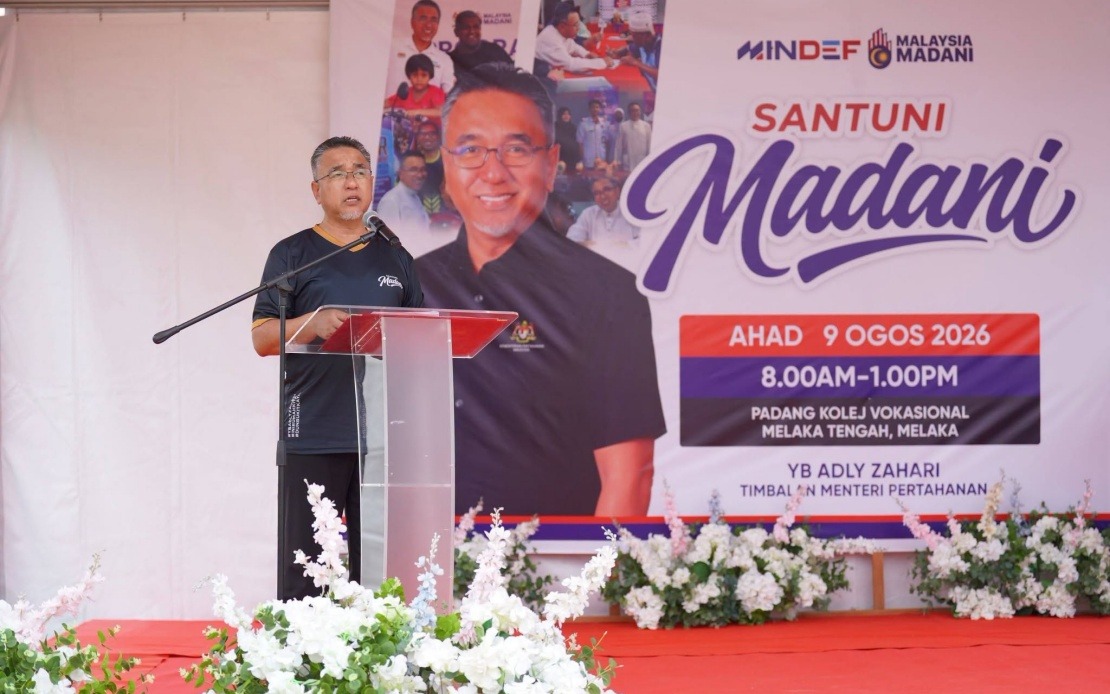
Melaka Pakatan Harapan is signalling receptiveness to formal political negotiations with potential coalition partners as the state prepares for its next election, though the coalition has yet to crystallise the specific terms of any such arrangement. Speaking after an official engagement in Melaka Tengah, PH chairman Adly Zahari emphasised that the coalition remains in exploratory discussions regarding both the framework of cooperation and the seat allocation that might underpin any partnership, suggesting that multiple internal assessments have already taken place to evaluate the grouping's electoral viability across the state's constituencies.
Adly's remarks underscore the pragmatic flexibility increasingly characterised by Pakatan Harapan's approach to coalition-building at the state level, particularly as individual component parties weigh their own strategic interests against broader unity imperatives. While the party leadership has refrained from entering formal negotiations with Barisan Nasional at present, the door remains conspicuously open for discussions with any party whose political agenda aligns with the Malaysia MADANI framework that underpins the current federal government's broader governance philosophy. This positioning reflects a calculated approach designed to maximise PH's negotiating leverage while maintaining the appearance of principled consistency around shared values and development priorities.
Centrally, Melaka Pakatan Harapan has identified significant growth potential within the state legislature, where the coalition currently holds five of twenty-eight seats. The party's strategic assessment concentrates on leveraging its proven strength in three parliamentary constituencies—Alor Gajah, Kota Melaka, and Hang Tuah Jaya—where PH successfully retained representation at the federal level. Beyond these consolidation zones, the analysis extends to three additional constituencies identified as opportunities for expansion: Tangga Batu, Masjid Tanah, and Jasin. This granular constituency-by-constituency approach suggests that PH strategists have conducted detailed voter analysis and demographic mapping to identify where ground organisation and messaging investments are most likely to yield electoral dividends.
PKR, the largest component party within Melaka's PH structure, has adopted a somewhat more cautious public posture, with state leadership acknowledging that Melaka's political terrain presents distinct challenges and opportunities compared to other components of the federal Unity Government arrangement. Adam Adli Abd Halim, the acting chairman of PKR's state leadership council, confirmed that while no formal engagement with BN has been initiated, informal channels of communication remain active and continue to be monitored. This distinction between formal and informal communication serves an important political function, permitting parties to explore possibilities without the visibility and commitment that formal negotiations would entail, thereby preserving flexibility for all parties involved.
The broader context informing these negotiations involves the delicate balance that must be maintained within Melaka's political ecosystem. The state has historically presented a complicated landscape for opposition coalitions, with territorial and organisational challenges distinct from neighbouring states or even from Melaka's own performance at the federal level. The fact that PKR's state representatives are being encouraged to focus on constituent service and delivery rather than high-profile political positioning suggests party leadership is conscious of the reputational risks associated with extended periods of political manoeuvring that might appear divorced from ordinary governance priorities.
For Malaysian political observers, the Melaka situation exemplifies broader tensions within the contemporary coalition framework established at the federal level following the 2022 elections. While the Unity Government has provided stable administration nationally, its application at the state level requires constant recalibration as local power dynamics, incumbent positioning, and demographic trends create distinctly different strategic calculations. Melaka's case is particularly instructive because it demonstrates how coalitional partners must simultaneously pursue their own institutional growth—PH's ambition to expand its seat count—while remaining available for broader partnership arrangements that might serve larger strategic objectives.
The emphasis on the Malaysia MADANI agenda as a touchstone for potential cooperation reveals how federal development frameworks increasingly serve as ideological currency in state-level negotiations. Rather than negotiating purely around seat allocation or portfolio distribution, contemporary coalition-builders invoke shared commitment to specific governance philosophies and development priorities. This approach potentially creates more stable coalitions than those based solely on arithmetic and power-sharing calculations, though it also requires genuine alignment on policy substance rather than merely procedural compatibility.
From a Malaysian governance perspective, the measured approach being adopted by both PH and PKR suggests lessons drawn from previous coalition experiences where rapid or opaque negotiations generated internal tensions and public confusion about party positioning. The current emphasis on transparency regarding the exploration process, even as formal decisions remain pending, represents an attempt to manage expectations and maintain party cohesion through inclusive communication. This transparency imperative is particularly important for smaller coalition partners and those holding state-level positions, who require clear rationale for any eventual coalition arrangements to justify their participation to their own grassroots supporters.
The question of how many additional seats Melaka PH can realistically capture remains the central metric by which these negotiations will ultimately be judged. Current projections suggesting growth potential in secondary constituencies carry implicit assumptions about voter behaviour, swing dynamics, and campaign effectiveness that may or may not materialise when elections are called. The fact that PH leadership is publicly confident about seat expansion suggests internal polling data provides encouraging signals, though such assessments are notoriously subject to shifts in political sentiment and external events between measurement and actual voting.
Looking forward, the trajectory of Melaka PH's coalition discussions will likely follow patterns established elsewhere in Malaysia's state politics. If negotiations with external parties prove unproductive or yield insufficient additional seats, PH will contest alone or in a minimal partnership, betting that improved performance justifies the independent approach. Conversely, if productive discussions emerge with parties sharing MADANI alignment, the coalition framework could solidify into a more durable arrangement extending beyond this election cycle. Either path carries implications for how the Unity Government framework continues to evolve at the subnational level across Malaysia's diverse political geography.

