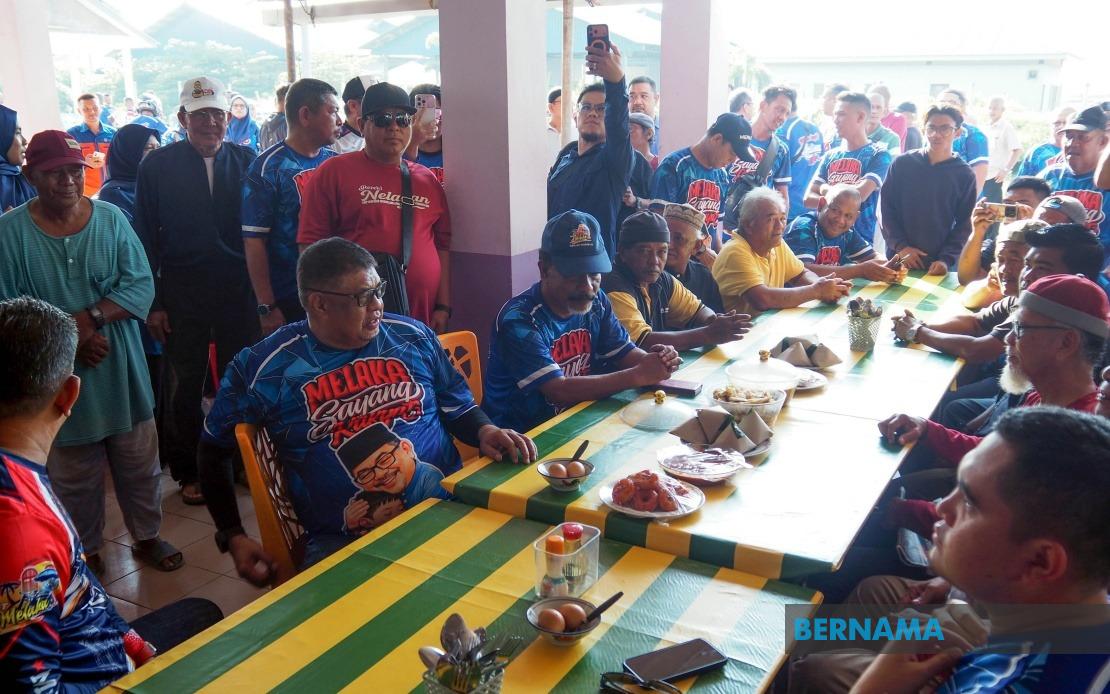
The Melaka state government has rolled out a comprehensive support package aimed at transforming conditions for the state's fishing community, combining social protection with modern technology adoption. During a grassroots engagement tour through the Merlimau constituency on July 17, Chief Minister Datuk Seri Ab Rauf Yusoh unveiled plans to extend Social Security Organisation (PERKESO) coverage to all registered fishermen whilst simultaneously equipping them with fish-finding devices designed to boost productivity. The dual approach signals a strategic recognition that the sector requires both immediate welfare improvements and longer-term capacity enhancement to remain economically viable.
The initiatives emerged from direct community consultations conducted as part of the state government's 'Jelajah Ketua Menteri Sayang Rakyat' outreach programme, which prioritises on-ground engagement over desk-based policymaking. Ab Rauf emphasised that this approach allows administrators to grasp the tangible challenges facing ordinary citizens and formulate targeted responses accordingly. Rather than maintaining distance from constituents, he noted, state leadership must venture into communities to witness challenges firsthand and design assistance programmes informed by lived experience. The Merlimau leg of this tour proved particularly productive for the fishing sector, generating several welfare decisions that will affect hundreds of households depending on maritime livelihoods.
On the day itself, the state government distributed immediate financial relief to 107 registered fishermen through the 'Bantuan Jaring Nelayan' scheme, allocating RM200 to each recipient for a combined total of RM21,400. This cash assistance targets operational expenses commonly faced by small-scale fishing operators, from net repairs to fuel costs that fluctuate with commodity prices. Beyond individual payments, the government also distributed 360 kilogrammes of fish valued at RM3,600 to the broader public attending the event, ensuring approximately 1.5 kilograms per person. The dual distribution mechanism serves both to provide tangible support and to raise awareness of the fishing sector's role in food security.
The introduction of fish-finding technology represents a significant modernisation effort within a traditionally experience-dependent industry. These electronic devices enable fishermen to locate fish concentrations with precision rather than relying solely on intuition, memory, and seasonal patterns accumulated over decades. Amirul Shah Fuad Shah, a 35-year-old fisherman from Kuala Merlimau with over two decades of experience, described how fish finders would allow crews to identify productive fishing zones and deploy nets strategically rather than casting nets across broader areas with uncertain yields. The technology transforms fishing from a labour-intensive guessing game into a more efficient operation where catch rates improve through targeted deployment. Commercial fish finders typically cost between RM1,000 and RM2,000 when purchased privately, placing them beyond reach for many small-scale operators—a gap the state programme directly addresses.
The efficiency gains from fish-finder adoption carry significant economic implications for household incomes dependent on fishing output. By reducing time spent searching for fish and improving catch consistency, operators can achieve higher returns per fishing expedition, translating to more stable monthly incomes. For aging fishermen and those without substantial capital reserves, this technology bridge is particularly valuable. Many fishing families operate on narrow margins where catch variations directly translate to food insecurity or inability to cover basic expenses. The state's provision of this equipment therefore represents not merely a productivity boost but a poverty-reduction mechanism targeting one of Malaysia's most economically vulnerable occupational groups.
The PERKESO coverage provision addresses occupational protection gaps historically affecting maritime workers. Fishing ranks among Malaysia's highest-risk occupations, with crews facing hazards from unpredictable weather, equipment malfunctions, and maritime accidents. Md Khalil Md Jadi, chairman of Kampung Sempang Fishermen's Association at 67 years old, emphasised how this social security extension acknowledges the genuine dangers workers face whilst earning livelihoods from the sea. Many fishing communities include elderly members who have devoted entire working lives to the sector yet lack institutional safety nets, making them particularly vulnerable to income loss from illness or disability. Mandatory PERKESO coverage ensures that occupational injuries or health deterioration linked to work conditions trigger benefits, providing some financial stability during vulnerable periods.
The timing of these initiatives reflects broader Southeast Asian challenges within traditional fishing sectors as they confront resource pressures and modernisation demands. Many regional governments struggle to balance heritage preservation with economic transformation, particularly where fishing communities constitute significant populations dependent on dwindling marine resources. Melaka's approach of pairing technology adoption with social protection represents a pragmatic middle path—modernising productivity whilst cushioning welfare impacts. This model may offer lessons for other Malaysian states and regional governments facing similar challenges with traditional maritime communities seeking sustainable livelihoods within changing economic contexts.
Local fishermen have received these announcements with genuine appreciation, viewing them as validation of their sector's importance within state economic and food security frameworks. Amirul Shah's recognition that government assistance makes previously inaccessible technology available reflects how state intervention can overcome capital constraints limiting individual operators' modernisation capacity. Similarly, Md Khalil's emphasis on recognition alongside assistance suggests that fishermen value being acknowledged as integral to the state rather than marginalised within development narratives focusing on urban services or manufacturing sectors.
The programme's success will ultimately depend on implementation quality and sustained commitment beyond the initial distribution phase. Fish-finder provision requires training to ensure operators can utilise the technology effectively, whilst PERKESO coverage requires clear communication regarding eligibility, benefit structures, and claim procedures. The state government must establish mechanisms to register all eligible fishermen systematically and ensure ongoing support as equipment requires maintenance and eventual replacement. Without such institutional scaffolding, initial enthusiasm could dissipate if beneficiaries encounter barriers accessing promised benefits or if equipment malfunctions without reliable repair services.
Longer-term, these initiatives position Melaka as actively engaged in sectoral transformation rather than allowing fishing communities to decline by default. Malaysian states increasingly compete for investment and talent, and demonstrating commitment to diverse occupational groups—including traditional sectors—signals inclusive governance. For fishermen themselves, the initiatives offer near-term income improvement and medium-term productivity gains that could stabilise family incomes and potentially attract younger generation participation in maritime occupations. Whether this translates into sustainable sector renewal depends on complementary policies addressing marine resource management, supply chain integration, and market access—dimensions extending beyond welfare provision alone.

