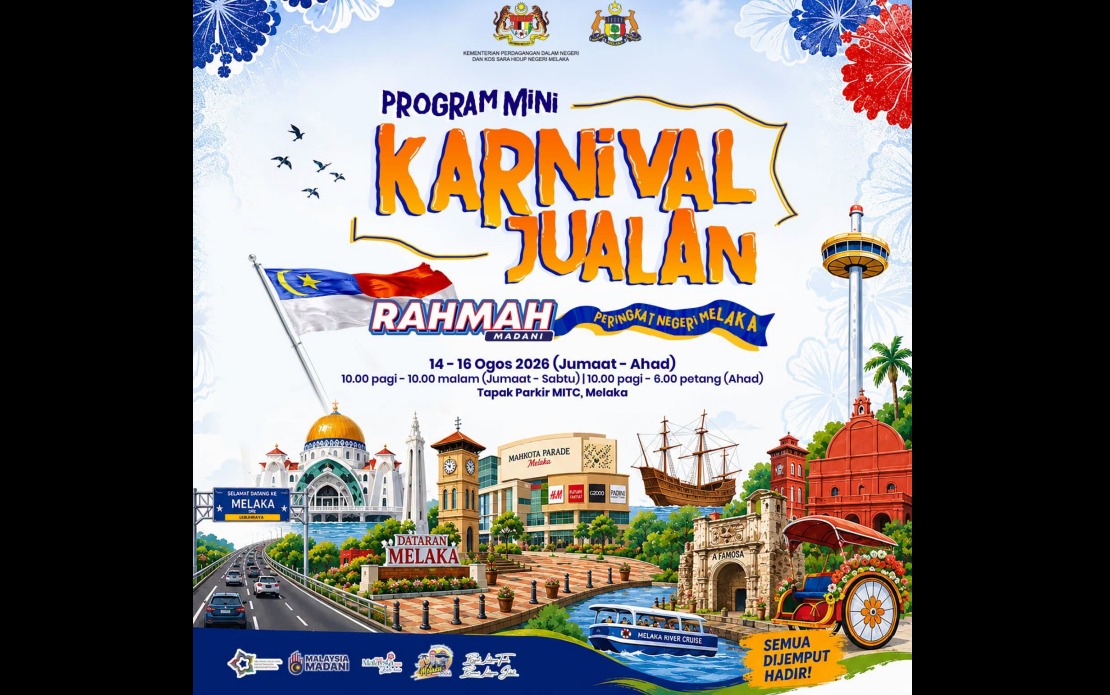
The Ministry of Domestic Trade and Cost of Living (KPDN) is bringing its grassroots outreach directly to Melaka residents with a three-day carnival launching tomorrow at the Melaka International Trade Centre (MITC), with projections suggesting more than 10,000 attendees will walk through the gates over the weekend. The initiative represents a deliberate shift in how the ministry connects with ordinary Malaysians, moving beyond conventional bureaucratic channels to create an accessible, informal platform where government services and consumer support programmes intersect with entertainment and community engagement.
Deputy Minister Senator Datuk Dr. Fuziah Salleh framed the carnival as emblematic of KPDN's broader philosophy: democratising access to information and benefits that directly impact household finances. By positioning the carnival as an interactive experience rather than a sterile information booth, the ministry acknowledges that citizens are more likely to understand and utilise government initiatives when they can explore them in a relaxed setting alongside their families. This approach carries particular resonance in Malaysia's cost-of-living environment, where household budgets remain under considerable pressure and awareness of subsidy programmes can meaningfully reduce financial stress.
The centrepiece of the carnival is the MADANI Rahmah Sales Programme (PJRM), a targeted subsidy mechanism designed to make daily necessities accessible at significantly reduced prices. For shoppers, particularly lower and middle-income households, this represents a tangible opportunity to stock up on essentials at marked-down rates, effectively providing immediate relief to household expenses. The significance extends beyond the discount itself: the carnival format allows customers to understand the supply chain, meet vendors directly, and build familiarity with the range of products available through government-supported channels. This direct engagement often encourages repeat participation and word-of-mouth promotion within communities.
Beyond the commercial dimension, KPDN is using the carnival to educate visitors about its consumer protection mandate, price monitoring mechanisms, and enforcement capabilities. These functions, while essential to market stability and consumer welfare, often operate invisibly to the public eye. By dedicating carnival space to advisory services and information sessions, the ministry demystifies its regulatory role and helps citizens understand how their complaints and concerns flow through government systems. For Malaysian consumers frequently frustrated by price volatility and product quality concerns, this visibility can build confidence that institutional oversight exists and functions on their behalf.
The programme structure deliberately caters to diverse demographics and interests, recognising that meaningful outreach requires something for everyone. The electronic sports tournament, organised with Todak, taps into the rapidly growing gaming community, particularly among younger Malaysians who might otherwise have limited exposure to KPDN initiatives. This generational bridge is strategically important: today's youth become tomorrow's voters and policy advocates, and positive early experiences with government programmes influence long-term attitudes toward institutional efficacy and trustworthiness.
Family-oriented activities, including children's colouring competitions and live performances by entertainers, ensure that the carnival functions as genuine community gathering space rather than a purely transactional venue. This holistic approach acknowledges that policy outreach succeeds best when it feels organic to the community fabric rather than imposed from above. When families spend entire afternoons at a government-sponsored event, enjoying free or low-cost entertainment while incidentally absorbing information about consumer rights and subsidy programmes, the ministry achieves sustainable behaviour change and programme adoption.
The Menu Rahmah food truck component deserves specific attention as it demonstrates the government's attempt to address food security and nutrition alongside affordability concerns. By featuring prepared meals at subsidised rates, the programme acknowledges that households struggling with cost-of-living pressures do not always have time or resources for elaborate meal preparation. Quick access to affordable, nutritious food reduces reliance on processed fast food and helps stabilise household nutrition outcomes, with downstream benefits for public health and productivity.
The inclusion of antique car and classic motorcycle exhibitions, while seemingly tangential to consumer protection mandates, actually reinforces an important cultural messaging point. These exhibits celebrate Malaysian heritage, entrepreneurship, and craftsmanship, implicitly connecting KPDN's consumer-focused work to broader narratives of national pride and historical continuity. Citizens who feel their cultural identity is respected and celebrated by government institutions are generally more receptive to government programmes and policy messaging.
From a strategic governance perspective, the carnival exemplifies how ministries can extend their reach and impact through partnerships and experiential programming. By collaborating with food vendors, entertainment providers, and private sector partners like Todak, KPDN leverages external resources and expertise while building constituencies invested in the carnival's success. This collaborative model is increasingly important in Malaysia's governance landscape, where public resources are stretched and effectiveness often depends on creative partnerships rather than hierarchical mandate.
The timing and scale of the event also signal confidence in KPDN's consumer-facing programmes. Projecting 10,000-plus attendees reflects institutional belief that the public genuinely wants this engagement and that the benefits of participation will generate organic uptake. If execution meets expectations, the Melaka carnival could become a template for regional rollouts, extending the model across Malaysia and creating consistency in how citizens nationwide encounter and understand KPDN initiatives.
For Malaysian policymakers and civil society observers, the carnival represents an encouraging example of government attempting to bridge the gap between policy intent and lived experience. Too often, well-designed subsidies and consumer protections fail to reach their intended beneficiaries simply because awareness remains limited or access appears complicated. By investing in direct, community-embedded outreach, KPDN acknowledges this reality and deploys resources toward closing the gap. Success in Melaka could demonstrate that grassroots engagement, far from being marginal administrative activity, constitutes a core function of effective governance.
The carnival runs from 10 am to 10 pm on Friday and Saturday, with condensed Sunday hours from 10 am to 6 pm, accommodating different community schedules and ensuring accessibility. This scheduling flexibility itself reflects responsive governance design, recognising that working families and shift workers may struggle to attend extended-hours events. For the Melaka community and the broader Southeast Asian region watching how Malaysian government agencies innovate in public engagement, the carnival offers practical lessons in translating policy objectives into community-centred experiences that simultaneously entertain, educate, and empower.

