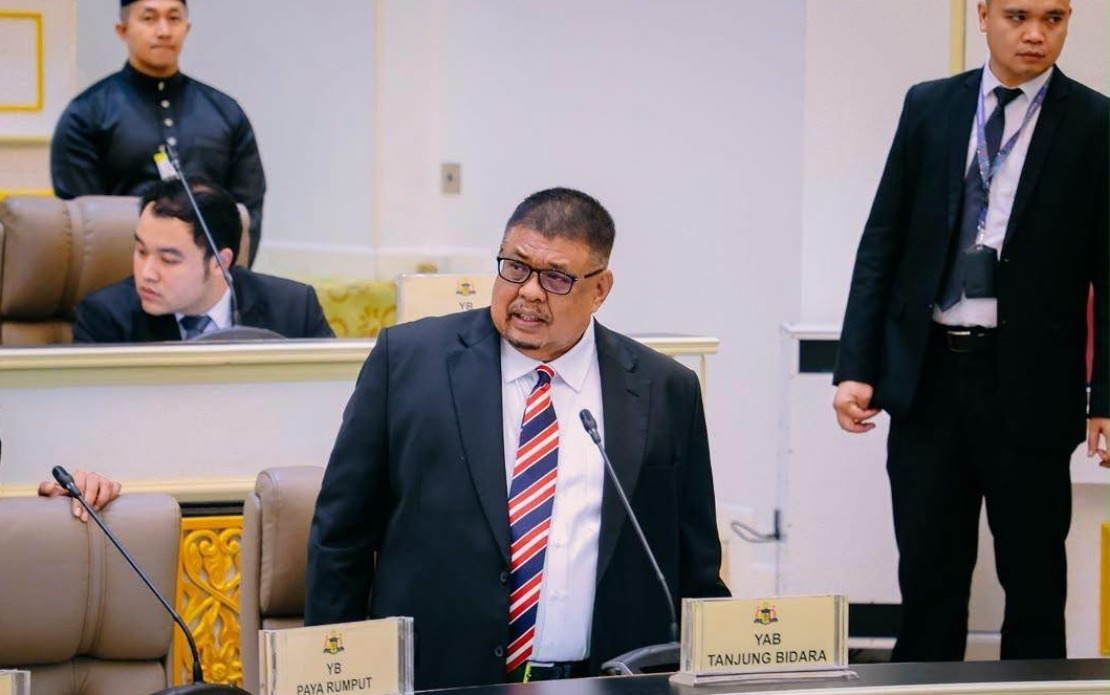
Melaka's administration will maintain full operational capacity despite the Democratic Action Party's sudden exit from the state government coalition, Chief Minister Datuk Seri Ab Rauf Yusoh declared on Monday. Speaking at the Seri Negeri Complex in Ayer Keroh, the CM sought to reassure residents, civil servants, the business community, and investors that the state machinery would experience no disruption in delivering essential services or pursuing development initiatives.
The DAP's withdrawal marks a significant shift in Melaka's political landscape after the four party representatives—Allex Seah Shoo Chin, Low Chee Leong, Leng Chau Yen, and Kerk Chee Yee—tendered their resignations from the state executive council immediately following the State Legislative Assembly's approval of a constitutional amendment permitting appointed assemblymen. Their swift departure highlighted internal tensions within the governing coalition that had been simmering beneath the surface of public announcements.
Ab Rauf's measured response reflected a calculated approach to managing the political fallout while maintaining public confidence in state governance. Rather than engaging in recriminations or prolonging political disputes, he emphasized that the government's primary obligation remained the welfare and interests of Melaka's citizens. This positioning allowed the administration to claim the moral high ground by appearing focused on substantive governance rather than factional politics. The strategy also signalled to external stakeholders—particularly potential investors and business partners—that political instability would not compromise the state's developmental agenda.
The decision to leave the executive positions vacant temporarily rather than appointing replacements represented a pragmatic holding pattern. By allowing existing administrative members to absorb the responsibilities previously handled by the departed DAP representatives, the government avoided the appearance of hasty decisions that might provoke further instability. This approach also preserved flexibility for potential future political negotiations without closing any doors through premature institutional changes.
Ab Rauf's acknowledgment of Prime Minister Datuk Seri Anwar Ibrahim's call for negotiations carried subtle significance. The CM noted that the DAP's decision became final upon submission of resignation letters immediately after the party's press conference, effectively rendering further negotiations technically impossible. This statement appeared designed to demonstrate responsiveness to the Prime Minister's intervention while simultaneously explaining why the government could not reverse the departure. The timing and phrasing suggested an effort to balance relations between state and federal leadership amid a delicate situation.
The Chief Minister's appreciation extended to the departing DAP representatives for their cooperation during the coalition period, a courtesy that preserved the possibility of future political engagement. This diplomatic gesture was particularly significant in Malaysian politics, where maintaining relationships across party lines often proved essential for effective governance. By avoiding harsh language or personal attacks, Ab Rauf created space for potential reconciliation should political circumstances change, whether through elections or other developments.
Maintaining harmonious relations with the federal government emerged as another stated priority for the Melaka administration going forward. For a state government operating in Malaysia's system of dual sovereignty, cooperation with federal authorities proved essential for accessing development funding, implementing national policies, and coordinating on matters of mutual concern. The emphasis on this relationship suggested that Ab Rauf intended to position Melaka as a reliable partner for the federal administration despite the state-level coalition realignment.
The underlying context of the DAP's departure involves constitutional amendments that would enable appointment of state assemblymen rather than requiring electoral victory. This issue reflected broader debates within Malaysian politics about representative democracy, party autonomy, and the balance between appointed and elected officials within state legislatures. The DAP's opposition to such mechanisms aligned with its positioning as a pro-democracy party, making the principle worth the political cost of exiting the coalition despite potential loss of influence over resource allocation and policy implementation.
For Malaysian observers tracking Melaka's political trajectory, this development represents another pivot in a state that has experienced substantial governmental changes in recent years. The state's political instability has occasionally overshadowed its economic and social development priorities, making public reassurances about continuity particularly important for maintaining investor confidence and public morale. The ability of the government to function effectively during this transition period would largely determine whether the DAP departure constitutes a minor adjustment or a prelude to more significant political restructuring.
The implications extend beyond Melaka's borders, offering lessons about coalition stability across Malaysia's varied political landscape. States governed through multiparty arrangements face inherent tensions between achieving policy coherence and accommodating diverse party interests. The DAP's exit, though seemingly triggered by the constitutional amendment issue, may reflect deeper incompatibilities that multiparty coalitions must continually negotiate. Other state governments in similar arrangements will likely monitor how Melaka manages this transition and whether it leads to improved governance or renewed political volatility.
As the dust settles from the DAP's departure, attention will focus on whether the Melaka government can deliver on Ab Rauf's promises of continued effective administration. The test will involve tangible metrics—infrastructure progress, service delivery improvements, public satisfaction—rather than political rhetoric. The Chief Minister's confident tone and systematic approach suggest preparedness for this challenge, though the loss of coalition partners always carries risks of reduced political leverage and potential future complications as the next state election approaches.

