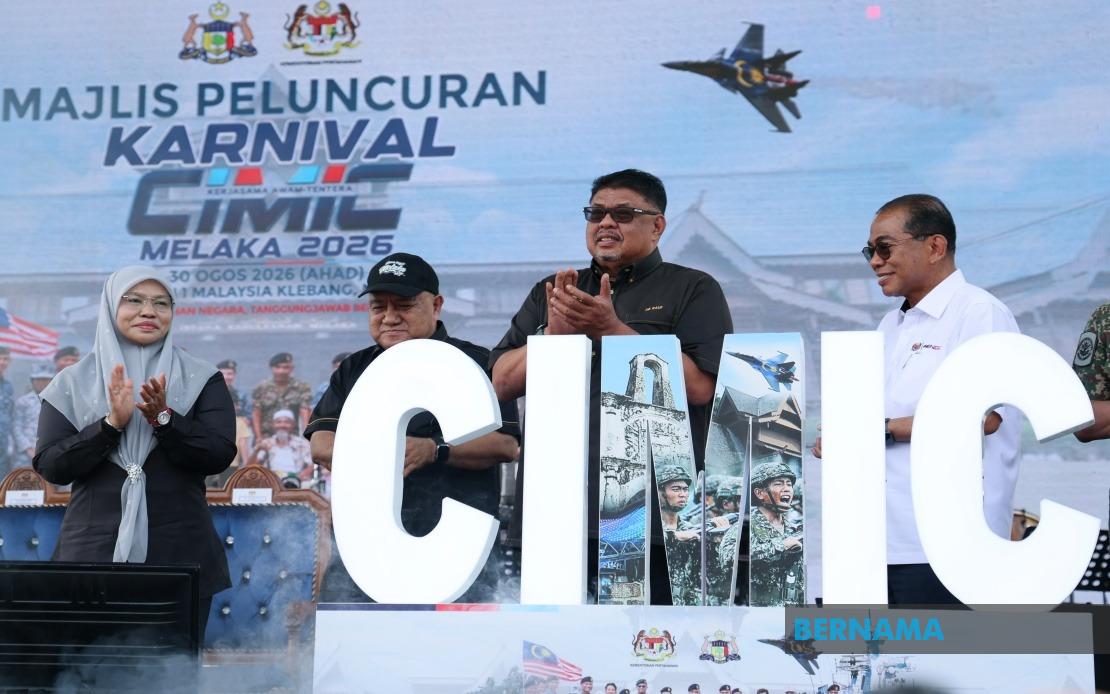
The Malaysian government is seriously examining whether Melaka could serve as a long-term venue for the Langkawi International Maritime and Aerospace Exhibition, a major biennial showcase that draws international participation in defence technology and capabilities. Defence Minister Datuk Seri Mohamed Khaled Nordin revealed the strategic exploration during his attendance at the Civil-Military Cooperation Carnival in Klebang, suggesting the coastal state possesses genuine potential as an alternative to the northern location that has traditionally hosted the event since its inception.
Mohamed Khaled's proposal centres on practical geographic advantages that Melaka offers for such a complex operation. The Klebang area, he noted during remarks to the media, provides natural synergies for hosting the exhibition. The location lies within reasonable proximity to Batu Berendam Airport, ensuring adequate air transport infrastructure for international delegations and military personnel attending what ranks among Southeast Asia's premier defence exhibitions. Equally significant, the coastal geography allows berthing facilities for naval vessels, a crucial element given LIMA's emphasis on maritime defence technologies and capabilities demonstration by participating nations.
The Defence Minister articulated a broader accessibility argument underlying the government's consideration. He observed that Langkawi's remote location in the far north creates logistical constraints for domestic participation, particularly for Malaysian businesses, military personnel, and the general public who might otherwise benefit from exposure to cutting-edge defence and aerospace technologies. Relocating the exhibition to Melaka would substantially reduce travel friction across the peninsula, potentially enabling far greater Malaysian engagement with the event and the emerging technologies it showcases. This reasoning reflects strategic thinking about how to maximise the exhibition's impact beyond its traditional international audience.
However, the Defence Minister tempered expectations by emphasising the substantial financial commitment required before such a relocation could materialise. He acknowledged that transforming Klebang into a venue meeting LIMA's exacting international standards would demand significant government capital investment. The exhibition attracts major defence contractors, military delegations from multiple nations, and necessitates world-class facilities, security protocols, and accommodation infrastructure. These requirements cannot be met through superficial upgrades; they demand comprehensive development of the surrounding area to match or exceed Langkawi's current capabilities and the sophisticated logistics the event demands.
Melaka's Chief Minister Datuk Seri Ab Rauf Yusoh echoed this pragmatic perspective, indicating that while the state government welcomes the prospect of hosting such a prestigious international event, preliminary assessments must precede any formal commitment. Ab Rauf underscored the necessity of carefully evaluating both Melaka's existing capacity and the tangible benefits that hosting LIMA would generate for the state economy and infrastructure development. This measured approach avoids rushing into a decision that could overextend state resources or create white elephant facilities if international participation fails to materialise at anticipated levels.
The exploration of Melaka as LIMA's alternative venue coincided strategically with this year's National Day celebrations, during which six Royal Malaysian Navy vessels participated in state-level events. This deployment demonstrated both the navy's operational capabilities and the feasibility of conducting maritime-focused activities from Melaka's waters. The visible presence of these naval assets, combined with successful coordination during the celebrations, apparently prompted government officials to reconsider whether Melaka possessed sufficient existing and developable infrastructure to accommodate LIMA's more demanding requirements.
The potential relocation carries implications extending beyond exhibition logistics. For Melaka, hosting LIMA would position the historically significant state as a contemporary hub for defence technology and innovation, enhancing its international profile beyond tourism and heritage attractions. For Malaysia's defence sector, a more accessible venue could accelerate domestic industry networking and technology awareness, potentially strengthening the domestic defence industrial base. Regional positioning matters too; as geopolitical complexities in Southeast Asia intensify, demonstrating commitment to sophisticated defence capabilities through premier exhibitions reinforces Malaysia's strategic relevance.
The timeline for any transition remains uncertain, with Mohamed Khaled emphasising that LIMA would continue at Langkawi unless compelling circumstances dictated otherwise. The government's framing presents this as a long-term strategic possibility rather than an imminent relocation, allowing time for both federal and state authorities to conduct detailed feasibility analyses. Cost-benefit assessments must compare infrastructure investment requirements against anticipated exhibition revenue, international participation levels, and broader economic spin-offs for Melaka and surrounding regions.
Politically, the proposal reflects broader trends in Malaysian governance toward decentralising major national events away from historically established venues. Such shifts require delicate coordination between federal and state authorities, particularly where substantial investment and operational control intersect. The measured responses from both Defence Ministry officials and Melaka's state leadership suggest awareness that premature commitment could generate difficulties if financial or logistical realities prove more challenging than preliminary assessments indicate.
The Civil-Military Cooperation Carnival itself, held at Dataran 1Malaysia throughout late August, served as the announcement's backdrop, providing platforms for showcasing Malaysian Armed Forces capabilities and cultivating civil-military engagement. This context suggests the Defence Ministry is systematically building broader support for defence sector initiatives, with the LIMA relocation proposal positioned within wider narratives about enhancing military-civilian coordination and expanding defence industry accessibility beyond traditional military circles.
For Southeast Asian defence observers, any relocation of LIMA would signal subtle shifts in Malaysia's regional positioning and investment priorities. The exhibition attracts participation from regional military powers, arms manufacturers, and strategic partners, making venue choices consequential for broader defence diplomacy and technology transfer patterns. A Melaka location might facilitate different participation patterns compared to Langkawi's somewhat isolated positioning, potentially reshaping which international defence actors prioritise Malaysian engagement.

