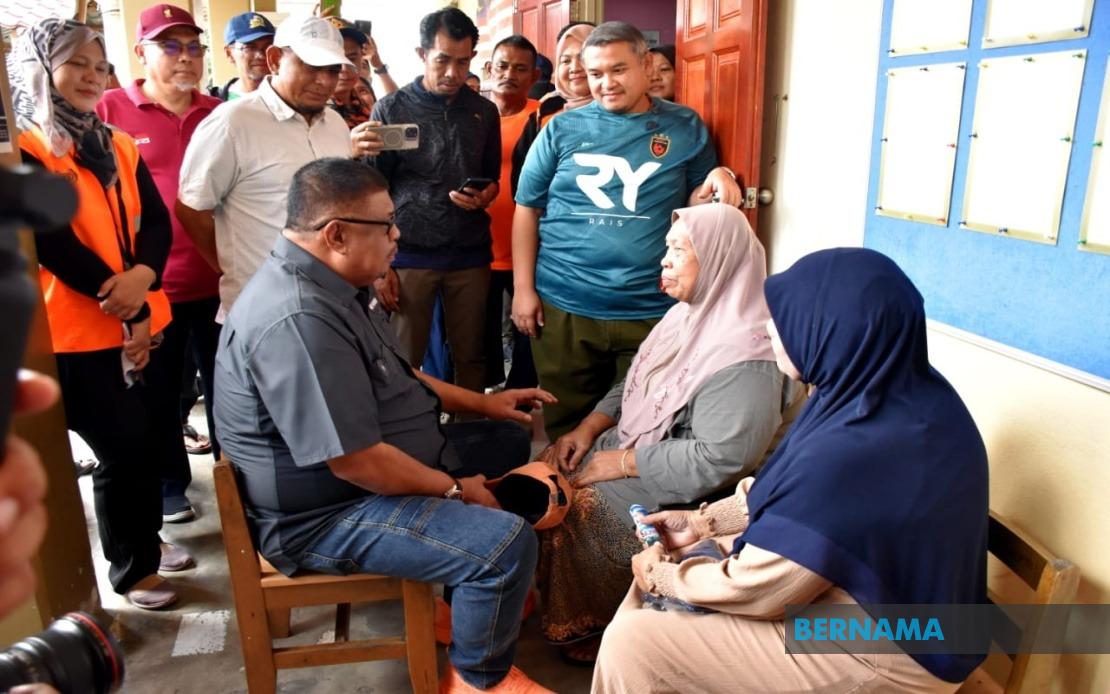
Melaka Chief Minister Datuk Seri Ab Rauf Yusoh has made a firm commitment to end the flooding crisis that has persistently affected Tanjung Minyak for more than three decades, pledging to implement comprehensive solutions following the latest deluge that displaced hundreds of residents. The announcement comes as the state grapples with the aftermath of exceptionally heavy rainfall that inundated multiple districts and forced emergency evacuations on a significant scale.
During a visit to flood evacuees sheltering at Sekolah Kebangsaan Tanjung Minyak 2 relief centre, Ab Rauf outlined the state government's intention to systematically evaluate all proposals and technical recommendations from relevant government agencies to identify sustainable remedies for the chronically flood-prone locality. The approach signals recognition that the recurrent problem demands more than temporary relief measures and point-solution interventions that have evidently proven insufficient over the past three decades.
The Chief Minister emphasised that the state administration would carefully weigh methodologies and suggestions submitted by specialised agencies to determine the most effective pathway forward, particularly in addressing how the area's drainage and water retention infrastructure performs when subjected to extreme rainfall events. His comments acknowledge that the root cause lies not merely in excessive precipitation but in the structural inadequacy of existing systems to cope with the volume of water such events generate.
The scale of this latest flooding crisis underscores the urgency of the situation. More than 900 evacuees from approximately 300 families have been accommodated across multiple relief centres throughout Melaka, a displacement that places considerable strain on social services and highlights the human cost of the unresolved infrastructure problem. The state government has committed to maintaining these evacuees' welfare as their priority until conditions normalise and residents can safely return to their homes.
According to Melaka's Irrigation and Drainage Department director Mohd Adnan Ahmad Fauzi, the immediate trigger for the flooding was rainfall that dramatically exceeded historical norms. The precipitation recorded in Melaka Tengah and Alor Gajah surpassed levels experienced during Tropical Storm Senyar late last year—itself a significant weather event—with cumulative measurements exceeding 100 millimetres recorded by mid-afternoon. These figures underscore that the event was not merely a typical monsoon-season occurrence but rather an exceptional meteorological incident that tested the area's preparedness.
The flooding appears attributable to a combination of factors: the intensity of the rainfall overwhelmed the capacity of water retention systems in the region, causing them to overflow their designed parameters and inundate surrounding residential areas. This scenario points to a vulnerability in Melaka's stormwater management infrastructure that becomes apparent only during extreme weather conditions, raising questions about whether current design standards adequately account for the intensification of rainfall events associated with climate change.
State Senior Housing, Local Government, Drainage, Climate Change and Disaster Management Committee chairman Datuk Rais Yasin's presence at the relief centre signals that the state government is coordinating a multi-agency response rather than leaving responsibility fragmented across different departments. The inclusion of climate change in the committee's portfolio suggests awareness that long-term solutions must account for changing weather patterns, not merely historical precipitation data.
For residents of Tanjung Minyak and similar flood-prone communities across Malaysia, the Chief Minister's commitment represents hope that government has finally recognised the inadequacy of ad-hoc disaster response and is prepared to invest in preventive infrastructure. However, the distinction between political pledges and actual implementation remains significant, particularly given that the problem has persisted through multiple administrations and political cycles.
The coordination of immediate aid through the District Office and state government channels indicates that emergency response mechanisms are functioning, yet this operational competence in crisis management must be complemented by the much more complex undertaking of diagnosing systemic failures and implementing structural remedies. Whether the state government will allocate sufficient budgetary resources to comprehensive drainage system upgrading or other structural interventions remains uncertain, as such projects typically demand substantial capital investment competing against other priorities.
For Malaysian policymakers beyond Melaka, the situation illustrates a broader challenge facing urbanised and semi-urbanised areas: ageing or inadequate stormwater infrastructure designed for historical climate patterns now faces increasingly intense rainfall events. The Tanjung Minyak case study may offer valuable lessons for other states reviewing their drainage and flood mitigation strategies, particularly as climate projections suggest continued intensification of extreme weather events across Southeast Asia.
The path forward requires not merely identifying solutions but committing the financial and technical resources necessary to implement them—a challenge particularly acute for state governments balancing development spending against essential infrastructure maintenance and upgrade. The Chief Minister's public commitment provides accountability that can be referenced if progress stalls, yet successful resolution will ultimately be measured not by pledges but by measurable improvements in the area's resilience to future rainfall events.

