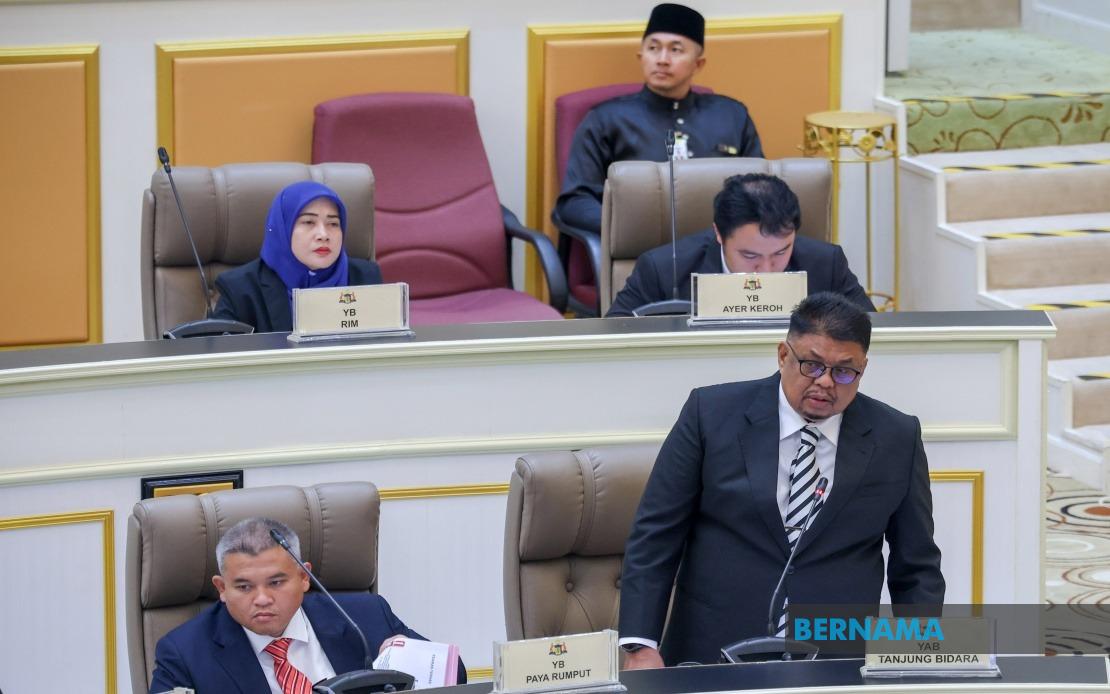
The Melaka State Legislative Assembly has taken a significant step in restructuring its composition by approving a constitutional amendment that will permit the appointment of up to seven nominated state assemblymen. Passed on July 14 with backing from 23 assemblymen against five opposing votes, the Melaka State Constitution (Amendment) Bill 2026 represents an attempt to reshape how representation functions at the state level, introducing a parallel route into the legislature beyond the traditional electoral process that has long dominated Malaysia's political system.
Chief Minister Datuk Seri Ab Rauf Yusoh, who introduced the Bill alongside Senior State Executive Councillor Datuk Rais Yasin, articulated the government's rationale as fundamentally about improving the calibre of legislative discourse. Rather than viewing the appointed seats merely as additions to representation, state officials frame the initiative as a mechanism to inject specialised knowledge into policy deliberation. The administration believes that individuals with backgrounds in law, economics, education, investment, technology and state development would bring technical rigour and evidence-based perspectives to legislative debates that elected representatives, while representative of popular sentiment, might not always possess.
The amendment thus addresses a longstanding tension in democratic governance between representative legitimacy and technocratic competence. By creating pathways for expert voices outside the electoral arena, Melaka's leadership is attempting to navigate this balance. The government explicitly acknowledges that certain highly qualified individuals may not succeed in electoral contests, yet possess demonstrable capacity to contribute meaningfully to governance. This logic mirrors the federal Dewan Negara model, where appointed members from professional and community backgrounds supplement directly elected representation.
Crucially, the amendment also contains language about inclusivity and redressing underrepresentation. The government has signalled that appointments could prioritise women, youths, Orang Asli communities, ethnic minorities, and industry professionals who face structural barriers to electoral success. This dimension reflects contemporary concerns about participatory equity, acknowledging that formal voting rights do not automatically translate into effective representation for marginalised constituencies. By deliberately carving space for such groups through non-electoral channels, state authorities are experimenting with supplementary inclusion mechanisms.
The debate itself proved instructive about political consensus and tactical positioning. Opposition Leader Dr Mohd Yadzil Yaakub indicated that the opposition would support the Bill, provided implementation remained transparent and firmly anchored to public interest principles. His reference to the Dewan Negara precedent demonstrated acceptance of the underlying constitutional logic while insisting on procedural safeguards. This pragmatic stance suggests that across Malaysia's political spectrum, there is recognition that purely elective chambers may have limitations, even if parties differ on implementation details and governance oversight.
The constitutional amendment fulfils a pledge made during the 2021 Melaka state election campaign. The Barisan Nasional manifesto had explicitly committed to this reform under its first thrust concerning political stability and mature democracy. The elapsed time between campaign promise and legislative delivery—approximately three years—is not unusual for constitutional amendments, which typically require careful drafting, stakeholder consultation and multi-stage parliamentary processes. The fact that this pledge has now materialised indicates sustained political will and successful navigation of procedural hurdles.
For Malaysian federalism and state governance, this development carries broader implications. Melaka is not attempting radical constitutional innovation; rather, it is adapting an existing federal practice to state level. However, the domino effects merit attention. Should the appointed seat model prove effective in enhancing legislative quality without generating perceptions of democratic deficit, other state assemblies might consider similar amendments. Conversely, if implementation becomes mired in patronage or perceived bias, it could strengthen arguments against appointed representation. The success of Melaka's experiment will likely influence how other states approach questions about legislative composition and the balance between electoral democracy and technocratic input.
The mechanics of appointment remain crucial to the amendment's legitimacy. The Bill specifies numbers—up to seven seats—but the law itself will require subsidiary regulations detailing selection criteria, appointment procedures, oversight mechanisms and tenure provisions. Whether these implementation rules genuinely prioritise expertise and inclusion, or instead become mechanisms for political patronage, will determine public and opposition assessment of the reform. Transparency in nomination processes and clear published justifications for appointments will be essential for maintaining the cross-party consensus currently supporting the initiative.
From a regional perspective, Melaka's move reflects a wider discussion across Southeast Asia about democratic innovation and legislative reform. Many countries in the region grapple with questions about how to incorporate specialised knowledge into electoral bodies while preserving fundamental democratic principles. Singapore's appointed MPs and Indonesia's military-nominated legislators represent different models across the spectrum. Melaka's approach represents Malaysia's specific calibration of this tension—relatively modest in scale, justified through expertise and inclusion rationales, and supported by opposition acceptance of the underlying framework.
The amendment also signals evolving concepts of representation in Malaysian politics. Traditional Westminster-derived models emphasised popular election as the primary legitimacy source. Contemporary governance increasingly recognises that effective legislatures benefit from diverse perspectives, including voices that electoral processes alone might not select. By formalising appointed seats, Melaka acknowledges that representation encompasses both electoral accountability and substantive contribution. This conceptual shift, though incremental, reflects maturation in how Malaysian states approach the architecture of democratic institutions.
Moving forward, stakeholder attention will focus on implementation. The appointment mechanisms must demonstrate genuine commitment to the stated objectives of expertise and inclusion rather than becoming vehicles for factional interests or ruling coalition control. Should the appointed members contribute meaningfully to legislative debates and propose substantive additions to state policymaking, the amendment will likely be viewed as a successful institutional innovation. Conversely, if appointed seats become sinecures or sources of partisan controversy, the model's viability in Melaka and elsewhere will face serious challenge. The coming months will prove instrumental in establishing the precedents and expectations that will shape how appointed representation operates in Malaysia's state legislatures.

