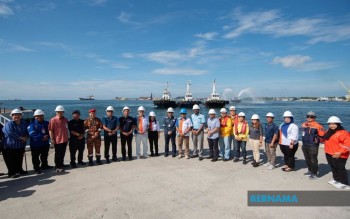
Megah Port Management Sdn Bhd (MPM) has officially unveiled its marine services division at Labuan Port, underscored by a substantial RM23 million investment in four purpose-built tugboats. The launch, held at Dermaga Merdeka Jetty, represents a pivotal development in the port's operational infrastructure and reflects the company's commitment to enhancing maritime safety and efficiency in one of Malaysia's key shipping hubs.
Managing Director Datuk Seri Patrick Tiong framed the tugboat acquisition as integral to MPM's strategic vision for Labuan Port's future. According to Tiong, the investment demonstrates the company's dedication to fulfilling its obligations under the recently executed Operation, Facility and Management Continuation Agreement with the Labuan Port Authority (LPA). The provision of marine services constitutes a mandatory responsibility that MPM has undertaken as part of its port management concession, and the company views the investment as essential to discharging these duties with professionalism and reliability.
The newly acquired tugboats will perform a wide range of critical maritime functions within Labuan Port's operational boundaries. These vessels are engineered to assist incoming and outgoing ships during complex manoeuvres, particularly during berthing and unberthing operations in the port's confined waters. Beyond routine assistance, the tugboats will serve as active emergency response assets, capable of mobilizing rapidly to provide firefighting support, rescue operations, and evacuation services during maritime incidents. This multifunctional capability extends to mechanical assistance for vessels experiencing propulsion loss or steering difficulties, as well as escort services for ships navigating through the port's designated channels.
Labuan Port's geographic and operational characteristics make tugboat services particularly valuable. The port's confines present challenging navigation scenarios, especially during adverse weather patterns or strong current conditions that can compromise vessel manoeuvrability. The new fleet enhances MPM's capacity to manage these hazards proactively, reducing the risk of collisions, groundings, and other incidents that could disrupt port operations or endanger maritime personnel and the environment. Tiong emphasized that emergency preparedness capabilities are essential to minimizing exposure to environmental risks and operational interruptions.
The marine services expansion encompasses multiple operational zones and major facilities within Labuan Port's jurisdiction, including the Dangerous Goods Terminal, Petronas Chemicals Methanol Labuan Terminal, Asian Supply Base Fuel Terminal, and Shell Timur Terminal. Each of these facilities handles sensitive cargoes or specialized operations that require sophisticated vessel-handling support. The tugboat fleet's presence provides these terminals with enhanced operational flexibility and safety margins, particularly important given the hazardous nature of some goods processed at these locations.
Regulatory compliance and inter-agency coordination form the backbone of MPM's marine services strategy. Tiong acknowledged the critical importance of close collaboration with the Malaysian Maritime Enforcement Agency, Marine Police Force, and other maritime authorities to ensure that all vessel movements and towage operations adhere to established maritime laws and safety protocols. This collaborative framework reflects the port authority's understanding that effective port governance requires seamless integration with national maritime enforcement infrastructure.
The launch event included a practical demonstration of the tugboats' emergency response capabilities, featuring a simulated firefighting response to a vessel incident in Labuan waters. This demonstration underscored the operational readiness of the new assets and provided stakeholders with tangible evidence of MPM's enhanced emergency preparedness. Such capabilities are increasingly valued in modern port management, where ports face growing pressure to demonstrate robust contingency planning and rapid response mechanisms.
Labuan Port occupies a significant position within Malaysia's maritime economy, serving as a critical node for regional shipping and offshore operations. The port's traditional strength in handling offshore support operations and petrochemical logistics positions it at the intersection of regional energy markets and global trade flows. The investment in dedicated marine services infrastructure signals MPM's confidence in the port's continued relevance and its determination to modernize operational capabilities to compete effectively with neighbouring regional ports.
The timing of the marine services launch reflects broader trends in Asian port development, where operators are increasingly investing in in-house capabilities rather than relying on external service providers. This vertical integration strategy offers several advantages: improved cost control, enhanced coordination between port operations and support services, and greater flexibility in responding to operational emergencies. For Labuan Port, which operates within a competitive regional environment, such investments are necessary to maintain service quality standards and attract shipping lines and terminal operators.
From a broader Malaysian perspective, the Labuan Port expansion demonstrates ongoing private-sector confidence in Malaysia's maritime infrastructure despite regional headwinds. The RM23 million investment, while not extraordinary in global port development terms, represents meaningful capital deployment in a specialized service sector. It also provides insights into how Malaysian port operators are responding to technological change and evolving customer expectations around safety and reliability.
MPM's approach to marine services also reflects the evolving relationship between port authorities and private operators in Malaysia. The mandatory service provision requirements embedded in the management agreement represent a regulatory approach designed to ensure that private operators internalize responsibility for port safety and efficiency outcomes. By obligating MPM to fund and maintain its own marine services capability, the LPA effectively aligns the operator's commercial interests with public safety and environmental protection goals.
Looking forward, the marine services launch establishes a foundation for potential operational expansion at Labuan Port. Improved vessel-handling capabilities may enhance the port's attractiveness for larger vessels or more specialized operations, potentially opening new revenue streams and cementing its position within regional shipping networks. The investment also signals to industry stakeholders—shipping lines, cargo owners, and terminal operators—that Labuan Port is actively modernizing and committed to maintaining competitive operational standards.
Tiong's concluding remarks acknowledged the collaborative ecosystem supporting Labuan Port's development, including the Ministry of Transport, the Labuan Port Authority, enforcement agencies, and industry partners. This acknowledgment reflects the reality that modern port operations depend on coordinated action across multiple institutional actors. The successful implementation of marine services will ultimately depend on sustained coordination among these parties and their collective commitment to maintaining the safety and efficiency standards that regional maritime commerce demands.

