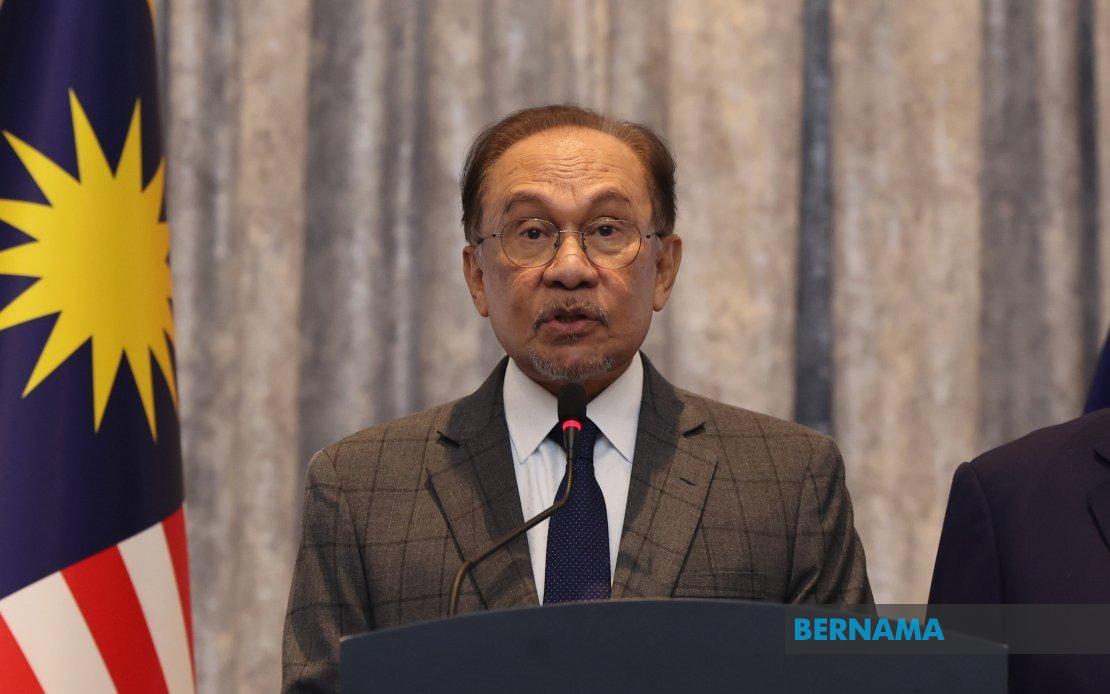
Prime Minister Datuk Seri Anwar Ibrahim has sounded a measured call for Malaysia's media sector to harness emerging technologies while remaining anchored to fundamental principles of ethics, values and national identity. Speaking at the Malaysian Press Night 2025 and Malaysian Press Institute-PETRONAS Journalism Awards 2026 in Kuala Lumpur on July 17, Anwar cautioned that the nation faces genuine peril if it allows rapid technological advancement to erode the moral and cultural foundations that guide journalism and public discourse.
The prime minister's remarks underscore a tension increasingly visible across Southeast Asia: how to capitalise on digital innovation, artificial intelligence and multimedia platforms while preventing these tools from becoming instruments of external influence or ideological colonisation. Anwar explicitly acknowledged that freedoms in information technology and digital infrastructure must be protected, yet he argued that technological prowess divorced from ethical grounding risks hollowing out journalism itself. His warning carries particular weight in Malaysia's media landscape, where outlets have grappled with balancing commercial pressures, content moderation demands and editorial independence in recent years.
Anwar drew a historical parallel to illustrate his concern. He pointed to the Western dominance of global media during the twentieth century, which enabled powerful nations to shape international narratives according to their own strategic interests rather than universal journalistic principles. He then pivoted to contemporary challenges, identifying a new form of power accumulation through technology control. Certain actors now leverage digital infrastructure, algorithms and data systems to advance ideological or cultural agendas that may conflict with local values, social contexts and democratic aspirations. This dynamic, he suggested, represents an evolution of colonialism—one in which control over technology replaces direct political domination.
Central to Anwar's argument is the concept of the "captive mind," a phrase traditionally associated with psychological or political subjugation. The prime minister reframed this concept for the digital age, arguing that as nations race to master emerging technologies, they simultaneously become vulnerable to technological subjugation if they fail to establish independent frameworks rooted in local values and principles. Malaysia, as a multiethnic and multireligious democracy navigating complex regional geopolitics, faces particular stakes in this contest. The challenge is not merely technical but deeply political and cultural: how to build digital capacity without surrendering narrative control or cultural sovereignty to external interests.
The government's role in supporting this balance received explicit mention. Anwar highlighted Communications Minister Datuk Seri Fahmi Fadzil and the Malaysian Communications and Multimedia Commission (MCMC) as key institutional actors tasked with fostering an enabling environment for media innovation. However, his language suggested partnership rather than dictation. He emphasised that the government "has a shared responsibility to support the media" and pledged to "listen to views and accept criticism with an open mind." This framing attempts to position state institutions as facilitators of press freedom rather than gatekeepers, though such assurances remain subject to scrutiny in Malaysia's often contentious media-government relationships.
Anwar specifically commended the Malaysian Press Institute (MPI), supported by PETRONAS, and the Malaysian Media Council (MMC) for driving media reform and innovation aimed at preventing Malaysia from becoming trapped in narratives dictated by external powers. These organisations, he suggested, represent civil society's institutional capacity to shape Malaysia's media future independently. Their work to enhance journalism standards, support investigative reporting and foster professional development becomes, in Anwar's view, a form of national defence against ideological or cultural appropriation through technology.
The prime minister's remarks implicitly acknowledge the concerns of journalists and media practitioners who fear that commercialisation, platform dominance by foreign tech companies and algorithmic content distribution may gradually erode local editorial control and journalistic standards. By elevating the discussion beyond technical questions to encompass values, ethics and sovereignty, Anwar positioned media development as a matter of national interest rather than purely commercial or technical concern. This framing carries implications for how Malaysian policymakers might approach regulation of social media platforms, content moderation, artificial intelligence applications and digital literacy initiatives.
Particularly significant is Anwar's call for columnists and opinion leaders to engage seriously with these questions. By appealing to editorial voices beyond institutional journalism, he suggested that the responsibility to maintain ethical anchoring amid technological change is diffuse rather than concentrated. Individual writers, bloggers, digital commentators and thought leaders all bear responsibility for maintaining principled discourse even as media formats and distribution channels evolve. This democratisation of responsibility reflects recognition that media influence in the digital age extends far beyond traditional newsrooms.
For Southeast Asian observers, Anwar's remarks offer a template for thinking about technology governance that avoids both uncritical techno-optimism and reflexive technological skepticism. The implicit argument is that technological capacity matters—Malaysia must develop genuine competence in artificial intelligence, digital infrastructure and multimedia innovation to avoid economic and strategic disadvantage. Yet this capacity only serves national interests if embedded within frameworks that prioritise local values, democratic principles and cultural continuity. The challenge lies in constructing institutions, regulatory approaches and professional cultures capable of managing this balance in practice.
The acknowledgment that Malaysia "cannot afford to be divided" on these matters carries undertones of caution. It suggests that while government, media institutions and civil society broadly share interests in maintaining journalistic integrity and resisting external ideological capture, achieving consensus on how to balance innovation with values remains contested. Different stakeholders—commercial media outlets, independent journalists, technology companies, government agencies and civil society organisations—may prioritise these concerns differently. Anwar's appeal for unity masks underlying tensions that will likely shape Malaysian media policy for years ahead.
Looking forward, the prime minister's framing suggests that Malaysia's media future will be evaluated not merely by technological sophistication but by whether innovation strengthens or weakens local democratic institutions, journalistic practice and cultural identity. This standard places considerable burden on media practitioners, policymakers and institutional leaders to develop digital strategies that enhance rather than compromise journalistic capacity. For Malaysian journalism to thrive in an era of rapid technological change, the sector must cultivate technical expertise alongside ethical clarity—a challenge that extends across the entire Southeast Asian region as nations negotiate their place in a technology-dominated global order.

