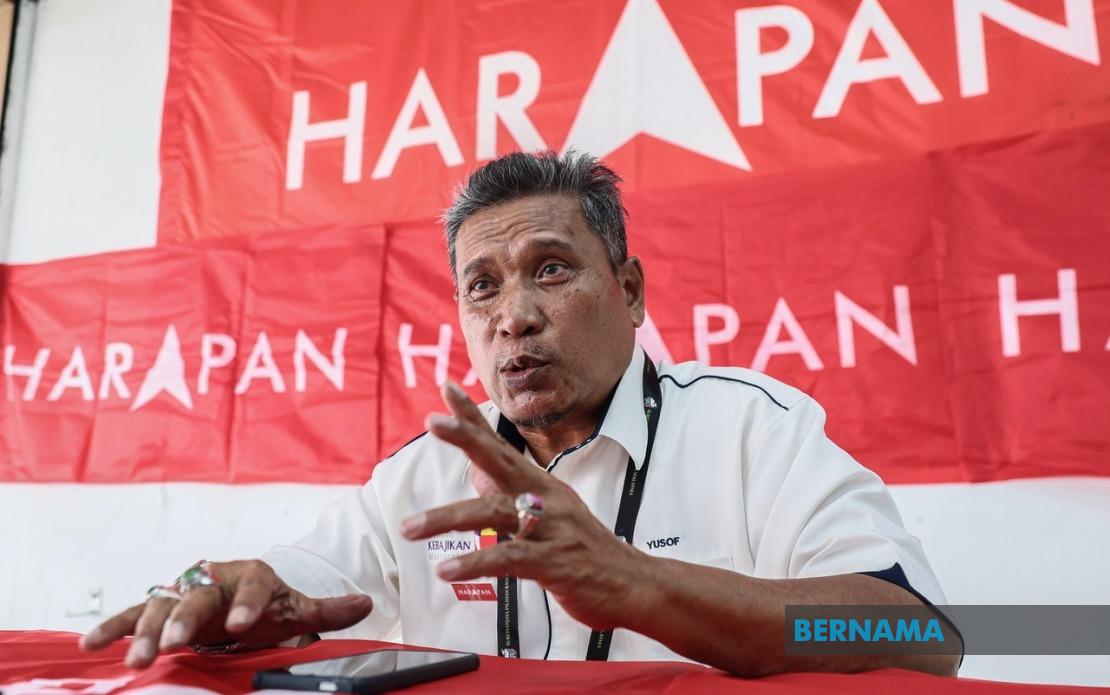
Md Yusof Dawam, the 64-year-old Pakatan Harapan contender for the Tenggaroh state seat, has positioned his campaign around tackling entrenched challenges facing the Felda settler community, particularly the exodus of younger residents to urban centres. Speaking to BERNAMA during a campaign visit to Mersing, the retired educator outlined a multifaceted platform centred on housing availability, economic vitality, and tourism development—issues that collectively paint a picture of a rural constituency grappling with generational transition and economic stagnation.
The question of accommodation for settlers' children has emerged as a recurring concern throughout Md Yusof's grassroots engagement, reflecting a demographic crisis that threatens the long-term viability of Felda settlements. Young adults raised within these communities find themselves unable to establish independent households on family incomes, compelling many to abandon agricultural livelihoods for wage employment in Kuala Lumpur, Johor Bahru, and other urban hubs. This structural constraint has implications extending beyond individual family circumstances; the departure of younger generations disrupts the intergenerational transmission of farming expertise and weakens the social fabric that has historically underpinned these settlements.
Md Yusof's proposed remedy involves advocating for a dedicated second-generation settlement spanning ten to twenty acres within the Tenggaroh scheme, designed with contemporary infrastructure and planning standards. This initiative transcends mere real estate provision; it functions as a retention mechanism intended to preserve family-managed oil palm plantations under successor stewardship rather than allowing productive assets to languish or pass into external ownership. By anchoring younger residents within the settlement through housing provision, Md Yusof contends that agricultural productivity and community cohesion can be simultaneously revitalized.
Beyond housing, the candidate has identified retail commerce as another sector ripe for systematic overhaul. The existing business landscape in Felda settlements, he argues, has remained fundamentally unchanged since the 1980s, failing to meet contemporary consumer expectations or generate sufficient economic dynamism to retain purchasing power within the community. His blueprint envisions the allocation of temporary land grants enabling construction of modern commercial premises, thereby creating a concentrated retail environment resembling a functional small town rather than dispersed shophouses.
This economic decentralization strategy carries particular significance given Tenggaroh's geographical distance from Mersing town—approximately seventy kilometres—which currently necessitates extended journeys for basic consumer goods and services. By developing consolidated commercial infrastructure, Md Yusof suggests that expenditure cycles would consolidate locally rather than leaking toward urban retail centres. Enhanced marketplace vitality would theoretically create employment opportunities for younger residents, furnishing an alternative to agricultural employment or outmigration.
Tourism development represents a third pillar of Md Yusof's platform, specifically leveraging Mersing's archipelago and its islands—Pulau Besar, Pulau Tinggi, and Pulau Aur—as gateways to economic participation. These islands have attracted international film production companies seeking exotic shooting locations, yet local youth have captured minimal economic benefit from this activity. The candidate contends that structural barriers, notably the absence of locally-owned tourism enterprises and maritime transport operators, have prevented economic spillovers from materializing. Addressing these gaps through targeted business facilitation could convert tourism into a meaningful income source for younger residents.
Md Yusof's campaign methodology emphasizes intimate community engagement over large-scale rallies. His approach privileges small-group meetings designed to foster direct dialogue, allowing him to cultivate granular understanding of constituent priorities while simultaneously building personal connections. This strategy reflects his self-identification as a four-decade Mersing resident and sixteen-year veteran of educational work within Felda Nitar, positioning him as an insider conversant with local dynamics rather than an external political appointee.
The Tenggaroh contest unfolds within the broader context of the 16th Johor state election, wherein 172 candidates are competing across 56 constituencies. The campaign cycle underscores persistent concerns about rural economic vitality and demographic sustainability—challenges extending well beyond this single seat. Polling is scheduled for July 11, with early voting for security personnel occurring on July 10.
Md Yusof's platform, though concentrated on localized concerns, touches upon dynamics relevant across Southeast Asian Felda-style agricultural settlements, where mechanization, commodity price volatility, and urbanization have collectively destabilized traditional agrarian economies. His emphasis on second-generation housing, retail modernization, and tourism diversification reflects an understanding that sustainable rural development requires multidimensional interventions rather than agricultural subsidies alone. Whether these proposals gain traction with voters will become apparent following the ballot, but they articulate a coherent vision for transforming Tenggaroh from a declining settlement into a functionally integrated, economically diversified community capable of retaining and attracting younger residents.

