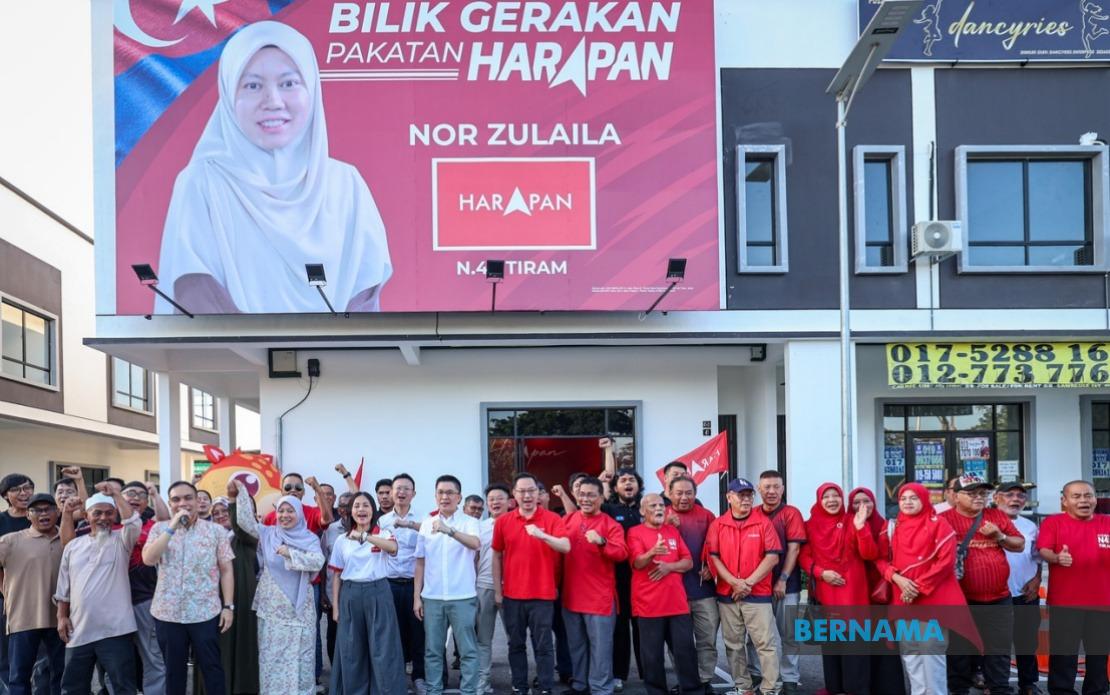
The Malaysian Communications and Multimedia Commission has received instructions to maintain consistent and reliable internet access throughout the Johor state election campaign, according to Deputy Communications Minister Teo Nie Ching. Speaking at the launch of Pakatan Harapan's operations centre for the N40 Tiram constituency in Pasir Gudang, Teo emphasised that stable connectivity represents a fundamental requirement for the smooth organisation of political activities and effective communication with voters across the state.
Teo, who also serves as Johor DAP chief, outlined the regulatory framework that will underpin digital infrastructure during the campaigning period. The MCMC has been tasked with conducting systematic monitoring of internet performance, with particular attention directed towards high-traffic zones expected to draw substantial crowds for campaign events. This targeted approach recognises that areas hosting political rallies and voter engagement activities face heightened demand for bandwidth and stable connections, making them priority zones for infrastructure oversight.
The timing of this directive reflects the compressed schedule for the 16th Johor state election, with nomination day set for June 27, early voting scheduled for July 7, and polling day falling on July 11. Within this narrow window, campaign organisations depend heavily on digital platforms for organising events, coordinating volunteers, and reaching voters who may not attend physical rallies. The emphasis on internet stability thus addresses a practical necessity rather than merely a convenience for modern political campaigns.
Teo's comments underscore a broader recognition within Malaysia's political establishment that digital infrastructure has become integral to electoral processes. Beyond traditional campaign methods, reliable internet enables candidates to livestream rallies to wider audiences, coordinate internal party operations across multiple constituencies, and facilitate voter registration verification. In the context of Johor's diverse geography and dispersed population centres, ensuring consistent connectivity becomes particularly important for reaching voters in both urban and semi-rural areas.
The Pakatan Harapan coalition has reported encouraging reception from voters during ground operations across Johor. According to Teo, voters have demonstrated substantial willingness to exercise their civic responsibilities, including those registered in constituencies other than their current residence. The coalition has observed a marked tendency among such voters to return to their hometowns for polling day, suggesting healthy voter participation prospects. This pattern may reflect broader awareness of the election's significance, particularly given the political dynamics within Johor over recent years.
Regarding the coalition's tactical approach, Teo indicated that DAP will direct concentrated effort across all 17 constituencies in which it is contesting, explicitly avoiding any categorisation of seats as strategically secured. This stance reflects a disciplined campaign philosophy that resists complacency and demands sustained focus across the entire slate of candidates. The rationale underlying this approach recognises that presuming victory in any constituency could divert resources and attention from areas requiring intensive ground work, potentially undermining overall performance.
Teo's emphasis on seat-by-seat attention also acknowledges the distinctive challenges confronting each constituency. Tiram, for instance, where Nor Zulaila Abdul Ghani is the Pakatan Harapan candidate, presents characteristics differing from other Johor constituencies in terms of demographic composition, economic activity, and voter sentiment. By treating each contest as competitively demanding, the coalition aims to tailor messaging and campaign intensity to local conditions rather than applying standardised approaches across the state.
The operation centre launched in Taman Kota Masai serves as a coordinating hub for Pakatan Harapan's activities in the Tiram area. Such facilities have become standard components of modern electoral campaigns, serving functions ranging from volunteer coordination to voter feedback collection and campaign material distribution. The presence of Deputy Education Minister Wong Kah Woh, alongside MPs Syahredzan Johan and Jimmy Puah Wee Tse, reflected the coalition's determination to demonstrate organisational unity and senior-level commitment to the Johor campaign.
For Malaysian observers, the MCMC directive carries implications extending beyond the immediate election cycle. The regulatory body's active management of internet infrastructure during a major electoral event sets precedent for viewing digital connectivity as a component of electoral administration rather than solely a matter of commercial provision. This framing aligns with international practice in democracies where governments increasingly recognise that communications infrastructure quality influences the integrity and efficacy of electoral processes.
The Johor election represents a significant political event within Malaysia's federal system, as state governments control substantial policy domains including land, education, and local governance. Electoral outcomes in Johor therefore hold material consequences for regional development trajectories and the balance of political forces within the peninsula. The attention devoted to digital infrastructure quality during campaigning reflects recognition of the contest's importance and the necessity of ensuring that all voters, regardless of location, have equal access to campaign information and organisational communications.
For political parties and independent candidates participating in the election, the MCMC's proactive stance offers some assurance regarding technical infrastructure, though campaign success ultimately depends on message development, ground organisation, and voter mobilisation efforts that remain the responsibility of individual contestants. The regulatory framework ensures a level playing field regarding digital access, preventing scenarios where internet inadequacy in particular areas might disadvantage candidates unable to compensate through alternative communication methods.

