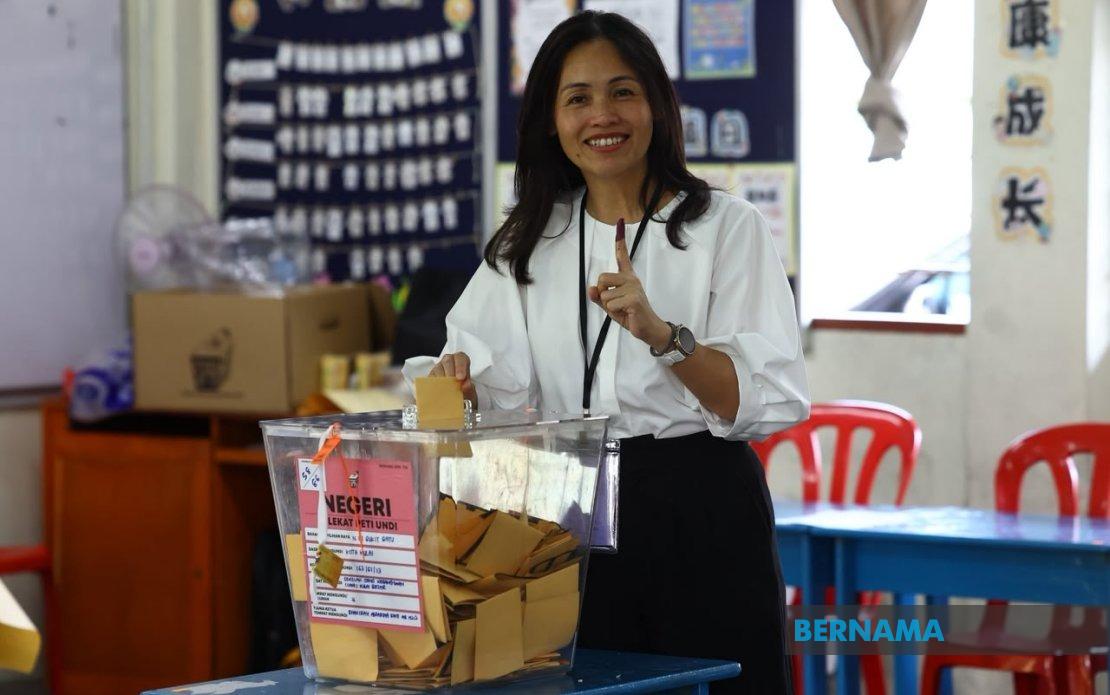
The Malaysian Communications and Multimedia Commission confronted a modest but noteworthy wave of digital misconduct complaints as voters in Johor cast ballots for the state's 16th legislative assembly election. Deputy Communications Minister Teo Nie Ching disclosed that the regulatory body had documented 29 separate complaints spanning online content violations, ranging from deliberately falsified information to inflammatory speech and fraudulent schemes designed to exploit election-day confusion.
Breaking down the complaint categories, fake news dominated the caseload with 17 registered incidents—more than half the total volume—indicating that voters and observers were actively flagging unverified claims circulating across social media and messaging platforms. The remaining complaints split between hate speech allegations numbering 11 and a single case involving fraudulent account creation and impersonation tactics. This distribution underscores how disinformation and divisive rhetoric remain persistent challenges during high-stakes electoral moments in Malaysia, when political tensions naturally intensify.
Within the hate speech category, the majority of violations centred on racial provocations, accounting for nine of the eleven complaints. The remaining instances touched on religious sensitivities and content deemed disrespectful toward the monarchy, all falling under Malaysia's cultural and political red lines commonly referred to as the 3R framework—race, religion and royalty. These designations matter significantly in Malaysian political discourse, where such violations can trigger legal consequences beyond administrative warnings, reflecting the nation's commitment to protecting communal harmony across its multi-ethnic landscape.
Teo's intervention at the polling station in Kulai carried a dual message aimed at voters and digital citizens more broadly. She stressed the imperative for public awareness regarding information verification and encouraged citizens to develop stronger critical thinking skills when encountering claims on social platforms. Her appeal for digital literacy reflected growing recognition among Malaysian policymakers that combating falsehoods requires not just regulatory intervention but a population equipped to distinguish credible sources from manufactured narratives designed to manipulate opinion.
The deputy minister's warning gained urgency given the sheer scale of the Johor electoral exercise unfolding that day. The 16th state election represented a substantial democratic exercise encompassing 172 candidates pursuing positions across 56 State Legislative Assembly constituencies. More than 2.6 million registered voters participated in the exercise, making the potential amplification of false or inflammatory content a matter affecting millions of households and their collective decision-making processes.
Teo's emphasis on exercising voting rights wisely carried implicit acknowledgment that electoral outcomes can be influenced by information quality. When voters encounter contradictory claims, unverified allegations, or emotionally charged statements exploiting communal sensitivities, their capacity to make reasoned choices deteriorates. This understanding has shaped Malaysian electoral administration thinking in recent years, prompting the MCMC and other oversight bodies to track online conduct more systematically during campaign periods.
The relatively contained number of formal complaints—29 across a state-wide election involving millions of voters and countless digital exchanges—might suggest either effective self-regulation among online communities or potential underreporting of violations. Complaints require active reporting by members of the public or monitoring organisations, meaning many instances of fake news or hate speech circulate without formal documentation. The figure therefore represents a floor rather than a ceiling for actual misconduct volume.
Malaysia's regulatory framework for online speech during elections operates within parameters established by the Communications and Multimedia Act, though practical enforcement during fast-moving campaign periods presents genuine challenges. The MCMC's approach combines reactive complaint handling with proactive monitoring, though resource constraints often limit the latter capability. As electoral cycles compress and digital platforms proliferate, this tension between regulatory ambition and practical capacity becomes more pronounced.
The context of Johor elections carries additional significance for national politics. The state represents a critical battleground where coalition fortunes often shift, and electoral outcomes there historically signal broader trends affecting federal government formation. This strategic importance means that coordinated disinformation campaigns targeting Johor voters carry outsized implications, making the MCMC's monitoring role particularly consequential during such contests.
Teo's appeal for vigilance among voters reflects an increasingly common sentiment among Malaysian political and regulatory leaders—that protection against digital manipulation ultimately depends on collective responsibility. Government agencies can establish rules and pursue enforcement, but citizens must also cultivate habits of verification and skepticism toward unattributed claims. This shared responsibility model acknowledges limits of top-down regulation while mobilising popular participation in defending information integrity.
Looking forward, the Johor experience provides data points relevant to Malaysia's broader election management strategy. As the nation approaches future general elections, the patterns observed during state-level contests inform preparations for managing potentially larger volumes of online misconduct. The 29 complaints documented during the Johor campaign offer baseline metrics against which future electoral periods can be measured, helping authorities assess whether digital misbehaviour escalates during higher-stakes contests.
The incident also highlights how Southeast Asian democracies increasingly grapple with regulating online speech during elections while respecting freedom of expression principles. Malaysia's approach—balancing community protection through hate speech prohibition with open political debate—represents one regional model amid varying approaches adopted across the association. The Johor experience, though modest in complaint volume, contributes to emerging regional understanding of how digital platforms interact with electoral processes and voter decision-making.

