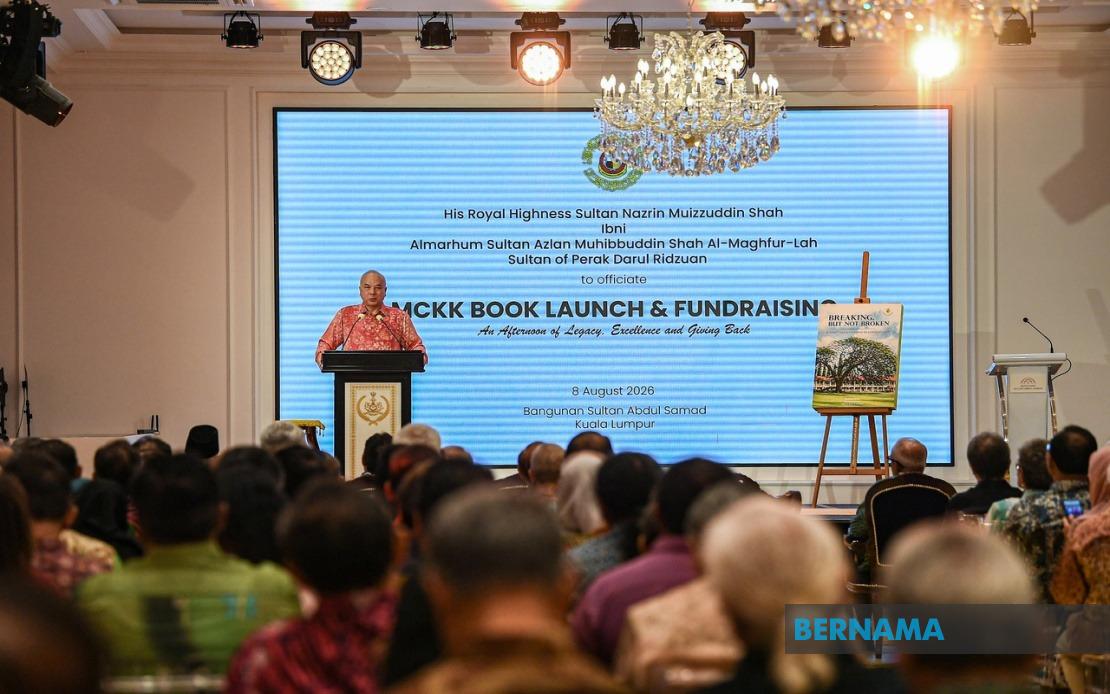
The Ruler of Perak, Sultan Nazrin Shah, has argued that prestigious heritage schools can secure a meaningful future by fundamentally reimagining their role in response to rapid technological disruption and the emergence of artificial intelligence. Speaking at a public event in Kuala Lumpur, the Royal Patron of the MCKK Board of Governors emphasised that educational transformation must occur without abandoning the moral and intellectual rigour that has historically distinguished such institutions. His intervention signals official recognition that Malaysia's elite residential schools face a genuine credibility crisis demanding urgent strategic renewal.
Sultan Nazrin's remarks underscore a central tension in contemporary Malaysian education: how to preserve institutional prestige and values whilst equipping students for a radically different economic and technological landscape. The Perak Ruler noted that heritage schools cannot simply replicate past approaches in fundamentally altered circumstances. Instead, they must develop pedagogical models that respond meaningfully to an era shaped by increasingly sophisticated artificial intelligence and computational technologies that will redefine labour markets and knowledge work across sectors from finance to healthcare to governance.
The implications for institutional relevance are substantial. According to Sultan Nazrin's assessment, several of Malaysia's most celebrated boarding schools—often described colloquially as "power schools"—have experienced a marked erosion of their traditional standing and influence. Graduates from these institutions no longer reliably demonstrate the linguistic proficiency, analytical capabilities, and civic commitment that historically distinguished their alumni networks. This decline, the Ruler suggested, represents a departure from established patterns where such schools consistently produced exceptional human capital. The observation carries weight given that these institutions occupy privileged positions in Malaysian society, commanding significant resources and attracting academically advanced intake.
Yet Sultan Nazrin articulated a vision extending beyond technical skills acquisition. He insisted that educational institutions must simultaneously cultivate what he termed "well-rounded human beings"—individuals possessing not only practical competencies suited to technological change but also the ethical sensibilities, emotional intelligence, and values necessary for meaningful participation in communities and societies. This dual imperative becomes particularly acute during periods of profound uncertainty, when the curriculum cannot reliably predict which specific technical skills will remain valuable. The Ruler's framing suggests that character formation, philosophical literacy, and moral reasoning deserve equal pedagogical weight alongside mathematics and digital literacy.
The challenge of implementation appears daunting. Transforming deeply established institutional cultures requires sustained leadership commitment, faculty retraining, curriculum redesign, and often uncomfortable confrontation with traditions that maintain symbolic importance despite limited contemporary relevance. Heritage schools must simultaneously honour their historical narratives whilst making hard choices about educational priorities. Sultan Nazrin's remarks implicitly acknowledge this tension by commending authors who addressed the sensitive institutional challenges confronting MCKK and comparable schools with analytical rigour rather than celebratory nostalgia.
Financial capacity represents another dimension of institutional renewal. The MCKK Foundation has mobilised considerable resources toward infrastructure modernisation, raising over RM36 million in donations and contributions since its 2008 establishment. Infrastructure investments, including the International Baccalaureate Complex and Auditorium Tun Abdul Razak, alongside facility upgrades affecting hostels, athletic amenities, and heritage buildings, demonstrate tangible commitment to physical modernisation. Such investments provide necessary scaffolding for pedagogical transformation by offering appropriate spaces for collaborative learning, technological integration, and contemporary educational practice.
The Foundation's endowment strategy reveals sophisticated institutional thinking about sustainability. With endowment funds exceeding RM16 million—substantially contributed by corporations including PETRONAS and international entities such as the Brunei sultanate—the school has positioned itself to generate reliable investment income independent of annual fundraising volatility. This endowment stability permits longer-term strategic planning and insulates programme continuity from short-term economic fluctuations. Over RM7 million in accumulated investment returns have supported scholarships, student development programmes, international participation, faculty professional development, and heritage preservation.
Scholarship distribution and financial assistance carry particular significance given Malaysia's broader equity concerns. Heritage schools, despite their public missions, have historically tended toward socioeconomic homogeneity due to fee structures and informal networking advantages favouring privileged families. Endowment-supported scholarships potentially democratise access, enabling talented students from diverse economic backgrounds to participate in these institutions' curricular and co-curricular offerings. This shift aligns with Sultan Nazrin's implicit emphasis on developing national human capital rather than merely reproducing elite family networks across generations.
The regional context shapes these institutional challenges acutely. Southeast Asian societies experience accelerating technological integration, demographic transitions favouring smaller family sizes and increased educational selectivity, and rising competition for positions in global knowledge-intensive sectors. Malaysia's heritage schools occupy distinctive niches within this competitive landscape, commanding reputational advantages that extend into tertiary institutions and professional networks. However, sustained reputational advantage requires demonstrable educational efficacy in preparing students for genuine economic and civic opportunities.
Sultan Nazrin's intervention suggests official patience combined with elevated expectations. The Perak Ruler neither dismissed heritage schools as anachronistic nor treated them as inherently superior to contemporary alternatives. Rather, he framed institutional renewal as both possible and necessary—achievable through sustained commitment to pedagogical innovation grounded in enduring ethical foundations. This balanced assessment acknowledges that heritage schools possess genuine advantages including accumulated human expertise, established alumni networks, and cultural capital that newer institutions cannot easily replicate, yet these assets require active renewal rather than passive preservation.
The path forward appears to demand sustained institutional introspection regarding educational philosophy, curricular content, pedagogical methods, and institutional cultures. Heritage schools must interrogate inherited practices with intellectual honesty, discontinuing approaches no longer defensible on educational grounds whilst amplifying elements genuinely valuable for contemporary student development. This selective preservation and strategic innovation—neither wholesale rejection of tradition nor nostalgic entrenchment—represents the substantive challenge Sultan Nazrin's remarks implicitly identify.
For Malaysian policymakers and educators more broadly, the Sultan's remarks carry implications extending beyond individual elite institutions. Heritage schools serve as visible symbols of educational quality and institutional stability within national systems. Their renewal or continued decline sends signals regarding societal capacity to adapt valued institutions to changing circumstances. Successful transformation at MCKK and comparable schools might catalyse broader pedagogical innovation across Malaysian secondary education, demonstrating that contemporary technologies and ancient values need not exist in irreconcilable tension. Conversely, institutional stagnation risks reinforcing perceptions that Malaysia's educational apparatus struggles to balance tradition with essential modernisation—a particularly consequential challenge as artificial intelligence and technological disruption reshape global labour markets.

