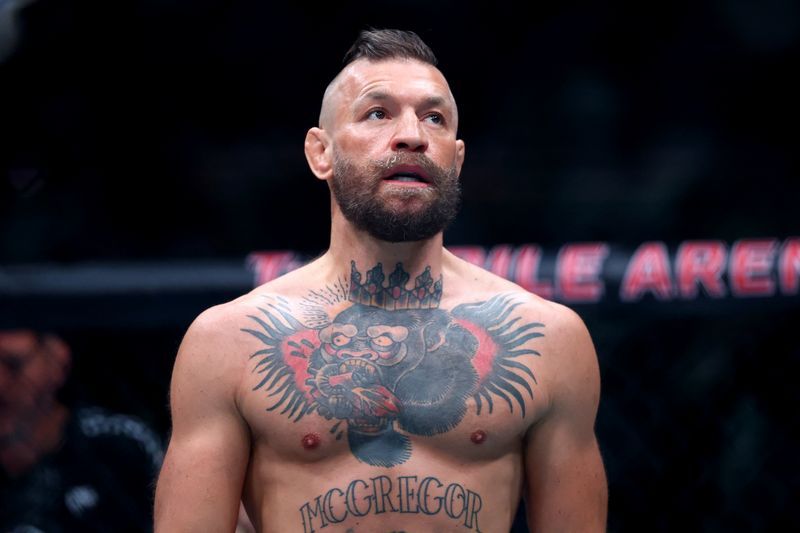
Conor McGregor's return to the UFC octagon proved brief and disappointing when a catastrophic knee injury cut short his opening round encounter with Max Holloway at UFC 329 in Las Vegas on Saturday. The former two-weight champion, whose fight lasted marginally over a minute, attempted an aggressive flying kick early in the contest but landed awkwardly, causing immediate visible distress. After struggling through a few additional seconds, McGregor gestured towards the referee to signal his inability to continue, bringing the bout to an abrupt conclusion before it had barely begun.
The injury marks another setback for McGregor, whose career trajectory has been severely hampered by a succession of physical and off-ring complications over the past four years. His previous competitive appearance came in July 2021 against Dustin Poirier, when he sustained a significant leg fracture that sidelined him for an extended period. That lengthy absence had already raised considerable questions about whether McGregor could return to elite-level competition, yet the Irish fighter had invested heavily in rebuilding his narrative around this particular engagement with Holloway.
The timing of this fresh injury compounds mounting frustration within fighting circles regarding McGregor's availability. Earlier in 2024, organisers had scheduled a matchup between McGregor and Michael Chandler for June, only to cancel the event after the Irishman incurred a broken toe during preparation sessions. These successive cancellations have created a pattern that extends beyond simple misfortune, suggesting deeper issues with McGregor's readiness to maintain professional athlete status at the highest competitive level.
Beyond the physical challenges plaguing his return, McGregor has faced substantial headwinds away from sporting competition itself. An Irish civil court jury determined in a separate proceeding that he bore legal liability for sexual assault allegations involving Nikita Hand dating to 2018, a verdict that intensified scrutiny of his public standing. Additionally, combat sports authorities implemented an eighteen-month suspension against the fighter for repeated whereabouts violations after he failed to appear for three biological sampling collection attempts during 2024. Although that ban was backdated and technically expired in March, the disciplinary action highlighted compliance issues that complicated his comeback timeline considerably.
Despite the disappointing result, Holloway indicated openness to rescheduling a rematch once McGregor recovers from his injury. The former featherweight champion acknowledged the considerable commercial and spectator interest surrounding their matchup, recognising the substantial promotional investment stakeholders had made in marketing this encounter. Holloway's pragmatic attitude suggests the UFC may look toward staging a third meeting between the pair, particularly given their existing rivalry and Holloway's victory by unanimous decision in their previous 2013 encounter.
The injury dynamic carries significance for Southeast Asian fight audiences, as McGregor maintains considerable drawing power throughout the region. His unpredictable career management and recurring physical setbacks inevitably affect scheduling for international broadcast partners and regional fan bases who have invested emotional and financial interest in his comeback narrative. Each cancellation or premature conclusion to an anticipated bout frustrates the global promotional machinery that depends upon his participation to drive subscription revenues and viewership numbers.
In a related development during the same Las Vegas event, British lightweight Paddy Pimblett delivered an efficient performance against French opponent Benoit Saint-Denis during the card's co-main attraction. Pimblett required less than a minute to secure victory through a submission hold, demonstrating the stark contrast between his rapid dominance and McGregor's inability to sustain competition. The disparity underscores how McGregor's physical condition compares unfavourably to younger competitors whose preparation timelines have remained uninterrupted by injury and legal complications.
Looking ahead, McGregor faces an extended rehabilitation period that will determine whether he can meaningfully return to competitive fighting. The nature of knee injuries in combat sports creates particular complications, as fighters require explosive leg drive and mobility for both striking and grappling applications. Recovery trajectories remain unpredictable, and McGregor's age at 37 introduces additional variables that could fundamentally alter his competitive capacity compared to pre-injury baselines. Whether the UFC will continue investing promotional resources into McGregor's comeback remains an open question that will likely depend upon his rehabilitation progress and demonstrated ability to remain healthy through training camps.
The broader context around McGregor's struggles reflects structural tensions within professional mixed martial arts regarding athlete management, regulatory oversight, and commercial expectations. The sport continues grappling with how to balance competitor welfare, disciplinary enforcement, and promotional interests when high-profile athletes experience repeated interruptions to their competition schedules. McGregor's situation exemplifies these competing pressures, as the UFC confronts whether maintaining his marketability justifies continued investment despite mounting evidence that his availability has become substantially constrained.

