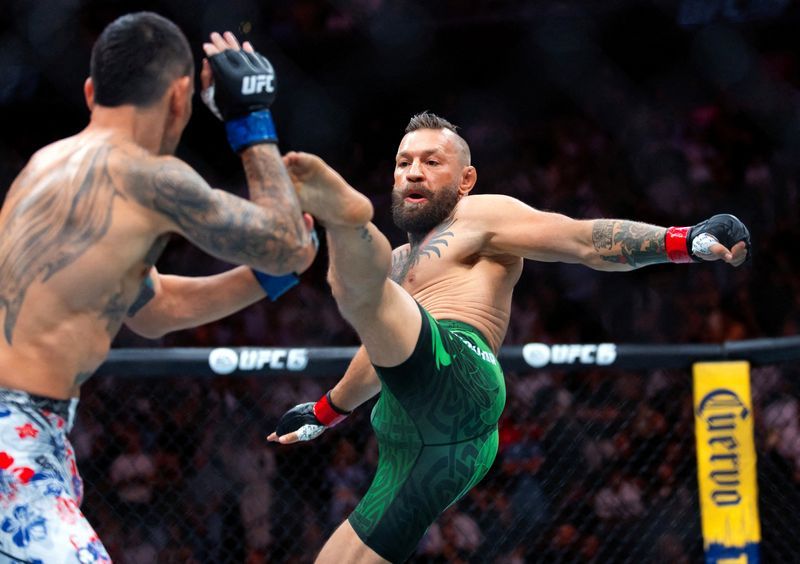
Conor McGregor's highly anticipated return to professional mixed martial arts competition has ended in disappointment after a catastrophic knee injury sidelined him within the opening minute of his bout against Max Holloway in Las Vegas. The incident occurred on Saturday when the former two-weight champion attempted an aggressive jump kick but landed awkwardly, immediately signalling to the referee that he could not continue. The injury represents another setback for the 37-year-old Irish fighter, whose storied career has been marked by an increasingly turbulent pattern of injuries, legal complications, and regulatory issues over the past several years.
On Monday following the fight, McGregor took to Instagram to confirm that he will pursue surgical intervention to address the knee damage. In a statement peppered with religious imagery, he declared his intention to resume training and competition, specifically mentioning his desire to fulfil what he described as the final fight remaining on his existing contract. The post suggested a mindset focused on rehabilitation rather than retirement, signalling that McGregor views this setback as temporary rather than career-defining. His optimistic framing contrasts sharply with the grim reality facing athletes confronting significant orthopedic injuries at an advanced stage of their career trajectory.
The recurring nature of McGregor's injury problems has become a defining characteristic of his recent professional life. Approximately five years prior to his encounter with Holloway, the fighter suffered a serious leg fracture while competing against Dustin Poirier, an incident that effectively sidelined him for an extended period. This history of significant injuries raises legitimate questions about whether McGregor's physical condition can sustain the demands of elite-level competition. Each new setback extends the timeline for his return and increases the likelihood of cumulative damage that might compromise future performance, even if he manages to recover from the current knee injury.
Beyond the purely athletic dimension, McGregor's comeback plans face substantial complications stemming from external circumstances. A scheduled June 2024 matchup with Michael Chandler was abandoned after the Irish fighter sustained a broken toe during training, illustrating how even routine preparation can derail competition timelines. This cancellation highlighted the precarious nature of maintaining peak physical condition while juggling other professional and personal obligations. For a fighter attempting to resurrect his career at 37 years old, such repeated delays compound the challenge of remaining competitive at the sport's highest level.
McGregor's troubles extend well beyond the confines of the octagon. In a significant development within Irish civil courts, a jury determined that McGregor bore legal liability for the rape of Nikita Hand in 2018, a verdict that fundamentally altered his public standing and commercial prospects. The judgment carries substantial implications for his marketability and sponsorship relationships, factors that traditionally supported his earning potential and public profile. This legal determination represents a turning point in how public institutions and commercial entities view their association with the fighter.
The fighter's compliance record with anti-doping authorities has also become problematic. In October 2025, McGregor accepted an 18-month suspension specifically for whereabouts violations after failing to make himself available for three separate biological sampling attempts conducted by Combat Sports Anti-Doping during 2024. Whereabouts failures represent a distinct category of infraction within the regulatory framework governing professional combat sports, one that does not necessarily imply intentional doping but rather reflects an athlete's failure to maintain adequate communication with authorities regarding their location and availability. The ban, though backdated to place its expiration in March, demonstrates that McGregor's difficulties with regulatory compliance have added another layer of complication to his career rehabilitation efforts.
The cumulative weight of these obstacles—physical injury, legal liability, regulatory sanctions, and recurring health setbacks during training—creates an exceptionally challenging environment for McGregor's proposed comeback. Southeast Asian combat sports fans and observers have long followed McGregor's career with considerable interest, making his struggles particularly newsworthy across the region. His decision to pursue surgery and rehabilitation sends a message about his determination, yet the realistic assessment of his circumstances suggests that returning to championship-level competition may prove substantially more difficult than his Instagram post implies.
For the broader mixed martial arts industry and McGregor's organization, the fighter's continued participation represents both commercial opportunity and potential reputational risk. His ability to draw audiences and generate media attention remains substantial, but the repeated delays, injuries, and controversies have gradually eroded the narrative of invincibility that once surrounded his public persona. Stakeholders must weigh the financial benefits of a McGregor return against the possibility that further public setbacks could diminish rather than enhance the sport's overall standing.
The coming months will prove critical in determining whether McGregor can realistically achieve the athletic objectives he has now publicly articulated. His commitment to surgery and rehabilitation suggests a genuine intention to continue competing, yet the intersection of his age, injury history, legal circumstances, and regulatory status creates substantial headwinds against a triumphant return. For observers across Malaysia and Southeast Asia, McGregor's situation exemplifies the multifaceted challenges facing aging elite athletes attempting to maintain relevance in highly demanding professional environments, particularly when those challenges extend beyond purely athletic considerations.

