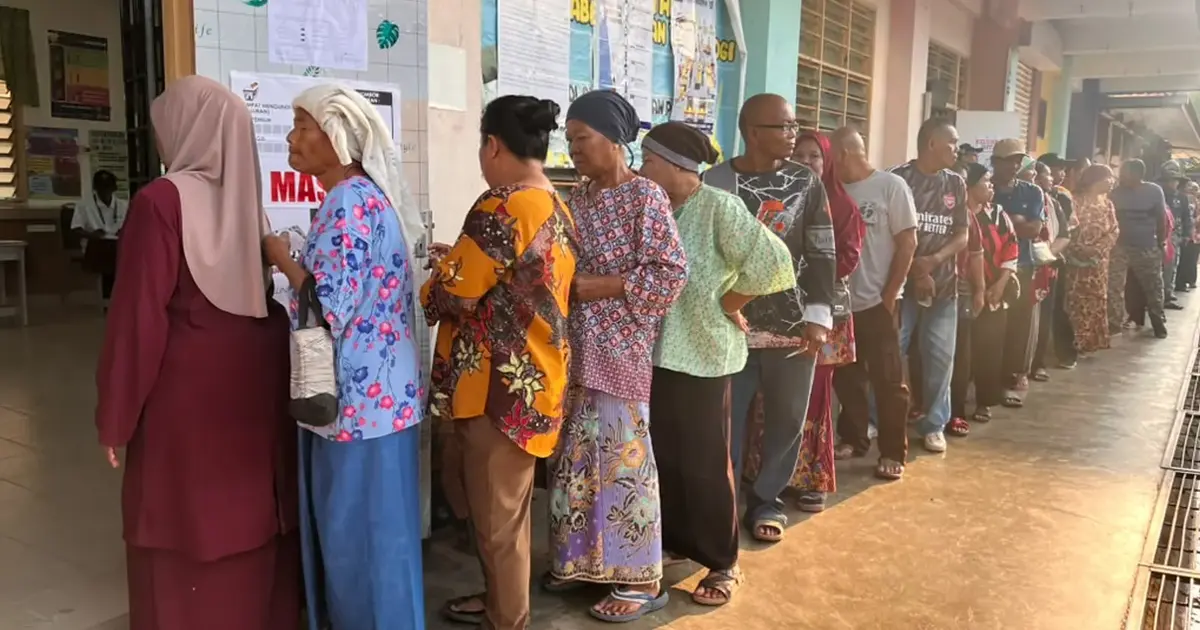
The MCA's victory in the Chennah state seat, where incumbent DAP assemblyman Loke Siew Fook lost his position, points to a broader dynamic within Malaysian coalition politics that political observers have long noted: the fortunes of Barisan Nasional's component parties rise and fall substantially with the strength and mobilisation capacity of Umno. The result reflects what analysts describe as substantial Malay voter turnout concentrated behind the Barisan Nasional ticket, a pattern that reshapes electoral mathematics in constituencies with diverse demographics.
Understanding this relationship requires examining how Umno functions as the anchor organisation within the Barisan coalition. As Malaysia's largest and oldest Malay-Muslim party, Umno commands extensive grassroots machinery, network reach, and ability to activate its traditional voter base during elections. When this machinery operates at full capacity, it generates momentum that extends beyond Umno's own candidates to benefit allied parties contesting in the same electoral cycle. The Chennah outcome exemplifies this phenomenon in action.
For the MCA, a party that has faced considerable electoral challenges over the past decade, victories tied to Umno's mobilisation efforts represent critical opportunities to demonstrate relevance and secure legislative representation. The party's base among Malaysian Chinese voters has fractured significantly since 2018, with many supporters gravitating toward opposition parties or abstaining from voting. By securing Chennah, the MCA gains a tangible political asset to present to its stakeholder community and members, reinforcing its value as a coalition partner.
The dynamics evident in Chennah reflect broader patterns in Malaysian electoral behaviour. In constituencies where Malay-Muslim voters constitute a majority or substantial plurality, the coordination between Umno and its partners becomes crucial. When Umno campaigns effectively and turns out its supporters in significant numbers, Chinese-majority or mixed-composition constituencies that might otherwise lean toward opposition parties can shift toward Barisan candidates. This coordination effect has become more pronounced as the political landscape has polarised and as voters increasingly vote along bloc lines.
Several factors explain why the MCA and other non-Malay Barisan components depend on Umno's strength. First, the political environment since 2018 has intensified competition for non-Malay voters, particularly among educated urban demographics who have become more volatile in their voting patterns. Second, opposition parties have successfully cultivated alternative structures that appeal to these voters, creating a multi-way contest that the MCA struggles to dominate independently. Third, when Umno successfully frames coalition politics as essential for Malay-Muslim interests, it creates psychological and strategic incentives for non-Malay voters sympathetic to stability or community harmony to support the broader Barisan ticket rather than fragmenting support across opposition parties.
The Chennah result carries particular significance given its location in Terengganu, a state where Umno has undergone considerable internal turbulence and factional disputes in recent years. That the party could still mobilise Malay voters effectively enough to deliver a victory for its MCA partner suggests either improved internal cohesion, successful messaging strategies, or both. For the MCA, the win demonstrates that even in states with challenging political environments for the party, Umno's organisational strength can create viable electoral pathways.
However, analysts caution that this dependency relationship contains inherent vulnerabilities for parties like the MCA. If Umno experiences internal crises, loses capacity to activate its voter base, or shifts strategic direction, the benefits that accrue to component parties during periods of strong Umno mobilisation can evaporate rapidly. The 2018 general election provided a stark example of how quickly electoral landscapes can change when Umno faced unprecedented challenges to its legitimacy and unity. This asymmetry means that the MCA must invest simultaneously in building its own independent voter coalition while capitalising on Umno-generated momentum when available.
For Malaysian observers following coalition dynamics, the Chennah outcome illustrates enduring structural realities of Barisan Nasional politics. The coalition functions most effectively as a unified electoral vehicle when its largest component operates from a position of strength. Conversely, periods of Umno weakness or internal division create space for opposition parties to make inroads in constituencies that might otherwise remain safely within the Barisan fold. This dynamic has shaped Malaysian electoral competition for decades and appears unlikely to change substantially in the near term.
The implications extend beyond immediate electoral arithmetic. The result suggests that efforts by any Malaysian political force to challenge Barisan Nasional's dominance must simultaneously address Umno's electoral capacity, not merely the weakness of individual component parties. Opposition coalitions that can successfully fracture Malay-Muslim voter blocs or reduce Umno's mobilisation effectiveness gain the potential to reshape broader electoral outcomes. Conversely, Barisan's path to electoral revival depends heavily on Umno's ability to restore confidence among its traditional voter base and translate that confidence into active electoral participation.
As the political calendar advances and attention turns toward future electoral opportunities, the Chennah dynamic will likely persist as a defining feature of Malaysian coalition competition. For the MCA and similar component parties, the lesson appears clear: their political viability within the Barisan structure depends substantially on Umno's continued capacity to mobilise and unite Malaysia's Malay-Muslim voter plurality around coalition politics.

