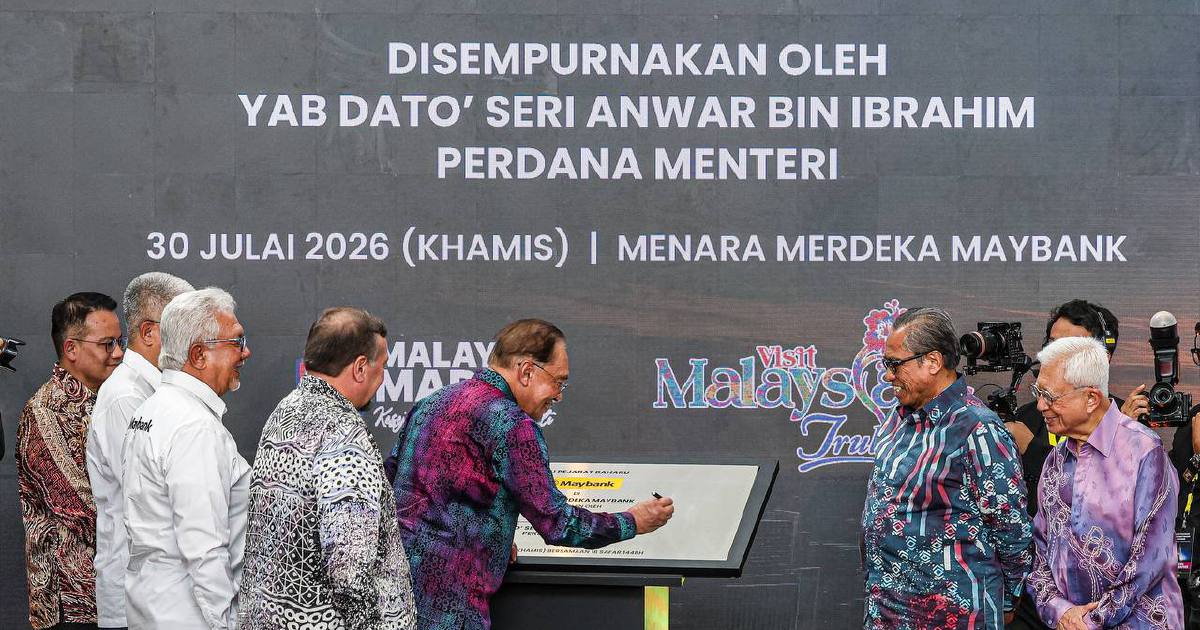
Malaysia's largest and most prominent banking institution, Malayan Banking Bhd commonly known as Maybank, has formally inaugurated its new headquarters facility at Menara Merdeka Maybank in Kuala Lumpur. The milestone event was marked by an official ceremony presided over by Prime Minister Datuk Seri Anwar Ibrahim, underscoring the national significance of this corporate development and its connection to Malaysia's broader economic aspirations.
The establishment of this new headquarters represents a substantial investment in Malaysia's financial infrastructure and demonstrates Maybank's commitment to deepening its operational footprint within the capital city. The move consolidates the bank's leadership position in the region's financial services sector, which has seen significant consolidation and modernisation over the past decade. For Maybank, which has long served as a cornerstone institution in Malaysia's financial system since its establishment in 1960, this relocation signifies a strategic evolution to meet contemporary banking demands and operational requirements.
Menara Merdeka Maybank itself stands as a symbol of modern architectural ambition in Kuala Lumpur's evolving skyline. The facility has been designed to accommodate the bank's expanding workforce and technological capabilities, reflecting the broader transformation underway within Malaysia's banking sector. State-of-the-art office infrastructure, integrated digital systems, and modern workplace design principles have been incorporated into the headquarters, positioning Maybank to manage its operations across Malaysia and throughout its regional network more effectively.
The involvement of Prime Minister Anwar Ibrahim in the official launch ceremony highlights the government's recognition of Maybank's critical role within Malaysia's economic ecosystem. The banking sector remains fundamental to the nation's financial stability and economic growth trajectory, particularly as Malaysia navigates post-pandemic recovery and adapts to shifting regional dynamics in Southeast Asian finance. Maybank's expansion initiatives, therefore, carry implications beyond corporate strategy, touching upon broader patterns of investment confidence and sectoral development across the nation.
Maybank's expansion into this new headquarters also reflects strategic positioning within a competitive regional banking landscape. The institution operates across multiple Southeast Asian markets through subsidiaries and branch networks, serving millions of customers ranging from individual retail clients to large institutional accounts. A consolidated, modern headquarters enables better coordination of this regional presence while supporting the bank's digital transformation initiatives, which have accelerated significantly in recent years as Malaysian consumers increasingly adopt online and mobile banking services.
The opening comes at a significant juncture for Malaysia's financial services industry, which continues to modernise its regulatory frameworks and technological infrastructure. The banking sector has been instrumental in supporting Malaysia's economic diversification away from traditional commodity dependence, facilitating investment flows across various industries including technology, renewable energy, and digital commerce. Maybank's enhanced headquarters infrastructure positions the institution to participate more actively in these emerging opportunities and to support Malaysian enterprises seeking regional expansion.
For Malaysian businesses and consumers, this development carries practical implications. A headquarters equipped with cutting-edge technology and designed for integrated operations can translate into improved service delivery, faster decision-making processes, and more innovative financial products and solutions. Maybank's commitment to upgrading its physical and operational infrastructure suggests confidence in sustained demand for banking services and a strategic readiness to compete effectively against regional and international financial institutions that have similarly expanded their presence in Malaysia.
The timing of this headquarters inauguration also reflects broader confidence in Malaysia's economic prospects despite global uncertainties. Foreign direct investment and major corporate capital expenditure decisions serve as indicators of business sentiment regarding a nation's future trajectory. Maybank's investment in a new flagship headquarters, therefore, carries symbolic weight beyond the banking sector, suggesting institutional confidence in Malaysia's continued appeal as a financial and business hub within Southeast Asia.
Looking forward, the new Menara Merdeka headquarters will serve as a command centre for Maybank's operations spanning multiple countries and customer segments. The facility's modern infrastructure should support the bank's ongoing digital innovation agenda, particularly its expansion into fintech partnerships, digital payment systems, and mobile-first banking services. These capabilities have become increasingly essential as Malaysian consumers, particularly younger demographics, demonstrate growing preference for digital-first financial interactions over traditional branch-based services.
The opening also signals Maybank's commitment to maintaining its market leadership amid intensifying competition from newer financial service providers and digital banking platforms. Traditional banks across Southeast Asia are investing substantially in modernisation and digital capabilities to compete effectively with agile fintech competitors. Maybank's new headquarters represents both an affirmation of its established market position and an investment in the technological and human infrastructure necessary to maintain competitive advantage in an increasingly digital financial services landscape.
For Malaysia's broader economic narrative, the inauguration of this major corporate headquarters reinforces the nation's role as a regional financial services centre. Kuala Lumpur's financial district has long attracted both domestic and international banking operations, and continued investment by anchor institutions like Maybank helps sustain the city's competitive positioning relative to other Southeast Asian financial hubs such as Singapore, Bangkok, and Jakarta. The physical manifestation of corporate commitment through major capital investments like new headquarters facilities contributes to maintaining this competitive advantage.

