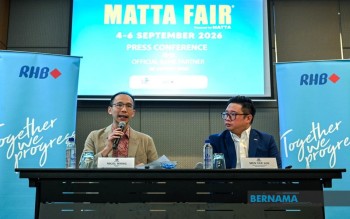
The travel and tourism sector is making its pitch to policymakers ahead of Budget 2027, with Malaysia's largest tour operator body laying out an agenda focused on tax relief and infrastructure spending. The Malaysian Association of Tour and Travel Agents (MATTA) has identified enhanced tax deductions for tour operators, substantially greater investment in tourism infrastructure upgrades, and a bolstered promotional budget as priority items for consideration when Finance Minister tables the Supply Bill on October 9. The positioning reflects the sector's belief that targeted fiscal support could meaningfully amplify Malaysia's competitive edge in attracting international visitors during the critical Visit Malaysia 2026-2027 promotional window.
At the heart of MATTA's appeal lies a straightforward economic argument: tax incentives that lighten the burden on tour operators will translate into expanded overseas marketing expenditure and, consequently, higher arrival numbers of foreign tourists. MATTA president Nigel Wong articulated this reasoning directly, explaining that improved tax deductions would create financial room for promotional campaigns abroad, directly supporting the government's Visit Malaysia 2026-2027 initiative. The framing positions tax relief not as a subsidy but as an investment mechanism—money retained by tour operators becomes marketing capital deployed internationally to raise Malaysia's profile as a destination.
Wong's case for infrastructure modernisation centres on a strategic observation: Malaysia possesses considerable heritage assets that, with targeted renewal, could command greater international appeal. He pointed to the Sultan Abdul Hamad Building restoration as an exemplar of what thoughtful public investment can achieve, noting that the refurbished landmark has become an iconic attraction within Kuala Lumpur's urban landscape. Beyond this particular success story, Wong identified a broader category of underutilised assets: natural heritage sites and historical structures scattered across the country that would benefit from comprehensive upgrading. The implicit argument is that Malaysia's tourism potential remains partially locked away in aging infrastructure, awaiting strategic capital deployment to unlock their drawing power.
The third pillar of MATTA's Budget 2027 submission concerns promotional spending at the national level. Tour operators contend that the government's marketing budget for the Visit Malaysia 2026-2027 campaign should be substantially elevated beyond current allocations. From the travel industry's perspective, a more generous national promotional budget serves as a force multiplier, amplifying the effect of individual operator campaigns and creating a cohesive national narrative that elevates Malaysia's position in global tourism competition. Without adequate central government promotion, MATTA's reasoning suggests, individual operators working independently will struggle to achieve the combined marketing impact necessary to significantly move visitor arrival numbers.
Wong added a fourth dimension to MATTA's proposal: institutional reform within municipal governance structures. He advocated for a whole-of-tourism approach wherein local councils and municipal authorities assume greater responsibility for ensuring that cities and urban areas meet fundamental safety and walkability standards. This framing acknowledges that tourist experience extends beyond individual attractions to encompass the broader urban environment. Clean streets, safe public spaces, clear pedestrian pathways, and visible municipal maintenance directly influence visitor perception and repeat-visit likelihood. By enlisting local government as active partners in tourism quality assurance, tour operators suggest that cities themselves become more competitive destinations.
The timing of MATTA's Budget 2027 submission carries significance. The Visit Malaysia 2026-2027 initiative represents a major government commitment to tourism growth, and tour operators recognise that budgetary decisions made in October 2025 will substantially determine the campaign's ultimate success. Tax incentives announced in Budget 2027 would take effect within the campaign period, directly influencing operator behaviour and marketing investment decisions. Infrastructure projects initiated following budget allocation could reach completion during the promotional window, maximising their visibility to international visitors. The promotional budget itself would shape media coverage and brand positioning during a critical period when Malaysia competes intensely against rival Southeast Asian destinations.
For Malaysian policymakers, MATTA's submission presents straightforward trade-offs. Tax incentives reduce immediate government revenue but potentially expand the tax base through increased economic activity, higher visitor spending, and multiplier effects throughout hospitality and related sectors. Infrastructure investment requires substantial capital expenditure but creates enduring assets and employment during construction phases. Elevated promotional budgets demand current spending but compete for results that could yield returns over years through sustained visitation growth. These are conventional fiscal choices, but MATTA frames them as interconnected elements of a coherent strategy rather than separate line items.
The tour operator perspective also reflects broader Southeast Asian tourism dynamics. Thailand, Vietnam, and Indonesia have all mounted aggressive Visit campaigns, investing heavily in both infrastructure and promotion to capture growing middle-class tourism from China, India, and within-region markets. Malaysia has significant competitive advantages—established air connectivity, developed hospitality infrastructure, political stability, and multicultural heritage appeal—but these advantages require investment to be fully realised. Competitors are not static; they continuously upgrade attractions, improve marketing reach, and enhance visitor experience. MATTA's Budget 2027 submission can be understood partly as a warning that inaction carries its own cost in the form of lost market share to more aggressively promoted rivals.
The proposal for municipal council participation in tourism management addresses an often-overlooked dimension of destination competitiveness. International visitor satisfaction surveys consistently identify urban cleanliness, safety, and ease of movement as decisive factors influencing destination selection and repeat visitation. Bangkok's chronic traffic congestion and infrastructure inadequacy have become liabilities despite its cultural attractions. Conversely, Singapore's efficient municipal management contributes substantially to its tourism appeal. By advocating for municipal accountability for tourist-facing city management, MATTA identifies a leverage point where relatively modest public investment in local governance coordination could yield disproportionate returns in visitor satisfaction and word-of-mouth promotion.
Nigel Wong's public comments following the MATTA Fair press conference indicate the association's confidence that its case has merit within policy circles. Whether Budget 2027 will accommodate these requests remains uncertain—competing demands and fiscal constraints always constrain budget allocation. However, the sophistication of MATTA's framing, its connection of tax incentives to concrete promotional outcomes, its emphasis on infrastructure as competitive necessity rather than luxury, and its recognition that tourism excellence requires whole-of-government engagement suggest that tour operators have thought carefully about how their sector contributes to broader economic objectives. The October 9 budget announcement will reveal whether Treasury and cabinet colleagues share this assessment.

